
Tag Archives: Promotional Products
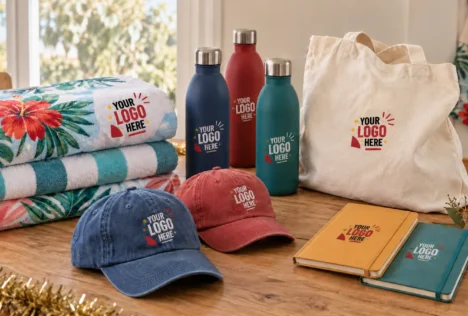
Corporate Christmas Gifts Australia: What to Order (and When) for 2026
Every year it happens. Somewhere around the second week of December, someone looks up from their desk and says, “Are we doing client gifts this year?” Cue the scramble: couriers are flat out, half the suppliers are winding down, and the only thing still available is a 2025 calendar nobody wants.
It’s mid-October as we write this, which means you’re ahead of that person. Good on you. This guide covers what to give clients, staff and the long thank-you list, how to keep it classy, and when you actually need to order so the gifts land before the office shuts for the year.
The short version
Custom-made or full-colour items: brief us in October. Branded stock items: early to mid November. Simple stock items with a one-colour print: late November is about the last comfortable window. December is for handing gifts out, not ordering them.
🗓️ When to order Christmas gifts (work backwards)
Don’t start with the order date. Start with the day the gifts need to be in your hands, then count back. Most businesses want them by the first or second week of December, so there’s time to sign cards and drop them off before the Christmas party season eats everyone’s calendar.
From that date, take off freight, then production, then artwork approval. Here’s roughly how that plays out:
- Made-to-order and full-colour items (order in October): anything printed edge to edge or made from scratch has the longest runway. Our Full Colour Christmas Stocking, for example, lists 20 working days of production after you approve the proof. That’s four working weeks before it even gets on a truck.
- Branded stock items (early to mid November): bottles, tumblers, notebooks, bags and the like are already sitting in an Aussie warehouse. Branding them is quicker, but popular colours do sell out as December gets closer.
- Simple stock items, one-colour print (late November): still doable. You’ll just have fewer choices and less room if the artwork needs a second look.
- December: couriers are slammed and plenty of suppliers close over the break. We’ll always try, but you’re rolling the dice.
Lead times vary by product, quantity and decoration, so treat the list above as a guide rather than a promise. Tell us your in-hands date and delivery address up front and we’ll only shortlist things that can realistically get there.
One more thing people forget: artwork approval is part of the lead time. If the person who signs off on the logo is going on leave in November, sort that out now. A proof sitting in someone’s inbox for a week can cost you more time than freight.
🎁 Who are you gifting? (It changes everything)
A gift for your best client and a gift for 300 people on the mailing list are two completely different jobs. Splitting your list into groups before you look at a single product saves a lot of time and money. Most businesses end up with three.
Clients: something they’d buy for themselves
The test for a client gift is simple. Would they still want it if your logo wasn’t on it? If the answer’s yes, you’re on the right track. Client gifts get kept when they feel like a treat, not an ad.
A few that pass the test:
- For the wine lovers: the Tirano Two Bottle Wine Cooler is ready for a summer arvo and doesn’t need you to supply the wine (though nobody would complain). Pop a bottle in a Jute Single Wine Bag if you’re delivering by hand.
- For the desk-bound: a boxed notebook and pen set like the Kingston Notebook and Pen Gift Set is useful from the first working day of January.
- For the coffee crowd: a quality vacuum tumbler like the SPICE Nazare 330ml gets used every morning, which is exactly where you want your brand to be.
- For the “hard to buy for” client: a NATURA Candle with Bamboo Lid is a safe, nice-smelling bet.

Presentation does a lot of the heavy lifting here. A magnetic lid gift box with a bit of tissue turns two good items into something that feels considered. We can pack them for you, so you’re not up until midnight on the boardroom floor with a roll of tape.
🍷 Building a client gift box?
Mix and match from wine accessories, drinkware, candles and gift boxes. We’ll help it look like one gift, not four random things.
👉 See Christmas and end of year gifts →
Staff: think summer holidays, not Christmas Day
Here’s an Aussie advantage. Our Christmas break is summer holidays, so the best staff gifts are the ones that come camping, to the beach or to the cricket. A gift that gets used on holidays reminds people where they work while they’re having a good time. That’s a pretty nice association.
- Oceana Recycled Cooler Bag: the Boxing Day esky, sorted.
- Pluto Picnic Blanket: for carols in the park, the beach or the backyard.
- Frontier Rapid Dry Towel: packs small, dries fast, gets taken on every trip.
- Rebel Clip Speaker: clips onto a bag so someone can play the cricket commentary nobody asked for.

If your crew is mostly on site, think about what actually survives a ute. A tough lunch cooler or a good drink bottle will get more use than something delicate. And if you want names on each gift, tell us at the start. Personalisation adds time and needs a clean list of spellings.
The big thank-you list: small, cheerful, easy to post
Suppliers, past customers, the whole database. This is where you want something low cost that still raises a smile, and ideally something that fits in a satchel without costing a fortune to send.
- Christmas Ham Bag: possibly the most Australian Christmas gift there is. It gets used every year, from the 25th until the ham finally runs out sometime around New Year.
- Hazel Chocolate Gift Box: a small branded box of chocolates. It won’t last long, but it will be appreciated (pick something heat-friendly if it’s heading north in December).
- Full Colour Christmas Stocking: fun for client kids or office decorations. Remember the 20 working day lead time.
For more low-cost ideas that travel well, have a look at our mailable items. If you’re torn between spending less on more people or more on fewer people, our budget vs premium guide walks through that trade-off.
🎄 How to avoid the tacky corporate gift
We’ve seen a lot of Christmas gifts over the years. The ones that end up in the regift drawer usually make the same few mistakes.
The logo is too big. A client gift with a giant logo feels like a billboard. Keep it smaller and tidier than you would on an event giveaway. A tone-on-tone or single-colour print often looks more expensive than a full-colour splash. Your free visual proof is the place to try both and pick the one you’d actually keep.
It says “Christmas 2026” on it. Anything printed with a date or a Santa has a use-by of 26 December. Put the festive bit in the packaging, the ribbon or the card. Keep the product itself useful all year, and your logo stays on show all year too.
Our favourite tip
Put the Christmas in the wrapping, not in the print. A good bottle in a festive gift bag gets used in February. A bottle with a reindeer on it goes in the cupboard.
It ignores the person. Not everyone drinks, eats chocolate or wants another mug. If you’re sending wine accessories, have a non-alcohol option ready for the clients who don’t drink. It takes ten minutes to sort and avoids an awkward moment.
It breaks a gift policy. Government departments and a lot of larger companies have limits on what staff can accept. If you work with them, a modest, useful item is safer than something flashy. When in doubt, ask your contact quietly.
It turns up late. A Christmas gift that arrives on 8 January is just a slightly confusing gift. See the timeline above.
📦 Delivery, packing and the Perth factor
Will you hand the gifts over in person, or post them? It changes what you should order. Bulky, heavy or fragile items are great for a handshake delivery and a headache in the mail. If you’re posting to clients across the country, pick something that packs flat and light.
If you have several offices, tell us early. We can split a single order across multiple addresses so you’re not paying to ship everything to one place and then sending it all out again. And if you’re in regional WA or the NT, add a few extra days on top of the usual freight times. December doesn’t make the trip any quicker.
What a great Christmas brief looks like
“About 40 client gifts at roughly $50 each, boxed and ready to hand out, plus 120 staff gifts around $25. Everything to our Perth office by 5 December. Logo is two colours. A few clients don’t drink.”
That’s all we need to send back a shortlist. Half of that is fine too. We’ll ask about the rest.
Still not sure where to start? Our guide to choosing promotional products breaks it down into three quick questions. It works just as well for Christmas.
Christmas sorted early
Beat the December rush.
Send us your rough numbers, budget and delivery date. We’ll come back with a shortlist that can actually arrive on time.
✓ Free visual proof ✓ No obligation ✓ Usually answered same day
Reviewed by Daniel Galpin, PromoMate Australia. Daniel looks after product selection, print methods and order planning, and has steered more than a few last-minute Christmas orders over the line.
Frequently asked questions about corporate Christmas gifts
1. When should I order corporate Christmas gifts in Australia?
As early as you can. Made-to-order and full-colour items are best briefed in October, branded stock items by early to mid November, and simple one-colour stock items by late November. Lead times depend on the product, quantity and decoration, so tell us your in-hands date and we’ll shortlist what can make it.
2. How much should I spend on a client Christmas gift?
It depends on the relationship and your client’s gift policy. Many businesses spend more on a short list of key clients and keep a smaller, cheerful gift for everyone else. Share a rough per-person budget and we’ll show you options at that level, branding included.
3. What are good Christmas gifts for staff?
In Australia, think summer. Cooler bags, picnic blankets, quick-dry towels, speakers and good drink bottles all get used over the holiday break. Choose something that suits how your team actually spends their time off.
4. Should I put Christmas designs on branded gifts?
Usually not on the product itself. A Christmas print dates the item, so it tends to get put away after December. Keep the festive touch in the gift box, bag or card, and keep the product useful year-round.
5. Can you pack the gifts into boxes for us?
Yes. We can pack items together in gift boxes or bags so they arrive ready to hand out. Mention it at the start, as packing affects pricing and timing.
6. Can you deliver to more than one office?
Yes. Give us the addresses and the split of quantities and we’ll quote delivery to each location. Regional and remote addresses can take longer in December, so allow extra time.
7. Can each gift have a person’s name on it?
On many products, yes. Personalisation takes longer than a standard logo print and needs a checked list of names. Let us know early so it can be built into the timeline.
8. What if I’ve left it too late?
Get in touch anyway. Stock items with a simple print can sometimes still be turned around quickly. We’ll be honest about what can arrive in time and what can’t.
Got a Christmas list and no idea where to start? Flick us an email with the rough details. No dramas, we’ll sort a shortlist.
You’ve Been Asked to Sort the Merch. Where Do You Start?
Someone has said, “Can you sort the merch?” You’ve got a date, a rough budget and perhaps a logo file called final-final-2.png. That’s enough to start. You do not need to scroll through thousands of promotional products and hope a good idea jumps out.
The fastest way to choose promotional products is to answer three questions: who is getting it, where will they use it, and what absolutely has to work? Those answers turn a vague brief into a shortlist. Here’s how we’d do it.
The 30-second starting point
Broad event crowd? Choose something easy to carry and useful on the day. Named staff group? Choose an item that will settle into their work routine. Small client list? Think about the way it will be handed over and used afterwards.
1. Who is getting it, and why?
“Everyone” is not an audience. A person walking past a trade-show stand, a new starter opening a welcome pack and a long-time client receiving a thank-you will read the same product differently. Start with the moment, not the catalogue.
Event giveaway: make it useful immediately
At an event, people are holding brochures, a coffee and three other things they didn’t plan to carry. A lightweight bag can solve a problem right then. The Delta Tote Bag is a simple example: it gives the recipient somewhere to put the day’s haul and gives a bold logo room to breathe. Start with the tradeshow collection or tote bags if reach and easy handout matter most.
For a broad crowd, the best item is usually the one that needs the least explanation. Think about how it will be handed out, whether one person can carry a carton to the stand, and whether attendees can use it without stopping to read instructions. If you expect a rush at registration, simple wins: an easy-to-grab item, one clear print position and no fiddly packaging.

Staff welcome pack: pick a job it can keep doing
A welcome pack is for a known person, so it can be more specific. What will help in their first month? A Kora Notebook – Medium makes sense for someone who takes notes in meetings or on site. A Galleria Cotton Tote Bag can hold the pack and then go back to work as a carry bag. There is no prize for cramming in five fillers. Two considered items beat a bag of things that never leave the cupboard.
It also helps to give the pack a simple theme. A notebook and tote say “ready for the working day”; a bottle and cap suit a more mobile crew. Choose one useful lead item, then add only what supports it. Before ordering, check whether names, departments or different office locations will affect packing and delivery. Sorting that early is much easier than opening cartons and rebuilding every pack by hand.

Client thank-you: make the handover feel considered
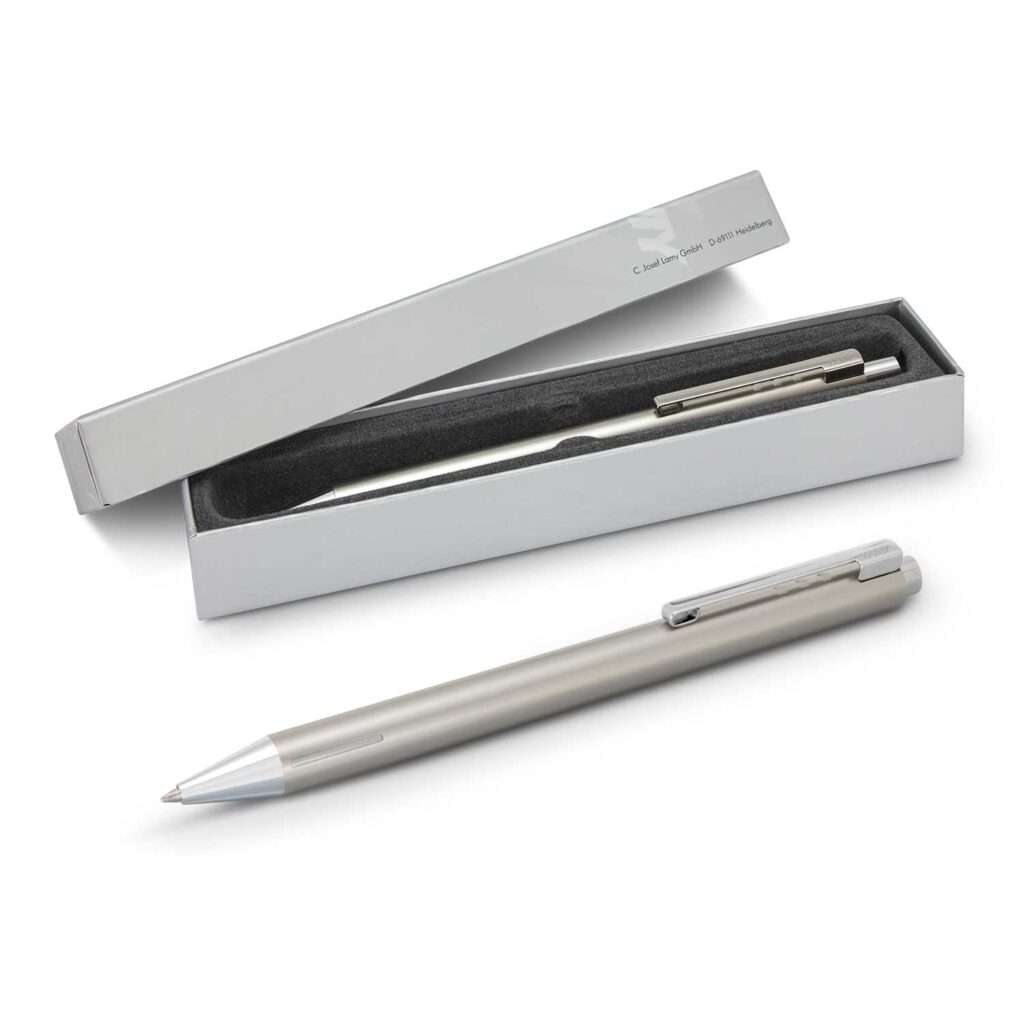
For a smaller client list, ask whether the item would still be appealing without the logo. The Vanguard Vacuum Bottle comes with a gift box, which helps when the moment of giving matters. An Ambassador Pen is another option if the client’s work is desk-based. Keep the branding in proportion; the free visual proof is where you check how it actually looks.
Presentation carries more weight here than it does with a mass giveaway. Ask whether the product has a gift box, how the box arrives, and whether a card or sleeve needs to be packed with it. Decoration matters too. White and gold on a black bottle can feel quieter and more premium than the same artwork enlarged in a bright colour. The right choice is the version your client will happily leave on their desk, not the one that shouts loudest in a catalogue.
Sorting end-of-year gifts? Our corporate Christmas gifts guide covers what suits clients, staff and the big thank-you list, plus when to order so it all arrives before the office shuts.
2. Where will it earn its place?
Picture the recipient a week after the event or welcome day. Is your item on their desk, in a work bag, in the ute or in the kitchen? This is the question that saves you from ordering something that looks clever in a mock-up but has no obvious home.
- At a desk: notebooks, pens and useful desk pieces have a natural job. Check the writing surface and the logo area before choosing a finish.
- On the move: bags and drink bottles need to fit how people travel and what they carry. Capacity, closure and weight matter more than a dramatic product photo.
- At an event: something that can be carried, used or worn during the day has a head start. Browse conference products if your audience is arriving with a delegate badge and a schedule.
- Sent by post: size, weight and protection become part of the decision. The mailable items collection is a better starting point than a bulky product you will have to pack around.
Now add frequency. Will it be used once at an event, weekly in a meeting room or every day on the commute? Daily-use items can justify more attention to feel, durability and decoration. A one-day handout needs to be easy to distribute and immediately useful. Neither approach is automatically better; they are doing different jobs.
Also think about the physical setting. A glossy black item may show fingerprints in a client boardroom. A pale tote will pick up marks on a mine site. A heavy bottle can be excellent at a desk and annoying in a mail-out. These small details are often what separate a product that gets kept from one that ends up in a drawer.
Once you know the setting, the new shop categories do the first round of narrowing. Within a category, use the filters that are shown on that page: for instance, you can browse cotton bags or metal drinkware. Brand and decoration filters appear where there are matching products. The filter is a starting point; the product page and artwork proof tell you whether a particular item fits your brief.
If you are weighing up bottle materials, we have a separate drink bottle comparison. If you have settled on a tote but are stuck on fabric, the tote material guide goes deeper. No need to solve every specification at once.
3. What absolutely has to work?
Before falling in love with an item, put the constraints on one line: quantity, in-hands date, delivery location, budget and artwork. A product is only a good choice if all five can work together.
- Quantity: tell us the likely number and whether it might change. Minimums and price breaks differ by product and decoration method.
- In-hands date: use the date you need the cartons, not the day you plan to place the order. Artwork approval and freight need room in the schedule.
- Delivery location: a Perth office, a regional site and a conference venue create different freight questions.
- Budget: share the total or a comfortable range, including branding and delivery. That lets us compare finished options fairly.
- Artwork: send the logo you have, even if you are unsure it is the right file. Tiny text, gradients and fine detail may need a different print method or a larger area.
Work backwards from the date
“Needed in November” is not quite enough. Give us the date the cartons must be at the venue or office, plus a day or two of breathing room if the event cannot move. From there, the path runs backwards through freight, production, artwork approval and product availability. A locally stocked item with a straightforward print may suit a tight deadline; a custom shape, special colour or individually named product usually needs more runway.
Artwork approval is part of the lead time, not something that happens after it. Make sure the person who can approve the logo placement knows when the proof is coming. A two-day delay on an email can matter more than shaving a day off freight.
Compare the finished cost, not the blank item
A cheaper blank product is not always the cheaper finished option. Decoration setup, the number of print colours, individual packaging, split deliveries and freight all affect the total. Ask for an apples-with-apples comparison that includes the branding method and delivery. That way you are comparing what will actually arrive, not two headline unit prices built on different assumptions.
A fair quote should make these clear
Product quantity, decoration method, number of print positions, setup charges, packaging, freight and GST. If one option leaves something out, it is not yet a fair comparison.
That last point is easy to underestimate. A logo can look fantastic on a laptop screen and turn into a blur on a narrow pen barrel. A large tote panel may make the same design sing. We’ll show you the proposed placement in a free visual proof before production. If you are choosing between methods, the printing versus embroidery guide will help with fabric items.
A useful brief beats a perfect brief
“We need roughly 250 items for new staff, delivered to Perth by 12 November. Around $20 each all-in. They work partly on site and partly at desks. Our logo has two colours.”
That gives us something solid to shortlist. “Something cool, ASAP” can work too, but expect a few more questions.
Three shortlists you can steal
These are starting points, not ready-made bundles. The right answer still depends on stock, quantities, decoration and the person receiving it.
- Busy exhibition stand: begin with the Delta Tote Bag, then decide whether you need a small useful item inside. Check the tradeshow range for products people can take without juggling.
- First-day staff pack: try the Kora Notebook inside a reusable Galleria Tote. If the role is mostly mobile or outdoors, swap the notebook for a bottle that suits their day.
- Client thank-you: consider the boxed Vanguard Bottle or an Ambassador Pen for someone who appreciates a proper desk item. A restrained logo often makes the gift easier to keep using.
Not sure what to choose?
Give us the messy brief.
An event date, a rough quantity and a budget are plenty. We’ll send back a practical shortlist — not a 400-page catalogue.
✓ Free visual proof ✓ No obligation ✓ Usually answered same day
Frequently asked questions about choosing promotional products
1. What is the best promotional product for an event?
Choose something useful in the event setting and easy to take away. A tote can help a visitor carry what they collect; a small desk item may suit a seated conference. Start with the audience and the moment rather than a universal bestseller.
2. How far ahead should I order branded merchandise?
As soon as your date and rough quantity are known. Production time depends on the product, branding method, stock and artwork approval; freight adds another variable. Tell us the in-hands date and destination so we can shortlist what is realistically available.
3. What if I do not know my exact quantity yet?
A range is fine for the first conversation. Let us know your best estimate and how much it could move. We can compare the relevant minimum orders and price breaks before you commit.
4. Can you help if my logo file is not print-ready?
Yes. Send what you have. We can check the detail, colours and likely decoration area, then tell you what artwork or adjustment is needed. You will see a visual proof before anything is produced.
5. Is a bigger logo always better?
No. It depends on the item and the job. A bold print can work on an event tote; a smaller mark may suit a client gift. Ask to see both in a proof at the actual product scale.
6. Can I mix products for different groups in one campaign?
Absolutely. A general giveaway, a staff pack and a few client gifts can each have a different item while sharing the same visual identity. Give us the groups and quantities and we’ll help make the set feel coherent.
7. Should every product use exactly the same logo treatment?
Not necessarily. Consistency comes from using the same identity thoughtfully, not forcing one print treatment onto every material. Dark red may suit a white tote, while white and gold can look more considered on a black client gift. The visual proof lets you compare options before production.
8. What information helps you quote accurately?
Send the estimated quantity, required delivery date, destination, budget range, intended recipient and the logo file you have. Mention individual names, multiple delivery points or special packing at the start. No dramas if some details are still rough; we’ll tell you which ones affect the shortlist.
Still staring at a half-formed brief? Send us the messy bits. We’ll sort a practical starting point.

8 Unusual Promotional Products People Actually Want to Keep
There’s a particular look people give you when you hand them something unexpected. A quick inspection. A small grin. Then: “Hang on, what does this do?”
That’s a decent start for a promotional product. But the next question matters more: will they want it once they get home?
If you’re looking for unusual promotional products in Australia, these eight are worth a look. There’s a mining truck you build yourself, a notebook you can wipe clean, and a tracker for the wallet that’s apparently grown legs again. Each has a different job, so we’ve included who we’d choose it for and what to check before putting your logo on it.
No need to order the weirdest thing in the catalogue. Just something that makes sense for the person receiving it.
🔎 Which unusual promotional product suits your audience?
| Product | Our suggested audience | Check before ordering |
|---|---|---|
| BRANDCRAFT Mining Truck | Mining and machinery clients | Artwork placement on the model template |
| Desk Whiteboard Notebook | Office teams and training groups | Cover printing versus writable pages |
| NATURA Puzzle Coasters | Client and settlement gifts | Logo legibility on bamboo |
| Carbon Bluetooth Tracker | Travellers and mobile teams | Phone compatibility and setup |
| Custom Puzzle Cube | Creative campaigns and launches | Artwork across panels and production time |
| Spinner Fidget Pen | Conference and training attendees | Small barrel print area |
| NATURA Bamboo Lap Desk | Remote staff | Laptop size and delivery arrangements |
| Bamboo Retractable Charging Cable | Delegates and travelling staff | Connectors and device charging needs |
🚚 1. BRANDCRAFT Mining Truck: some machinery for the desk

Finally, a mining truck you can park without a spotter.
The BRANDCRAFT Mining Truck Wooden Model arrives as a laser-cut sheet of basswood. The pieces slot together without tools, turning a flat pack into a small model for a desk or shelf.
We’d put this in front of a mining supplier, equipment hire business or machinery dealer. The connection is obvious before anyone reads the logo. It also gives the recipient something to do with the gift, which is a much better opening than asking them to read another brochure.
Branding options include one-colour screen printing, laser engraving and direct digital printing on the model. Choose artwork using the actual template: a logo needs to make sense once the pieces are assembled, not just look good on the flat sheet.
It’s a considered client gift or targeted event item. For a broad audience with no connection to mining, choose a model that fits their world. The BRANDCRAFT Wheel Loader is another option for construction and earthmoving businesses.
📝 2. Desk Whiteboard Notebook: for plans that change before lunch

The Desk Whiteboard Notebook has eight leaves, giving you 16 pages of dotted whiteboard card. Write something down, wipe it off and have another crack. Handy when Monday’s tidy plan has become Tuesday’s problem.
The cover folds into a desk stand, so it can sit beside a keyboard as a planner. There’s also a whiteboard pen with an eraser in the lid, held in an elastic loop.
This would be our office-team pick. Trainers could use it for short exercises, while new starters get something useful for reminders and working notes.
Pad printing and screen printing are available on specified cover areas. The listed screen-print area is 236 × 130mm, giving a simple design room to breathe. Don’t assume the internal writable pages can be custom printed; we’d confirm any request beyond the listed cover options.
Choose it for temporary notes. Someone who needs a permanent record of every meeting will be happier with a conventional notebook.
🧩 3. NATURA Puzzle Coasters: a small gift with somewhere to live

The NATURA Puzzle Coaster set contains four bamboo coasters that interconnect. They come in a natural kraft gift box, so there’s already a tidy way to hand them over.
We’d shortlist these for a real estate settlement gift or a client thank-you. They have a straightforward use at home or in the office, and the joining shapes make them a little more interesting than a standard square coaster.
The catalogue lists pad printing, laser engraving and direct digital printing in a 25 × 65mm area. A clear logo is enough here. Squeezing in the website, phone number and entire service list will make a small gift look very busy.
Bamboo grain varies, so engraved marks won’t look identical across every piece. If colour consistency is central to your brand, talk through the printed options before settling on engraving.
📍 4. Carbon Bluetooth Tracker: for the missing-wallet routine

Pockets. Kitchen bench. Car. Other pockets. You know the drill.
The Carbon Bluetooth Tracker is a slim, credit-card-shaped item finder with a wirelessly rechargeable battery. Its format makes it an interesting choice for wallets, rather than another gadget that needs its own space in a bag.
The supplier lists support for Apple Find My or Google Find My Device networks. This is crowdsourced Bluetooth tracking, not a GPS unit: location updates depend on the relevant network and nearby participating devices. Confirm the recipient’s phone compatibility and setup requirements before ordering for a team.
There’s a 40 × 40mm area for pad printing or direct digital branding. We’d consider it for travel businesses, frequent travellers or selected client gifts where the function will be appreciated.
Include clear setup instructions when handing it over. A useful tracker still needs someone to pair it with their phone.
Want to see which one suits your logo?
Send us the shortlist and your artwork. We’ll prepare a free visual proof so you can check the placement before committing. Request a quote and visual proof, no obligation.
🎲 5. Custom Puzzle Cube: let the artwork do something

The Custom Puzzle Cube uses full-colour digital labels across its panels. That gives you an opportunity to build a design around the puzzle itself.
A product launch could use different images across the faces. A training company could create a visual challenge. We’d keep any important wording within individual panels so it stays readable when the cube is mixed up.
Give the artwork some thought. Six versions of a tiny logo probably won’t make the most of it. Strong colours and recognisable images will be easier to work with than dense text.
The listed lead time is 25 working days by air freight; larger orders can be sea freighted on request. Get a confirmed delivery date for your quantity and destination before promising these for an event. This is one to plan ahead for.
🖊️ 6. Spinner Fidget Pen: something to do during the long meeting
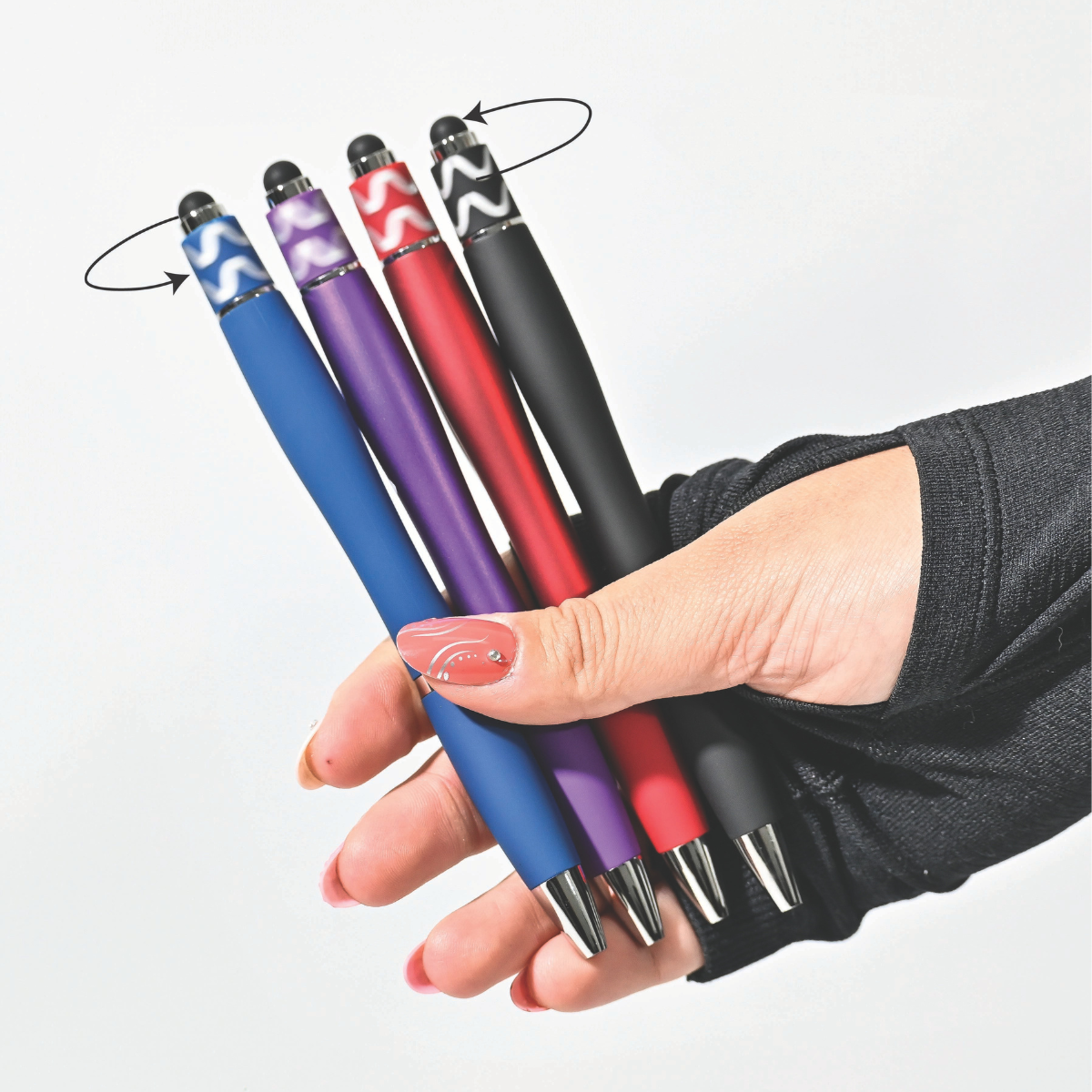
The Spinner Fidget Pen P730 combines a twist-action pen, touchscreen stylus and wave-shaped spinner. It still earns its spot in a conference bag as a writing tool; the spinner adds a bit of fun.
We’d choose it for training days or delegate packs where a regular pen feels a little predictable. It’s also a simple product to demonstrate. Give the top a flick and the explanation is mostly done.
Pad printing on the barrel is the standard option. Keep the artwork clean because the available space is narrow. A short business name or compact logo will be easier to read than several lines of contact details.
We’ve covered it in more detail in our Spinner Fidget Pen guide. Here, we’d pick it for the combination of everyday writing and a small distraction, without making promises about concentration or stress relief.
💻 7. NATURA Bamboo Lap Desk: a proper work-from-home gift

The NATURA Bamboo Lap Desk has a cushioned base, a built-in mouse mat and slots for a phone and tablet. It accommodates laptops up to 16 inches, with a silicone strip to help keep the laptop in position.
We’d consider this for remote staff who regularly work away from a conventional desk. Check how they actually work first. Someone with a permanent dual-monitor setup may have very little use for it.
The listed decoration is a one-colour pad print in a 65 × 35mm area. The desk’s large surface doesn’t mean the whole top is available for printing.
It’s supplied in a kraft gift box, but its size also makes delivery worth discussing. If gifts are going to separate home addresses, include that detail when requesting pricing.
🔌 8. Bamboo Retractable Charging Cable: less spaghetti in the bag

The Bamboo Retractable Charging Cable packs several connectors into a compact retractable format. It has USB-A and USB-C inputs, with USB-C, Micro-B USB and Lightning outputs.
We’d put this on the shortlist for travelling staff and conference delegates. It addresses a familiar annoyance without taking up much space.
The bamboo hub offers a 37mm circular area for pad printing or laser engraving. Use a logo that reads well within the circle, especially if your normal artwork is long and narrow.
Check the required charging performance for the devices involved. Having the right plug doesn’t automatically mean a cable supports a particular fast-charging mode or laptop power requirement. We’d confirm those details rather than promise one cable will do everything.
💬 How to choose without getting carried away
Start with the recipient. A wooden mining truck has an obvious connection for an equipment supplier. A whiteboard notebook suits someone who spends their day juggling tasks. That connection is what makes the choice feel thoughtful.
Then compare the complete order cost: product, decoration, any applicable setup, GST and delivery. Don’t compare a blank-item price with a finished branded gift. Our budget versus premium promotional products guide goes into how to decide where the extra spend makes sense.
Finally, work backwards from the date you need the goods in hand. Allow for artwork approval as well as production and freight. Give us the quantity, delivery location and deadline at the start and we can narrow the options down quickly.
Still working from a half-formed brief? Our three-question guide to choosing promotional products starts with who is receiving it, where it will be used and what absolutely has to work. It is a quick way to turn “something different” into a shortlist.
📋 Before you order: five things worth checking
- Where will it go? A desk gift, a pocket giveaway and a parcel sent to someone’s home need different choices. Include packaging and delivery in the budget.
- Will the logo read at actual size? Check the proof at the stated print dimensions. Zooming in on a screen can make tiny lettering look perfectly legible.
- Does the recipient need to do anything first? A tracker needs pairing, a model needs assembling and a rechargeable item needs charging. Make the instructions part of the handover.
- Would a sample settle the decision? Ask about sample availability and any charges before a larger order. A visual proof shows artwork placement; it won’t tell you how a product feels in your hand.
- What is the confirmed arrival date? Give us your delivery postcode and the date you need the goods, not just the event date. Leave time to pack delegate bags or distribute staff gifts.
How will you know it worked?
For an event, decide what you want next: a conversation, a follow-up enquiry or a sample request. A campaign link on an accompanying card can help track responses without cramming a QR code onto a tiny print area. For staff gifts, ask people a few weeks later whether they’re using them. Use that feedback when choosing the next order.
Product information checked against the supplier catalogue in September 2026. Selection advice from the PromoMate Australia team.
❓ Questions about unusual branded merchandise
1. What makes a good unusual promotional product?
A clear connection to the recipient and a reason to use or display it. Start with their work, interests or daily routine, then choose something with a useful feature or an engaging design.
2. Can all eight products carry our logo?
Yes. Each has listed branding options, but the methods and print areas differ. We’ll check your artwork against the chosen product and supply a visual proof before production.
3. What is the minimum order quantity?
It depends on the product and decoration. Send us the quantity you need and we’ll confirm the available options. There isn’t one minimum that applies across this shortlist.
4. How long does branded merchandise take?
Timing depends on stock, artwork approval, decoration and delivery. The Custom Puzzle Cube lists a 25-working-day lead time by air freight. Ask for a confirmed schedule for your order, especially for an event.
5. Are these suitable for children?
Check the age guidance and small-parts information for the individual item. A model or puzzle being fun does not make it suitable for every age. Tell us the intended age group when enquiring.
6. Can you help us choose within a budget?
Absolutely. Send your total budget, quantity, audience and delivery location. We’ll help compare suitable products and branding options, with a free visual proof and no obligation.
Got a few favourites? We’ll sort the next bit.
Send us your logo and the products you like. Tell us who they’re for and when you need them. We’ll come back with confirmed pricing and help you get the artwork right.
Request your quote and free visual proof →
Or email [email protected]. We actually answer our emails.
📚 More help choosing your merch
- Budget vs premium promotional products: decide where extra spend earns its place.
- Choosing promotional product colours: get the stock colour and logo working together.
- Promotional products for trade shows: plan the wider event giveaway.
Latest from the PromoMate blog
- Corporate Christmas Gifts Australia: What to Order (and When) for 2026
 Clients, staff and the long thank-you list each need a different gift. Here’s what to order for Christmas 2026, and when to brief it so it arrives before the office shuts.
- You’ve Been Asked to Sort the Merch. Where Do You Start?Need to sort branded merch? Use three simple questions to choose promotional products for events, staff and clients, then send us your brief for a free proof.
- 8 Unusual Promotional Products People Actually Want to KeepExplore 8 unusual promotional products for Australian teams and clients, with practical branding advice, real product links and free visual proofs.
- How to Choose Promotional Product Colours That Suit Your BrandBold merchandise can look brilliant or completely off-brand. Here is how to choose stock colours, custom PMS products and full-colour decoration with fewer surprises.
- Budget vs Premium Promotional Products: What Actually Earns the Spend?Compare budget, mid-tier and premium promotional products using real PromoMate catalogue examples. Match the item to the audience, use, quantity, artwork and occasion.
- Stainless Steel vs Plastic vs Glass vs Insulated Vacuum: Which Branded Drink Bottle Actually Suits Your Job?Stainless, plastic, glass or insulated vacuum? We break down what each branded drink bottle actually costs, how well the logo survives, and which one to pick for gyms, trade shows, mining crews and executive gifts.
- Cotton vs Non-Woven vs Jute vs Recycled Cotton Tote BagsCotton, non-woven PP, jute or recycled cotton? Compare cost, print quality, durability and lead times before ordering branded tote bags in Australia.
- Do Promotional Products Actually Work? What the 2025 APPA Data ShowsNew 2025 APPA research: 81% recalled the brand, 84% told others, 77% went on to buy. Here’s what the data means for how you plan and spend your promo budget.



How to Choose Promotional Product Colours That Suit Your Brand
🌈 Bright Merch Is Back (and We’re Here for It)
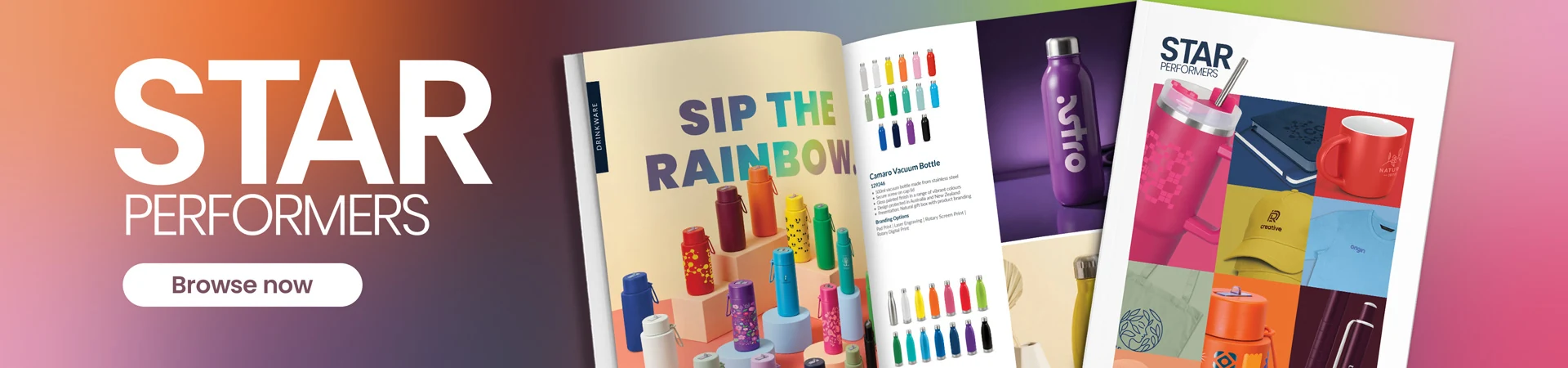
G’day, colour. The latest Star Performers range from Trends is not exactly shy: pinks, oranges, greens, blues and a whole spread of drinkware that looks like somebody tipped a paint chart across the desk. After years of black, navy and white doing most of the heavy lifting in promo, we reckon it is a welcome change.
The right colour gives merch a personality before anyone has even read the logo. It can make a bottle feel sporty, help a giveaway stand out across a busy event, or turn a plain pen into the one everybody pinches from the meeting room. The wrong colour can make a dog’s breakfast of the whole job. The logo disappears, the print looks dull, or five “close enough” blues turn up looking like five different companies.
This is not a breathless “look at all the new stuff” roundup. We want to help you pick a colour that suits the brand, the people receiving it and the place they will actually use it. Have a flick through Star Performers — edition three for ideas, then use this guide before you lock anything in.
🎯 Start With the Job, Not Your Favourite Colour
Here is where buyers come unstuck: they choose the colour they personally like best. A bright purple bottle might be brilliant for a school fun run and completely wrong for a conservative client gift. A matte-black notebook can feel spot-on in an executive pack and disappear into the scenery at a colourful outdoor event.
Before you open the colour chart, ask three things. Who is getting it? Where will they use it? What should it say about your business? A kids’ program can go playful. A construction induction pack needs something practical with branding that can be read in half a second. A design studio can probably get away with the odd curveball because creativity is part of what it sells.
If the product itself is still undecided, start with our guide to choosing promotional products before narrowing the colour. It uses the same audience, setting and must-work questions to turn a loose brief into a shortlist.
A quick colour brief that actually helps:
Audience: staff, clients, students, event visitors or the general public?
Setting: office, site, gym, school, conference or outdoor event?
Brand role: should it feel dependable, energetic, premium, playful or understated?
Practical test: is the logo still clear from an arm’s length away?
That last check matters more than any clever colour theory. If nobody can read the logo, the palette has missed the point.
🧩 Three Ways to Use Colour Without Making a Mess
1. Pick a stock colour that supports the logo
Stock colours are the easy road. The supplier already makes the product in a set range, you pick the best fit and we add the branding. It does not have to be an exact match to feel like your business. Quite often a white, black or neutral product with a crisp logo looks more deliberate than a near-match where the logo quietly vanishes.
The Camaro Vacuum Bottle is a ripper example. It runs from white and soft green through yellow, orange, pink, teal, blues, purple and black. That gives you room to create contrast, match an event theme or colour-code teams without turning the order into a full custom-manufacturing exercise.

2. Match the product itself to a Pantone colour
If your particular blue, green or red is a big part of the brand, custom PMS colouring can be worth the extra planning. PMS stands for Pantone Matching System. It gives everyone one proper colour reference instead of playing a painful game of “no, the other medium blue”. Our Pantone PMS colour chart explains the basics.
The Panama Palette Pen is made to order with a custom PMS barrel in gloss, matte or rubberised finish. It is a good fit when the pens really do need to land in one exact brand colour. It is not the “we forgot the conference is next Friday” option. The current listing states a 38-working-day production lead time, so tell us the required date before we all get attached to it.

3. Use the product as a canvas
Sometimes one tidy logo is not the idea at all. Full-colour decoration is where gradients, photos and proper illustrations get some room to breathe. Done well, the product becomes part of the campaign rather than a blank object with a logo parked on it.
The SPICE Calypso Bottle 500ml — Full Colour gives you a large wrap-style branding area on recycled stainless steel. The catch is time: its current listing states 40 working days for production, with sampling on top. If the event date is fixed, work backwards before you fall in love with the artwork. Future you will be grateful.

🎨 Not sure whether you need a stock colour, PMS match or full-colour print?
Send us the logo, audience, quantity and deadline. We’ll sort through the practical options and prepare a free visual proof before anything goes to production.
👉 Request a Quote →
🖨️ Same Logo, Different Surface, Different Result
Every job has two colour decisions hiding in it: the colour of the thing and the colour we put on the thing. White print on a navy bottle does not behave like navy print on a white bottle. A full-colour digital print does a very different job from a one-colour pad print, laser engrave or screen print.
Then the surface joins the party. Gloss paint bounces light around. Matte and rubberised finishes soften it. Recycled fibres can have flecks and natural variation. Laser engraving usually exposes the material underneath instead of adding ink. None of that means something has gone wrong; it just changes the finished look.
If colour accuracy matters, send the original vector logo and the PMS references from the brand guide. Please do not choose a colour from a screenshot on somebody’s website and call it done. Screens use RGB light; physical branding uses ink, thread, film or exposed material. Our artwork requirements page covers the useful file formats, and the printing processes guide shows what each method is good at.
Before approving the proof, check:
the product colour and logo colour have enough contrast;
small text and fine details suit the decoration method;
the artwork position makes sense when the product is held or used;
the proof lists the right PMS references, finish and colour split;
the approved version is the one everybody is actually working from.
🛍️ What We’d Actually Shortlist
Need plenty of colours without the custom-production palaver? Start with the Camaro Vacuum Bottle. If capacity, lid style or insulation matters more than the exact shade, have a look through the wider branded drink bottles range instead.
Want a smaller everyday giveaway? The Vistro Stylus Pen — Colour Match comes in a broad bright range and has a touchscreen stylus. It works nicely for staff teams, school houses or an event palette people should recognise at a glance. The wider pens and pencils range has quieter options if the rainbow is not your cup of tea.
Got artwork that needs room? The full-colour Calypso bottle is the loud option. The Ashbury Full Colour Notebook gives you customisable inner pages as well as cover branding. Its current listing states a 40-working-day production lead time, so this is one for the planned campaign, not a Tuesday-afternoon rescue mission.
Want something people will show each other? The Chameleon Colour Changing Cup reacts to ice-cold drinks. That makes it good fun at festivals and brand activations. The strength of the colour change varies with temperature and conditions, so buy it for the interaction, not laboratory-perfect uniformity.
📋 The No-Drama Colour Brief
You do not need to turn up with a perfect production brief. Honestly, a useful first email can be five lines. Tell us what the merch is for, who gets it, roughly how many you need, the deadline and the budget. Attach the best logo file you can find and any official brand colours. We’ll take it from there.
If you want a colour mix, give us the split. Fifty blue, fifty green and fifty orange is much more useful than “a mixture would be nice”. If exact matching matters, mention it early. Custom PMS products and samples can take a fair bit longer than stock-colour items.
Then have a proper look at the visual proof. Check the contrast, size and position, not just whether we used the right logo file. Too loud? We can shrink the print, calm down the base colour or look at engraving. Too flat? A better product colour may do more than blowing the logo up another 20%.
And no, making a proof does not lock you into the order. The whole point is to catch the wobbly idea before it becomes twelve cartons of wobbly merchandise. We actually answer our emails, and if the first option is wrong, we’ll sort it. No dramas.
Reviewed by Daniel Galpin, Co-Founder at PromoMate Australia
Product selection, print-method fit, colour planning and reducing order risk for Australian businesses, schools, events and trade teams. Meet the team →
❓ Frequently Asked Questions About Promotional Product Colours
1. Do promotional products need to match my brand colour exactly?
Nope. Exact matching is useful when colour is a big part of the brand, but contrast and readability matter more on plenty of products. A neutral item with a clean logo can look more consistent than a near-match that feels accidental. Custom PMS colouring is there when “close enough” genuinely will not do.
2. What is a PMS colour?
PMS stands for Pantone Matching System. It gives printers and suppliers a shared reference for a specific colour. It is more reliable than choosing a shade by eye on a screen, although the product material, finish and decoration method can still affect how the colour looks in real life.
3. Can I mix product colours in one order?
Often, yes, but it depends on the product, available stock and how the supplier packs it. Give us the exact split when you ask for the quote. We will check it properly rather than promising that every colour can be mixed in whatever quantity takes your fancy.
4. What artwork should I supply for accurate colour matching?
An AI, EPS or print-ready vector PDF is ideal, along with the PMS references from your brand guide. Only got a PNG or an ancient PDF somebody found in the shared drive? Send it anyway. We will check it and tell you what needs sorting before production.
5. Is full-colour branding the same as PMS colour matching?
No. Full-colour decoration reproduces artwork using a multi-colour print process and suits gradients, photos and illustrations. PMS matching targets a specified spot colour. The right choice depends on the artwork, product and print method; some jobs use both ideas in different ways.
6. Will the colour on my screen match the finished product?
Not perfectly. Screens emit RGB light, while physical products use inks, coatings, thread or exposed material. Monitor settings also vary. A digital proof is excellent for checking placement and scale, but if precise colour is critical, ask whether a physical sample or pre-production sample is available.
7. How much extra time does custom colour take?
It varies by product. Made-to-order colour and full-colour products can take several working weeks before freight. For example, the current Panama Palette Pen listing states 38 working days and the full-colour SPICE Calypso Bottle states 40 working days, with sampling additional. Confirm the current schedule before planning an event around it.
Got a colour question we did not cover? Ping us at [email protected] or send through a quote request. No dramas if the artwork is not tidy yet; send what you have.
⭐ Ready to Put Some Colour to Work?
Pick something the recipient will use first. Then use colour to make it feel like yours. Have a browse through the Star Performers brochure, or send us the rough brief and we’ll narrow the options down. Free visual proof, no obligation, and a real person at the other end of the email. Easy.
📚 More from PromoMate
- Corporate Christmas Gifts Australia: What to Order (and When) for 2026
- You’ve Been Asked to Sort the Merch. Where Do You Start?
- 8 Unusual Promotional Products People Actually Want to Keep
- How to Choose Promotional Product Colours That Suit Your Brand
- Budget vs Premium Promotional Products: What Actually Earns the Spend?
- Stainless Steel vs Plastic vs Glass vs Insulated Vacuum: Which Branded Drink Bottle Actually Suits Your Job?
- Cotton vs Non-Woven vs Jute vs Recycled Cotton Tote Bags
- Do Promotional Products Actually Work? What the 2025 APPA Data Shows

Budget vs Premium Promotional Products: What Actually Earns the Spend?
Budget promotional products are not automatically wasteful, and premium merchandise is not automatically a better investment. The useful question is simpler: which item is most likely to be kept and used by this particular recipient?
That is not just supplier talk. The latest Australasian Promotional Products Association research found usefulness was the leading reason people kept branded merchandise. PromoMate’s summary of the same Australian and New Zealand research explains what the APPA findings mean for a real merchandise brief.
The short answer
- Choose budget when reach matters, the audience is broad and the product still performs a genuine job.
- Choose mid-tier for named groups such as staff, conference delegates and club members who should use the item regularly.
- Choose premium for a small, known recipient list and a moment where quality says something important about the relationship.
- Mix tiers when one campaign includes walk-ups, qualified prospects and a handful of high-value people.
Start with the job, not the price band
Price per unit is only one part of the cost. Artwork setup, branding method, number of print positions, quantity, stock location and freight can change the final quote. A cheap item that is ignored is expensive waste; a dearer item given to the wrong person is just expensive.
| Decision | Question to ask | What it changes |
|---|---|---|
| Recipient | Do we know their name, role or interests? | The more specific the recipient, the more targeted the product should be. |
| Use | Where and how often could they use it? | Frequent, visible use can justify a better-built item. |
| Quantity | Do we need 50, 500 or 5,000? | Setup and decoration costs spread differently at each volume. |
| Artwork | Is the logo simple, detailed, full colour or position-sensitive? | The decoration method may narrow the product choice before price does. |
| Date | When and where must it arrive? | A suitable stocked product beats an ideal product that misses the event. |
| Brand risk | What will poor quality communicate here? | Client gifts and staff gear usually carry more reputation risk than a broad giveaway. |
A note on prices: this guide deliberately avoids fixed dollar bands. Catalogue prices and supplier stock change, and the cheapest undecorated product is not the final branded price. Use the linked products as real examples, then request a current quote for your quantity, artwork and destination.
Budget promotional products: broad reach with a clear purpose
The budget tier is for useful, straightforward products supplied at volume: branded pens, simple keyrings, event drinkware, basic lanyards and lightweight promotional tote bags. The best budget product does one job well and gives the artwork enough room to remain clear.
Where budget makes sense
- Trade-show and open-day walk-ups where the audience is large and not individually qualified.
- Community events and campaigns where distribution matters more than presentation.
- Useful inserts inside a larger delegate or welcome pack.
- Repeat-use basics such as pens, provided the writing quality and print remain acceptable.
Budget falls down when the item feels disposable, the product cannot reproduce the artwork properly or the recipient expects a more considered gesture. Before ordering, ask for a sample where practical and check the actual print area—not just the blank product photo.
Why I still have one old stubby holder
I’ve still got a stubby holder from an old job that I left years ago. It isn’t valuable in the usual sense, but I’ve had it for ages. Every time it comes out, it takes me back to that job, the people and some very good times. That bit of sentimental value is why it has never ended up in the bin.
That is a useful reminder: retention is not only about materials or unit price. A simple classic 5mm neoprene stubby holder can earn a long life when it becomes connected to a team, an event or a shared moment. The memory does the premium work, even when the product itself sits in the budget tier.
Mid-tier promotional products: the everyday workhorse
Mid-tier merchandise is usually the strongest all-round choice for a known group. Think vacuum bottles and reusable drinkware, hardcover notebooks, practical bags and structured branded caps. These products can feel considered without turning every recipient into a major investment.
Where mid-tier makes sense
- Staff onboarding and safety or site packs.
- Named conference delegates, speakers and sponsors.
- Club-member packs and participant kits.
- Client thank-yous where the relationship is established but the list is still sizeable.
This is also the tier where product specifications matter. Check lid design, capacity, binding, fabric weight, closures and care instructions. A product can look premium in a catalogue image and still be wrong for the way your audience will use it.
Premium promotional products: fewer people, higher stakes
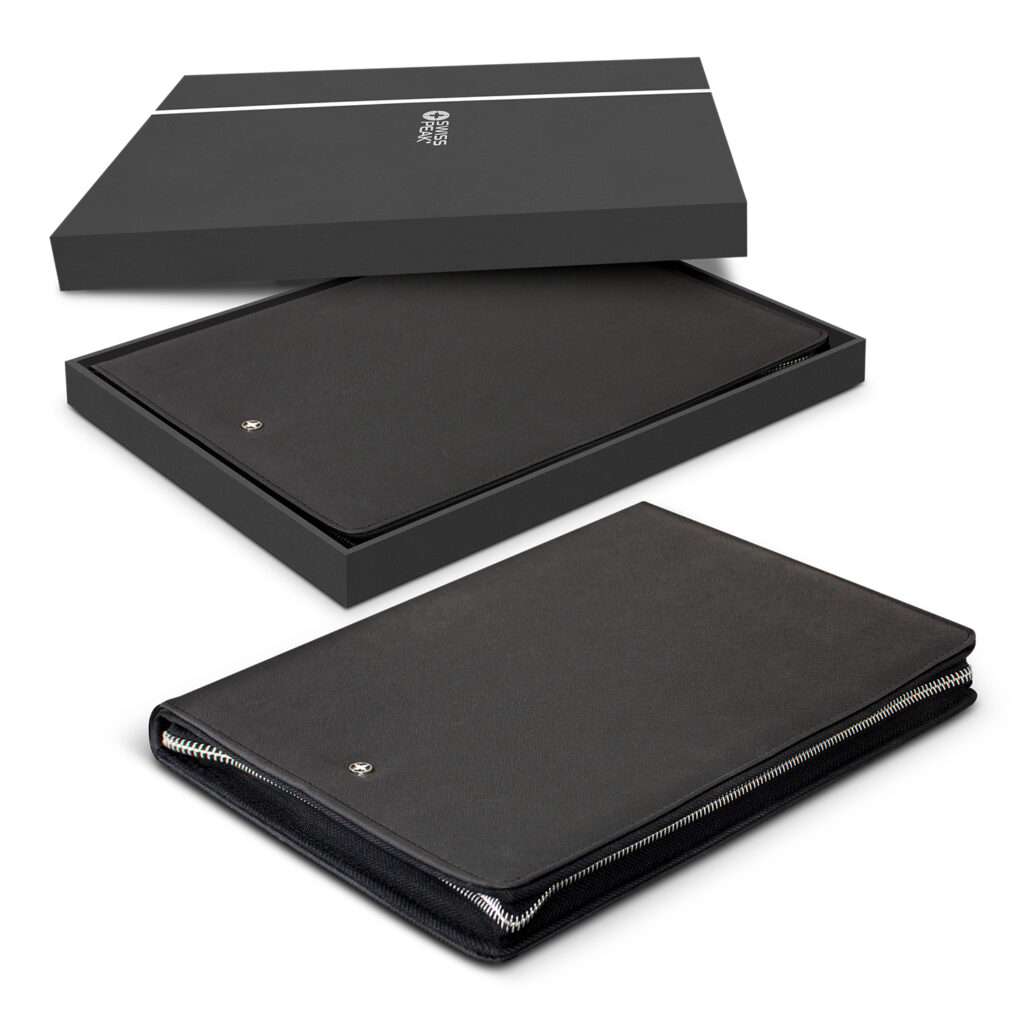
Premium merchandise suits a small, known list and an occasion where quality is part of the message. Live PromoMate examples include BLUNT umbrellas, Swiss Peak bags and Titleist golf products. The point is not to spend more for its own sake; it is to choose something the recipient would be pleased to own without the logo.
Where premium makes sense
- VIP client onboarding or renewal.
- Board, partner, service or staff-recognition milestones.
- Keynote and speaker gifts.
- A tightly selected group of high-value prospects after a real conversation—not every person walking past the stand.
Premium is easiest to ruin with oversized branding. A restrained engrave, deboss or embroidery position often protects the product’s appeal better than filling the available area. Our printing versus embroidery guide explains how the decoration method affects detail, feel and durability.
Christmas is when most businesses mix tiers: something premium for key clients and a smaller gift for everyone else. Our corporate Christmas gifts guide has ideas for each group and the order-by timing.
Real examples from the PromoMate catalogue


When mixing tiers is the smarter order
A single event can have three audiences. Treating them all the same either wastes money or wastes an opportunity.
- General visitors: a useful budget item that can be distributed quickly.
- Booked meetings or qualified leads: a mid-tier product connected to the conversation.
- Key clients, speakers or decision-makers: a reserved premium item, handed over deliberately.
The same logic works for staff programs: a consistent mid-tier onboarding kit for everyone, with premium recognition at genuine milestones. It is clearer and usually more defensible than spreading the whole budget evenly.
If you have settled on a budget but the usual choices feel a bit predictable, browse our eight unusual branded merchandise ideas. The shortlist covers practical desk gifts, puzzles and tech, with print areas and buying considerations to help narrow it down.
If you are still at the blank-page stage, our three-question promotional product guide will help you define the audience, place of use and non-negotiables before you compare price bands.
Seven details to put in the brief
- Who receives it and what do you know about them?
- What should the product help them do?
- How many are required, including a sensible spare quantity?
- What is the total project budget—not only the blank product allowance?
- What artwork must be reproduced, and in how many positions?
- What is the in-hands date and delivery postcode?
- Is there a material, packaging, brand or compliance requirement that must be evidenced?
Send those details at the start and the shortlist gets much better. For timing, see our shipping and lead-time guide. We will confirm the product, stock and branding schedule for the actual job rather than applying a blanket turnaround promise.
A quick note on recycled and “eco” merchandise
Do not pay a premium for a vague environmental label. Ask what component is recycled, the percentage or material standard where available, what packaging is supplied and whether the claim applies to the whole item or one part. The ACCC guidance on environmental and sustainability claims is a useful independent check: claims should be clear, specific and capable of being substantiated.
Frequently asked questions
Is it ever worth ordering premium gear for a trade show?
Not for every walk-up. Premium items can make sense when you have booked meetings or a small list of named decision-makers. Keep a broader budget or mid-tier item for general visitors and reserve the premium pieces for the conversations that justify them.
How do I justify premium spend to my finance team?
Show the intended recipient, reason for the gift, expected use and total project cost. Compare cost per useful, retained item rather than inventing an exact impression count. Premium is defensible when the audience is deliberately selected and the product has a realistic long-term use.
Can I mix tiers in one order?
Yes. A common structure is a useful budget item for broad distribution, mid-tier merchandise for named participants and a limited premium item for key clients or speakers. Tell us the audience numbers for each group and we can quote the project together.
Can a budget product still make my logo look good?
Absolutely, if the product and decoration suit the artwork. A simple one-colour logo can look excellent on a budget pen or tote. Detailed gradients, fine text or several colours may require a different product, a larger print area or another branding method.
How far ahead should I plan?
It depends on stock, quantity, branding method, proof approval and delivery location. Premium does not always mean slower, and budget does not always mean immediate. Share the required date before choosing the product so we can confirm realistic stocked options and flag anything that needs more time.
Practical product sourcing and branding advice for Australian organisations.
Meet the team →
Want a shortlist instead of another catalogue? Send us the audience, quantity, budget, artwork and required date. We’ll recommend realistic options and prepare a free visual proof before anything goes into production. Request a quote and free visual proof →
Recommended products
- Corporate Christmas Gifts Australia: What to Order (and When) for 2026Clients, staff and the long thank-you list each need a different gift. Here’s what to order for Christmas 2026, and when to brief it so it arrives before the office shuts.
- You’ve Been Asked to Sort the Merch. Where Do You Start?Need to sort branded merch? Use three simple questions to choose promotional products for events, staff and clients, then send us your brief for a free proof.
- 8 Unusual Promotional Products People Actually Want to KeepExplore 8 unusual promotional products for Australian teams and clients, with practical branding advice, real product links and free visual proofs.
- How to Choose Promotional Product Colours That Suit Your BrandBold merchandise can look brilliant or completely off-brand. Here is how to choose stock colours, custom PMS products and full-colour decoration with fewer surprises.
- Budget vs Premium Promotional Products: What Actually Earns the Spend?Compare budget, mid-tier and premium promotional products using real PromoMate catalogue examples. Match the item to the audience, use, quantity, artwork and occasion.
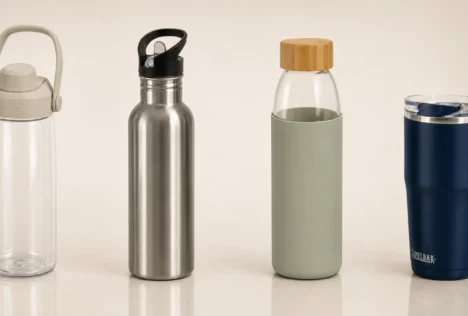
Stainless Steel vs Plastic vs Glass vs Insulated Vacuum: Which Branded Drink Bottle Actually Suits Your Job?
🥤 Branded Drink Bottles: Four Materials, Four Very Different Jobs
G’day. If you’re staring down a quote for branded drink bottles and you’ve got a tab open for stainless steel, another for BPA-free plastic, a third for glass and a fourth for some $28 insulated vacuum number, you’re not alone. This is one of the most common product decisions we get phone calls about at PromoMate, and the wrong call here usually means one of two things: either you’ve overspent by $4,000 on a bottle that ends up in a drawer, or you’ve underspent on something that cracks at the gym and the logo fades after a fortnight.
The honest truth is that all four of these drink bottle options have a job they’re brilliant at, and a job they’re terrible at. This guide is how Dan or Katy would talk you through it over the phone: opinionated, with real per-unit numbers, and a clear winner for each scenario. No fluff, no “depends on your needs”. Let’s pick the right one. If you are weighing the bottle against other branded merchandise, our budget vs premium promotional products guide covers the wider budget, mid-tier and premium decision.
⚡ Quick-Pick TLDR
- Trade show, 500 units, $3 budget each → BPA-free plastic Tritan with pad print.
- Gym, sports club or school sports day, 200 units, $7–10 each → Single-wall stainless with laser engrave.
- Executive corporate gift, 25–50 units, $25+ each → Insulated vacuum double-wall stainless, laser engraved, gift-boxed.
- Cafe loyalty / refill program, 100 units, looks-led → Glass with silicone sleeve, sandblast logo.

🥤 Option 1: BPA-Free Plastic (Tritan, PET, PP)
What it is. A lightweight, food-grade plastic bottle made from Tritan (the clear, glassy stuff that flexes but won’t shatter), PET (the same plastic as a Coke bottle, but reusable-grade), or PP (polypropylene, softer and often opaque). All three are BPA-free by default in the promo industry now; that’s table stakes, not a feature. Branding is almost always done with a single-colour or multi-colour pad print, which sits on the surface of the bottle and is sealed clear.
Where it shines. Big runs, tight budgets. Think trade show booths, uni open days, footy club season giveaways, festival hydration stations, real estate letterbox drops, gym membership signup packs. Anywhere you need 500-plus bottles in your customer’s hands and the per-unit budget is sub-$5. Tritan in particular looks deceptively premium — you can print full-colour logos that pop, and it’s surprisingly durable for what it costs.
Where it falls down. The pad print is the weak link. Run it through a dishwasher 30-40 times and the logo will start to lift at the edges. Plastic also doesn’t read “premium” no matter how you brand it, so it’s the wrong call for corporate gifting where the bottle is the only thing the recipient sees. And on hot mine sites or in cars left in the Perth sun, cheaper grades of plastic can develop a flavour over time.
Cost positioning: budget. Expect $2 to $6 per unit at 100+ quantities, including a single-colour pad print one position. A 750ml Tritan sports bottle with a flip-top lid and your logo printed one colour usually lands around $3.20–$4.50 each at 250 units. PET screw-cap bottles can drop under $2.50 at 500+ if you stick to a basic shape. For a real product example, the Rivia RPET Bottle is a 600ml BPA-free recycled PET option with order breaks starting at 50.
⚙️ Option 2: Single-Wall Stainless Steel
What it is. A one-layer 304-grade or 18/8 stainless steel bottle. No insulation, no double wall, just a solid metal tube with a screw or sports lid. Branding is almost always laser engraved, which burns a permanent, slightly darker mark into the steel surface. The engraved mark itself is permanent, although many bottles are still marked hand-wash only to protect the lid and painted finish. It’s the branding method we always push customers toward when they’re going stainless.
Where it shines. Gyms, sports clubs, schools, council giveaways, charity events, real estate closing gifts at the lower end. It’s the sweet spot bottle. Feels properly substantial in the hand, the laser engrave looks classy at any quantity, and you get a real “this is a quality item” reaction without paying vacuum-flask prices. A school netball team carrying 80 engraved stainless bottles to interschool comp looks the part. A footy club rolling them out as a pre-season hydration kit looks even better.
Where it falls down. Single-wall means temperature transfers straight through. Pour cold water in and the outside of the bottle gets cold and sweaty, which is a problem in a conference satchel, fine in a gym bag. Pour hot tea in and you’ll burn your hand. So it’s not a coffee bottle, and it’s not the bottle to hand to a mining crew expecting their water to stay cold to smoko. Also, laser engrave is single-tone. If your logo only works in full colour, this isn’t your option.
Cost positioning: mid. Roughly $5 to $12 per unit at 100+, laser engrave one position included or nearly so. A 600ml stainless bidon-style bottle with a sports lid runs about $6.50–$8.50 each at 150 units engraved. Step up to a 750ml screw-cap with bamboo lid and you’re closer to $10–$12. Setup for the laser is usually $40–$60 one-off. The 900ml Solana Bottle is a solid single-wall stainless example, with a carry handle, laser-engraving option and order breaks from 25.
🧪 Option 3: Glass with Silicone Sleeve
What it is. A borosilicate glass bottle (the same heat-resistant glass used in kitchen lab gear and good coffee plungers), wrapped in a coloured silicone sleeve that protects it from knocks and gives you a colour-match option for your brand. Lid is usually bamboo or stainless. Branding is done either by sandblast (a frosted, etched look directly into the glass) or screen print onto the silicone sleeve. Sandblast looks the most premium; the screen print is cheaper and lets you do colour.
Where it shines. Cafes running loyalty refill programs, wellness brands, yoga studios, sustainability-led corporates, naturopaths, premium events where the bottle itself is part of the brand story. Glass tastes neutral, no plastic flavour or metallic note, and customers who care about that really care. Sandblast etched on borosilicate glass looks like something from a high-end whisky decanter. It punches above its price in perceived value.
Where it falls down. Glass breaks. The sleeve helps a lot. You can drop it on tiles and usually walk away fine. But throw it in a tradie’s ute or hand it to 200 kids at a sports carnival and you’ll have a problem. It’s also heavier, which makes shipping costs higher per unit. And it’s the slowest of the four to brand because sandblast is a more manual process. Don’t pick glass for fly-in fly-out mining crews or anything heading into a rough environment.
Cost positioning: mid-to-premium. Around $8 to $15 per unit at 100+ with branding. A 500ml borosilicate glass bottle with silicone sleeve and a sandblast logo typically lands $10–$13 each at 100 units. Screen-printed sleeve versions can come in under $10 at the same quantity. MOQs are usually 50-100 units, lower than stainless in some ranges. The 600ml Eden Glass Bottle with Silicone Sleeve is the like-for-like option, with borosilicate glass, a bamboo lid and order breaks from 50.
🔥 Option 4: Insulated Vacuum Double-Wall Stainless
What it is. Two layers of 304 stainless steel with a vacuum-sealed gap between them, sometimes with copper plating on the inner wall for extra thermal resistance. The vacuum is what does the heavy lifting — it stops heat or cold transferring through the bottle wall, so your contents stay icy cold for 24+ hours or piping hot for 12+. Laser engrave is again the gold-standard branding method, though some ranges support full-colour UV print or wrap. Lid options range from screw-cap to flip-straw to push-button coffee lid.
Where it shines. Executive corporate gifts, board onboarding kits, law firm welcome packs, mining and resource crews where water needs to survive a 12-hour shift in 40-degree heat, conference VIP bags, real estate “thank you for listing” gifts for higher-end properties, end-of-year staff appreciation gifts. Anywhere the bottle itself needs to do work for your brand, and where the recipient will use it daily for years. We send vacuum bottles out to FIFO crews up at Pilbara mine sites all the time; they earn their keep there.
Where it falls down. Cost. At $12-$35 a unit, you can’t hand these out as a 500-piece trade show giveaway without blowing your budget into next quarter. They’re also heavier than single-wall stainless, so they’re a worse pick for cyclists or runners. And the premium feel only lands if you’ve spent the money on a known shape. The cheaper vacuum bottles at the low end of the range can look just OK without feeling special, which defeats the point.
Cost positioning: premium. Roughly $12 to $35 per unit at 100+ with laser engrave. A 600ml vacuum bottle with a bamboo lid and one-position engrave usually sits $16–$22 each at 100 units. A 750ml powder-coated vacuum bottle with a flip-straw lid and full wrap branding can push $28–$35 at the same quantity. Step up to gift-boxed sets at 25-50 units and you’re paying $30+ each, but for a 25-piece exec gift run, that’s well-spent money. The 550ml Nexus Vacuum Bottle is a current double-wall stainless example with laser engraving, a dual-opening lid and included gift box.
⚖️ Head-to-Head: The Comparison Table
Here’s the practical side-by-side most buyers actually need before they pick up the phone:
| Factor | BPA-Free Plastic | Single-Wall Stainless | Glass + Silicone | Insulated Vacuum |
|---|---|---|---|---|
| Cost (100+ units) | $2–$6 | $5–$12 | $8–$15 | $12–$35 |
| Branding Method | Pad print (colour) | Laser engrave | Sandblast or screen | Laser engrave / UV wrap |
| Durability | Good — flexes, won’t shatter | Excellent — dents, won’t break | Fair — breaks if dropped hard | Excellent — built like a tank |
| Keeps Drinks Cold? | No (insulation effect minimal) | No | Slightly (glass is poor insulator) | Yes — 24+ hours cold |
| Keeps Drinks Hot? | No | No (and burns your hand) | No | Yes — 12+ hours hot |
| Dishwasher-Safe Logo | Limited (pad print lifts over time) | Yes — engrave is permanent | Yes (sandblast) / Limited (screen) | Yes — engrave is permanent |
| Perceived Value | Functional / promo | Quality, sporty | Premium, lifestyle | High-end corporate |
| Typical MOQ | 100 units | 100 units | 50–100 units | 50–100 units |
| Lead Time | 2–3 weeks | 3–4 weeks | 3–4 weeks | 3–5 weeks |
| Weight | Lightest | Mid | Heaviest | Heavy |
🎯 Which One For Which Job?
This is the part most articles dodge. We won’t. Here are the calls we’d make if it was our money:
Scenario 1: 500-bottle trade show giveaway, $3 per unit budget
BPA-free Tritan with a one-colour pad print. Don’t even think about stainless at this budget — you’ll get half the quantity and the bottles will still get binned at the end of the conference. Save your money, pick a clean shape, brand it well, and move on. See our budget bottle range for the most popular Tritan and PET options.
Scenario 2: 150 bottles for a netball or footy club season kit
Single-wall stainless, laser engraved. The team carries them to every match, the logo never fades through 50 washes, and the per-unit cost lands around $7-9 once you factor in setup. Plastic is too cheap-feeling for a team kit; vacuum bottles are overkill and weigh too much for sports use.
Scenario 3: 25 executive Christmas gifts for top clients, $30+ budget
Insulated vacuum, laser engraved, in a gift box. This is exactly the situation vacuum bottles are made for: a 25-unit run where the bottle has to land like a proper gift, and the recipient will use it on their desk or in their car every day for the next three years. We’d pair it with a bamboo lid for the looks.
Scenario 4: 200 bottles for a FIFO mining crew, Pilbara summer
Insulated vacuum, no question. Single-wall stainless turns into a hand-burner in the cab of a haul truck; plastic warms the water in 20 minutes. A 750ml double-wall vacuum bottle with a screw lid keeps the water cold from pre-start to knockoff. Spec it powder-coated in the company colour, engrave the crew logo, done.
Scenario 5: 100 bottles for a cafe loyalty / refill program
Glass with silicone sleeve, sandblast logo. The cafe vibe is wellness-led, customers care about taste neutrality, and the bottle becomes part of the shop’s brand on the bench. Pair it with one of our reusable coffee cups for a full refill offer.
Scenario 6: 80 bottles for a primary school sports day
Single-wall stainless if budget allows ($8 each), or BPA-free Tritan with a sports lid if the budget is sub-$4. Glass is a no-go around kids, too breakable. Vacuum is overkill at this age group; they’ll lose them within a term anyway. Keep it tough and simple.
🔧 A Quick Word on Branding Methods
Laser engrave is what we recommend on every stainless and vacuum bottle we quote, unless the client specifically wants a colour print. The mark is permanent and looks expensive, even though the bottle itself may still be hand-wash only. The colour comes out slightly darker than the bare metal, usually a clean charcoal grey on raw stainless, or a contrasting tone on powder-coated finishes. One-off setup is $40-$60.

Pad print is the standard for plastic. It transfers ink from a flat plate via a silicone pad onto the curved surface of the bottle. Holds up reasonably well, but it’s not permanent. Heavy dishwasher use will eventually lift the edges. Multi-colour pad prints are possible but each colour adds a setup of $40-$50 and a few cents per unit. For most plastic bottle runs, one or two colours is the sweet spot.
Sandblast (etching) is the premium method for glass. A stencil masks the bottle and abrasive grit blasts away the surface, leaving a frosted etched logo that’s part of the glass itself. Won’t ever come off. Looks brilliant. Slower and more manual than other methods, so lead times are slightly longer.
Screen print on silicone sleeve is the cheaper glass-bottle option. You’re printing onto the rubber wrap, not the glass itself, so colour is unlimited but the print is only as durable as the sleeve. Fine for cafe and lifestyle use; not what we’d pick for daily heavy use.
❓ Frequently Asked Questions
Q: Are all your bottles BPA-free?
Yes. Every plastic bottle we sell is BPA-free as standard — that’s been an industry baseline for years now, not a feature anyone should be charging extra for. Tritan, PET and PP options are all certified food-grade.
Q: How long does the laser engrave actually last on a stainless bottle?
The engraved mark itself is permanent because it is cut into the metal rather than printed on top, so it can outlast the painted finish. Follow the individual bottle’s care instructions, though: many are marked hand-wash only to protect the coating, seals and lid. We’ve had customers come back five years later to reorder for the same crew and the original engravings still look fine.
Q: Can you do full-colour logos on stainless or vacuum bottles?
Yes, via UV digital print or wrap on most vacuum bottle ranges. The trade-off is that UV print isn’t quite as bulletproof as laser engrave — heavy dishwasher use over a couple of years can wear it. For corporate gifts that get hand-washed, full-colour is fine. For sports clubs, we’d still push you toward engrave.
Q: What’s the smallest order quantity you’ll do?
Most bottle ranges start at 50 units, with the most common MOQ being 100. A few vacuum and glass ranges go down to 25 if you want a really small executive run, but the per-unit cost climbs at that scale. Send us your numbers and we’ll point you toward the best-fit range.
Q: How long from order to delivery?
Standard production is 3-4 weeks for stainless and vacuum, 2-3 weeks for plastic, and 3-4 weeks for glass. We’ll send you a digital visual proof within a day or two of order, you sign off, and the clock starts from there. Rush is possible on some ranges — just ask.
15+ years in promotional products, specialising in product sourcing and branding method selection for Australian businesses.
Meet the team →
🎯 Want help picking the right bottle?
Tell us the quantity, the use case, and a rough budget, and we’ll send a free visual proof of your logo on the option you’re leaning toward. No obligation, no sales pitch, and we actually answer emails.
👉 Get a Free Quote →
Have a browse of our full branded drink bottle range, the broader drinkware category, or our sports and fitness picks for clubs and gyms.
Why Every Business Needs a Brand Style Guide (And How PromoMate Can Help Bring It to Life)
In today’s fast-paced, content-saturated world, your brand is more than just your logo or colour palette. It’s your voice, your identity, and the lasting impression you leave with customers. But with teams growing, outsourcing on the rise, and content being produced at lightning speed, how do you make sure your brand remains consistent and instantly recognisable?
The answer: a brand style guide.
Whether you’re a startup looking to build your identity or a well-established business refreshing your look, having a brand style guide is essential. At PromoMate.com.au, we’ve worked with businesses of all sizes to not only help develop their brand identity but also translate it into high-quality promotional products that reinforce that identity in the real world.
Let’s break down what a brand style guide is, why you need one, and how we at PromoMate can help make your brand more than just a logo—something people remember, relate to, and trust.
What Is a Brand Style Guide?
A brand style guide, sometimes called a brand book or brand bible, is a document that outlines how your brand looks, feels, and speaks. It’s your go-to reference for anyone creating anything for your business—from marketing materials to social media posts, and yes, even branded merchandise.
A good brand style guide typically includes:
- Logo usage: Where and how your logo should appear, minimum sizes, colour variations, and what not to do.
- Colour palette: Your official brand colours in HEX, RGB, and CMYK codes.
- Typography: The fonts and typefaces that represent your brand’s personality.
- Voice and tone: How your brand speaks—whether it’s professional and authoritative or friendly and casual.
- Imagery and iconography: Guidelines around photos, graphics, and icons that reflect your style.
- Applications: Real-world examples like business cards, emails, website layouts, and yes—promotional products!
Why Your Business Needs One
1. Consistency Builds Trust
Imagine seeing a business with mismatched logos, clashing colours, and inconsistent messaging across platforms. Not very confidence-inspiring, right? Consistency tells your audience that you’re professional, reliable, and worth their attention. A style guide ensures every designer, marketer, or supplier is singing from the same song sheet.
2. Makes Onboarding Easier
Hiring a new designer or marketer? Working with freelancers or external vendors? A brand guide reduces the guesswork and gets everyone on the same page from day one. It saves time, money, and prevents embarrassing slip-ups.
3. Brings Your Brand to Life Across Channels
Your brand doesn’t just live online. It’s on pens, notebooks, shirts, coffee cups, tote bags, and trade show booths. And that’s where we come in…
How Promomate Brings Your Brand Style to Life
At Promomate.com.au, we’re not just another promotional products company. We’re branding specialists who understand the importance of making your business look and feel cohesive across every touchpoint.
Here’s how we help:
✅ Product Recommendations That Match Your Style
Got a clean, minimalist brand? We’ll help you find sleek products that reflect that aesthetic—think matte finish bottles, subtle engraving, or eco-friendly packaging. More playful or vibrant? We’ve got bold colours, quirky gifts, and custom options to match your vibe. Your brand guide tells us who you are—we help amplify that with products that make sense.
✅ Printing and Design Accuracy
Ever seen your brand colours look “off” on merchandise? It happens when you work with suppliers who don’t understand colour matching. We use your exact Pantone and CMYK values to ensure your branded merch looks just like it should. Your brand guide gives us the details—we take care of the rest.
✅ Logo Placement Done Right
Your logo is sacred (and expensive to build!). We know exactly how to position it so it’s visible, balanced, and never distorted. We refer to your usage guidelines to keep everything consistent, classy, and compliant.
✅ Campaign Support
Planning a product launch, event, or staff onboarding? We work with your branding guidelines to design curated promo kits and campaigns that feel like a true extension of your marketing. From concept to delivery, we align with your brand’s style every step of the way.
The Real-World Impact of Consistent Branding
Let’s say you hand out 500 tote bags at a conference. People carry them around all day, some even take them home. That’s hundreds of mini-billboards walking around, showing off your logo, colour scheme, and personality. If your style is spot-on and matches what people see online or in-store, that reinforces recognition.
And recognition leads to trust. Trust leads to sales.
That’s the power of promotional products done properly—backed by a solid brand style guide and a supplier who respects it.
Not Sure Where to Start?
If you don’t have a brand style guide yet, we can help you get started with a basic one. We’ve seen firsthand what works (and what doesn’t) when it comes to translating branding into merchandise and real-world marketing.
And if you already have one—perfect! Let’s work together to make sure every piece of branded gear you produce matches the vision you’ve crafted.
Final Thoughts
Your brand is your story. A good style guide makes sure it’s told the same way, every time, everywhere.
At Promomate.com.au, we take your branding seriously. We combine our deep knowledge of promotional products with a respect for your visual identity, tone, and values to create merch that does more than just look good—it speaks volumes.
Ready to bring your brand to life with merch that aligns with your style guide?
👉 Let’s chat at Promomate.com.au
Artwork preparation, visual proofing, and customer consultation — helping businesses get their branding right first time.
Meet the team →