
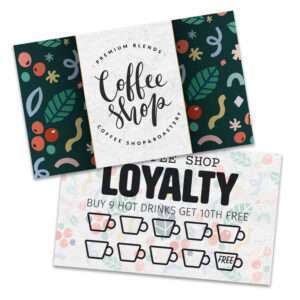
Full Colour Loyalty Cards
1 colour · Digital print
From $0.42 ea ex GST
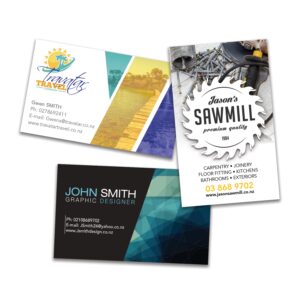
Full Colour Business Cards
1 colour · Digital print
From $0.32 ea ex GST
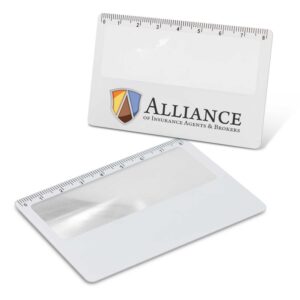
Card Magnifier
1 colour · Pad print or digital print
From $0.91 ea ex GST
Give the Card One Clear Job
A business card can introduce a person, prompt a booking, support a quote or help someone find the right contact after an event. A loyalty card has a different job: bringing a customer back and making the reward easy to understand. Decide what action matters most before filling every millimetre with job titles, services, icons and a miniature autobiography.
What Belongs on a Business Card?
- Name and role: use the wording clients recognise, particularly where a team has several service areas.
- Contact details: include the channels someone should actually use, with email addresses, phone numbers and web addresses checked carefully.
- Brand cues: keep the logo, type and colours consistent with the rest of the business without sacrificing legibility.
- A useful next step: a short service line, booking URL or QR code can help, provided it has breathing room and is tested at printed size.
Paper, Finish and Two-Sided Printing
The current full-colour business and loyalty cards use sturdy 350gsm art board, with a gloss finish listed for the business card and a matt finish for the loyalty card. Both sides can carry colour, and edge-to-edge artwork is available on those products. That gives the reverse a proper purpose rather than leaving it blank by habit.
A gloss surface can make colour feel lively, while matt is often easier to write or stamp on when the exact stock and coating support it. If a loyalty card needs stamps, signatures or handwriting, confirm the intended marking tool and leave an uncluttered area for it. A beautiful reward grid nobody can mark is really just a tiny poster.
Set Artwork Up for Print
Use the product template and include bleed where requested so colour can trim cleanly to the edge. Keep important text inside the safe area. Supply vector logos where possible and use high-resolution images at final size. Small type, hairline rules and low-contrast text may look acceptable on a large screen but struggle once reduced to a card.
Colour on paper will not glow like a backlit monitor. Use defined colour values and request guidance when matching a brand colour matters. The Pantone colour guide and printing processes guide explain the basics.
Real-Life Card Briefs
- Trade and field teams: individual contact cards with a clear service area and durable, easy-to-read layout.
- Events: a clean card that connects the conversation to the right person or landing page after everyone leaves.
- Cafes and retail: loyalty cards with simple rules, sensible expiry wording and enough room for stamps or marks.
- Multi-person teams: one controlled design and an accurate data list, proofed name by name before printing.
Proofing, Quantities and Related Print
Business cards can contain several variable details, so confirm spelling, extensions, email domains and QR destinations on every version. Minimums and timing depend on the selected product and artwork. The current full-colour card listings state a specific production period, but always plan from the confirmed quote and read the shipping and lead-time guide.
For the rest of the campaign, compare printed labels and stickers, badges, mailable promotional items and event banners.
Printed Business Card FAQs
Can business cards be printed on both sides?
Yes, the current full-colour business card supports colour on both sides. Use the reverse for a useful service message, QR code or next step rather than repeating the front without a reason.
What artwork should we supply?
Use the template, include bleed where requested and keep important content inside the safe area. Vector logos and high-resolution images give the best starting point, and all contact details should be proofed carefully.
Can you print loyalty cards too?
Yes. The range includes full-colour loyalty cards. Tell us how the reward works and how the card will be marked so the layout leaves practical space for stamps, punches or writing.