
Month: August 2026

How to Choose Promotional Product Colours That Suit Your Brand
🌈 Bright Merch Is Back (and We’re Here for It)
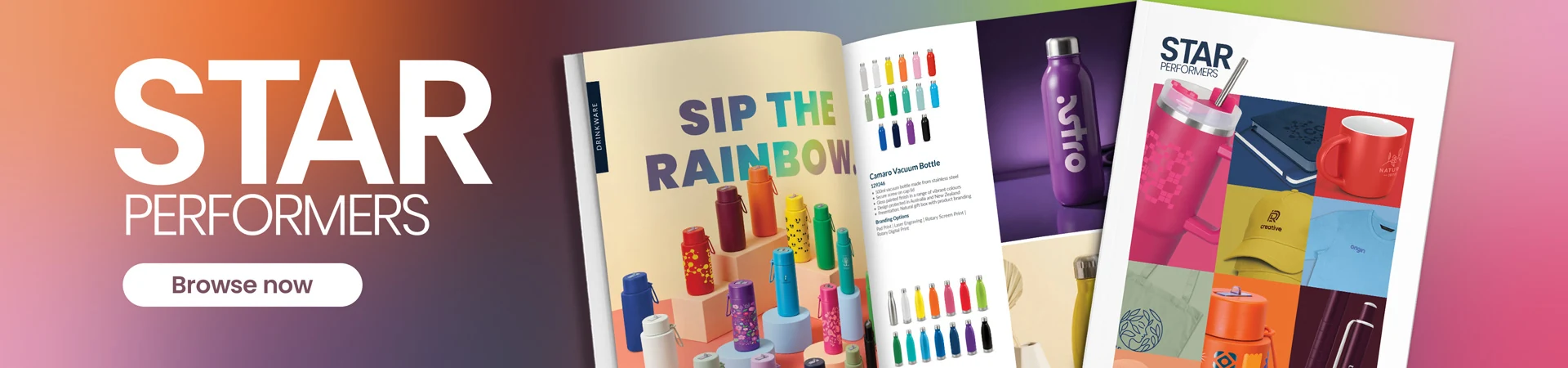
G’day, colour. The latest Star Performers range from Trends is not exactly shy: pinks, oranges, greens, blues and a whole spread of drinkware that looks like somebody tipped a paint chart across the desk. After years of black, navy and white doing most of the heavy lifting in promo, we reckon it is a welcome change.
The right colour gives merch a personality before anyone has even read the logo. It can make a bottle feel sporty, help a giveaway stand out across a busy event, or turn a plain pen into the one everybody pinches from the meeting room. The wrong colour can make a dog’s breakfast of the whole job. The logo disappears, the print looks dull, or five “close enough” blues turn up looking like five different companies.
This is not a breathless “look at all the new stuff” roundup. We want to help you pick a colour that suits the brand, the people receiving it and the place they will actually use it. Have a flick through Star Performers — edition three for ideas, then use this guide before you lock anything in.
🎯 Start With the Job, Not Your Favourite Colour
Here is where buyers come unstuck: they choose the colour they personally like best. A bright purple bottle might be brilliant for a school fun run and completely wrong for a conservative client gift. A matte-black notebook can feel spot-on in an executive pack and disappear into the scenery at a colourful outdoor event.
Before you open the colour chart, ask three things. Who is getting it? Where will they use it? What should it say about your business? A kids’ program can go playful. A construction induction pack needs something practical with branding that can be read in half a second. A design studio can probably get away with the odd curveball because creativity is part of what it sells.
If the product itself is still undecided, start with our guide to choosing promotional products before narrowing the colour. It uses the same audience, setting and must-work questions to turn a loose brief into a shortlist.
A quick colour brief that actually helps:
Audience: staff, clients, students, event visitors or the general public?
Setting: office, site, gym, school, conference or outdoor event?
Brand role: should it feel dependable, energetic, premium, playful or understated?
Practical test: is the logo still clear from an arm’s length away?
That last check matters more than any clever colour theory. If nobody can read the logo, the palette has missed the point.
🧩 Three Ways to Use Colour Without Making a Mess
1. Pick a stock colour that supports the logo
Stock colours are the easy road. The supplier already makes the product in a set range, you pick the best fit and we add the branding. It does not have to be an exact match to feel like your business. Quite often a white, black or neutral product with a crisp logo looks more deliberate than a near-match where the logo quietly vanishes.
The Camaro Vacuum Bottle is a ripper example. It runs from white and soft green through yellow, orange, pink, teal, blues, purple and black. That gives you room to create contrast, match an event theme or colour-code teams without turning the order into a full custom-manufacturing exercise.

2. Match the product itself to a Pantone colour
If your particular blue, green or red is a big part of the brand, custom PMS colouring can be worth the extra planning. PMS stands for Pantone Matching System. It gives everyone one proper colour reference instead of playing a painful game of “no, the other medium blue”. Our Pantone PMS colour chart explains the basics.
The Panama Palette Pen is made to order with a custom PMS barrel in gloss, matte or rubberised finish. It is a good fit when the pens really do need to land in one exact brand colour. It is not the “we forgot the conference is next Friday” option. The current listing states a 38-working-day production lead time, so tell us the required date before we all get attached to it.

3. Use the product as a canvas
Sometimes one tidy logo is not the idea at all. Full-colour decoration is where gradients, photos and proper illustrations get some room to breathe. Done well, the product becomes part of the campaign rather than a blank object with a logo parked on it.
The SPICE Calypso Bottle 500ml — Full Colour gives you a large wrap-style branding area on recycled stainless steel. The catch is time: its current listing states 40 working days for production, with sampling on top. If the event date is fixed, work backwards before you fall in love with the artwork. Future you will be grateful.

🎨 Not sure whether you need a stock colour, PMS match or full-colour print?
Send us the logo, audience, quantity and deadline. We’ll sort through the practical options and prepare a free visual proof before anything goes to production.
👉 Request a Quote →
🖨️ Same Logo, Different Surface, Different Result
Every job has two colour decisions hiding in it: the colour of the thing and the colour we put on the thing. White print on a navy bottle does not behave like navy print on a white bottle. A full-colour digital print does a very different job from a one-colour pad print, laser engrave or screen print.
Then the surface joins the party. Gloss paint bounces light around. Matte and rubberised finishes soften it. Recycled fibres can have flecks and natural variation. Laser engraving usually exposes the material underneath instead of adding ink. None of that means something has gone wrong; it just changes the finished look.
If colour accuracy matters, send the original vector logo and the PMS references from the brand guide. Please do not choose a colour from a screenshot on somebody’s website and call it done. Screens use RGB light; physical branding uses ink, thread, film or exposed material. Our artwork requirements page covers the useful file formats, and the printing processes guide shows what each method is good at.
Before approving the proof, check:
the product colour and logo colour have enough contrast;
small text and fine details suit the decoration method;
the artwork position makes sense when the product is held or used;
the proof lists the right PMS references, finish and colour split;
the approved version is the one everybody is actually working from.
🛍️ What We’d Actually Shortlist
Need plenty of colours without the custom-production palaver? Start with the Camaro Vacuum Bottle. If capacity, lid style or insulation matters more than the exact shade, have a look through the wider branded drink bottles range instead.
Want a smaller everyday giveaway? The Vistro Stylus Pen — Colour Match comes in a broad bright range and has a touchscreen stylus. It works nicely for staff teams, school houses or an event palette people should recognise at a glance. The wider pens and pencils range has quieter options if the rainbow is not your cup of tea.
Got artwork that needs room? The full-colour Calypso bottle is the loud option. The Ashbury Full Colour Notebook gives you customisable inner pages as well as cover branding. Its current listing states a 40-working-day production lead time, so this is one for the planned campaign, not a Tuesday-afternoon rescue mission.
Want something people will show each other? The Chameleon Colour Changing Cup reacts to ice-cold drinks. That makes it good fun at festivals and brand activations. The strength of the colour change varies with temperature and conditions, so buy it for the interaction, not laboratory-perfect uniformity.
📋 The No-Drama Colour Brief
You do not need to turn up with a perfect production brief. Honestly, a useful first email can be five lines. Tell us what the merch is for, who gets it, roughly how many you need, the deadline and the budget. Attach the best logo file you can find and any official brand colours. We’ll take it from there.
If you want a colour mix, give us the split. Fifty blue, fifty green and fifty orange is much more useful than “a mixture would be nice”. If exact matching matters, mention it early. Custom PMS products and samples can take a fair bit longer than stock-colour items.
Then have a proper look at the visual proof. Check the contrast, size and position, not just whether we used the right logo file. Too loud? We can shrink the print, calm down the base colour or look at engraving. Too flat? A better product colour may do more than blowing the logo up another 20%.
And no, making a proof does not lock you into the order. The whole point is to catch the wobbly idea before it becomes twelve cartons of wobbly merchandise. We actually answer our emails, and if the first option is wrong, we’ll sort it. No dramas.
Reviewed by Daniel Galpin, Co-Founder at PromoMate Australia
Product selection, print-method fit, colour planning and reducing order risk for Australian businesses, schools, events and trade teams. Meet the team →
❓ Frequently Asked Questions About Promotional Product Colours
1. Do promotional products need to match my brand colour exactly?
Nope. Exact matching is useful when colour is a big part of the brand, but contrast and readability matter more on plenty of products. A neutral item with a clean logo can look more consistent than a near-match that feels accidental. Custom PMS colouring is there when “close enough” genuinely will not do.
2. What is a PMS colour?
PMS stands for Pantone Matching System. It gives printers and suppliers a shared reference for a specific colour. It is more reliable than choosing a shade by eye on a screen, although the product material, finish and decoration method can still affect how the colour looks in real life.
3. Can I mix product colours in one order?
Often, yes, but it depends on the product, available stock and how the supplier packs it. Give us the exact split when you ask for the quote. We will check it properly rather than promising that every colour can be mixed in whatever quantity takes your fancy.
4. What artwork should I supply for accurate colour matching?
An AI, EPS or print-ready vector PDF is ideal, along with the PMS references from your brand guide. Only got a PNG or an ancient PDF somebody found in the shared drive? Send it anyway. We will check it and tell you what needs sorting before production.
5. Is full-colour branding the same as PMS colour matching?
No. Full-colour decoration reproduces artwork using a multi-colour print process and suits gradients, photos and illustrations. PMS matching targets a specified spot colour. The right choice depends on the artwork, product and print method; some jobs use both ideas in different ways.
6. Will the colour on my screen match the finished product?
Not perfectly. Screens emit RGB light, while physical products use inks, coatings, thread or exposed material. Monitor settings also vary. A digital proof is excellent for checking placement and scale, but if precise colour is critical, ask whether a physical sample or pre-production sample is available.
7. How much extra time does custom colour take?
It varies by product. Made-to-order colour and full-colour products can take several working weeks before freight. For example, the current Panama Palette Pen listing states 38 working days and the full-colour SPICE Calypso Bottle states 40 working days, with sampling additional. Confirm the current schedule before planning an event around it.
Got a colour question we did not cover? Ping us at [email protected] or send through a quote request. No dramas if the artwork is not tidy yet; send what you have.
⭐ Ready to Put Some Colour to Work?
Pick something the recipient will use first. Then use colour to make it feel like yours. Have a browse through the Star Performers brochure, or send us the rough brief and we’ll narrow the options down. Free visual proof, no obligation, and a real person at the other end of the email. Easy.
📚 More from PromoMate
- Corporate Christmas Gifts Australia: What to Order (and When) for 2026

- You’ve Been Asked to Sort the Merch. Where Do You Start?
- 8 Unusual Promotional Products People Actually Want to Keep
- How to Choose Promotional Product Colours That Suit Your Brand
- Budget vs Premium Promotional Products: What Actually Earns the Spend?
- Stainless Steel vs Plastic vs Glass vs Insulated Vacuum: Which Branded Drink Bottle Actually Suits Your Job?
- Cotton vs Non-Woven vs Jute vs Recycled Cotton Tote Bags
- Do Promotional Products Actually Work? What the 2025 APPA Data Shows



Budget vs Premium Promotional Products: What Actually Earns the Spend?
Budget promotional products are not automatically wasteful, and premium merchandise is not automatically a better investment. The useful question is simpler: which item is most likely to be kept and used by this particular recipient?
That is not just supplier talk. The latest Australasian Promotional Products Association research found usefulness was the leading reason people kept branded merchandise. PromoMate’s summary of the same Australian and New Zealand research explains what the APPA findings mean for a real merchandise brief.
The short answer
- Choose budget when reach matters, the audience is broad and the product still performs a genuine job.
- Choose mid-tier for named groups such as staff, conference delegates and club members who should use the item regularly.
- Choose premium for a small, known recipient list and a moment where quality says something important about the relationship.
- Mix tiers when one campaign includes walk-ups, qualified prospects and a handful of high-value people.
Start with the job, not the price band
Price per unit is only one part of the cost. Artwork setup, branding method, number of print positions, quantity, stock location and freight can change the final quote. A cheap item that is ignored is expensive waste; a dearer item given to the wrong person is just expensive.
| Decision | Question to ask | What it changes |
|---|---|---|
| Recipient | Do we know their name, role or interests? | The more specific the recipient, the more targeted the product should be. |
| Use | Where and how often could they use it? | Frequent, visible use can justify a better-built item. |
| Quantity | Do we need 50, 500 or 5,000? | Setup and decoration costs spread differently at each volume. |
| Artwork | Is the logo simple, detailed, full colour or position-sensitive? | The decoration method may narrow the product choice before price does. |
| Date | When and where must it arrive? | A suitable stocked product beats an ideal product that misses the event. |
| Brand risk | What will poor quality communicate here? | Client gifts and staff gear usually carry more reputation risk than a broad giveaway. |
A note on prices: this guide deliberately avoids fixed dollar bands. Catalogue prices and supplier stock change, and the cheapest undecorated product is not the final branded price. Use the linked products as real examples, then request a current quote for your quantity, artwork and destination.
Budget promotional products: broad reach with a clear purpose
The budget tier is for useful, straightforward products supplied at volume: branded pens, simple keyrings, event drinkware, basic lanyards and lightweight promotional tote bags. The best budget product does one job well and gives the artwork enough room to remain clear.
Where budget makes sense
- Trade-show and open-day walk-ups where the audience is large and not individually qualified.
- Community events and campaigns where distribution matters more than presentation.
- Useful inserts inside a larger delegate or welcome pack.
- Repeat-use basics such as pens, provided the writing quality and print remain acceptable.
Budget falls down when the item feels disposable, the product cannot reproduce the artwork properly or the recipient expects a more considered gesture. Before ordering, ask for a sample where practical and check the actual print area—not just the blank product photo.
Why I still have one old stubby holder
I’ve still got a stubby holder from an old job that I left years ago. It isn’t valuable in the usual sense, but I’ve had it for ages. Every time it comes out, it takes me back to that job, the people and some very good times. That bit of sentimental value is why it has never ended up in the bin.
That is a useful reminder: retention is not only about materials or unit price. A simple classic 5mm neoprene stubby holder can earn a long life when it becomes connected to a team, an event or a shared moment. The memory does the premium work, even when the product itself sits in the budget tier.
Mid-tier promotional products: the everyday workhorse
Mid-tier merchandise is usually the strongest all-round choice for a known group. Think vacuum bottles and reusable drinkware, hardcover notebooks, practical bags and structured branded caps. These products can feel considered without turning every recipient into a major investment.
Where mid-tier makes sense
- Staff onboarding and safety or site packs.
- Named conference delegates, speakers and sponsors.
- Club-member packs and participant kits.
- Client thank-yous where the relationship is established but the list is still sizeable.
This is also the tier where product specifications matter. Check lid design, capacity, binding, fabric weight, closures and care instructions. A product can look premium in a catalogue image and still be wrong for the way your audience will use it.
Premium promotional products: fewer people, higher stakes
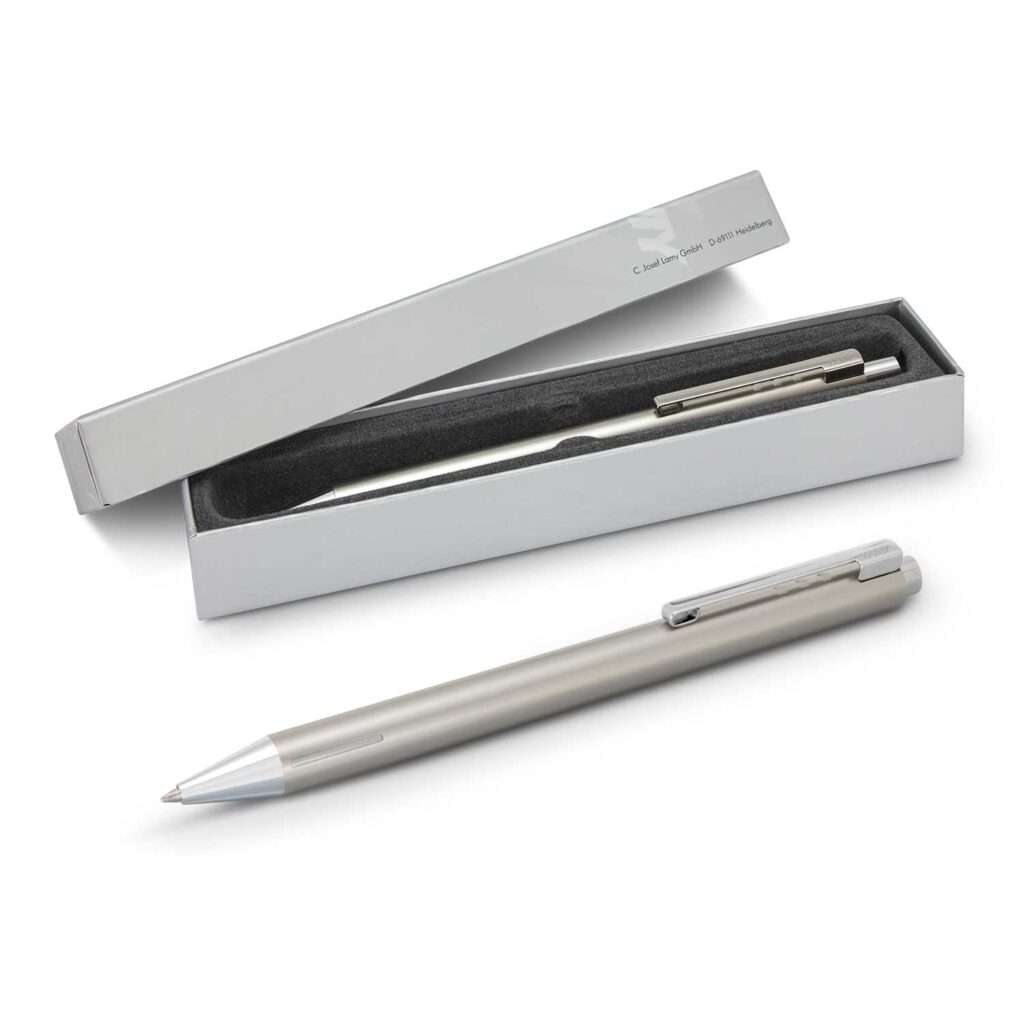
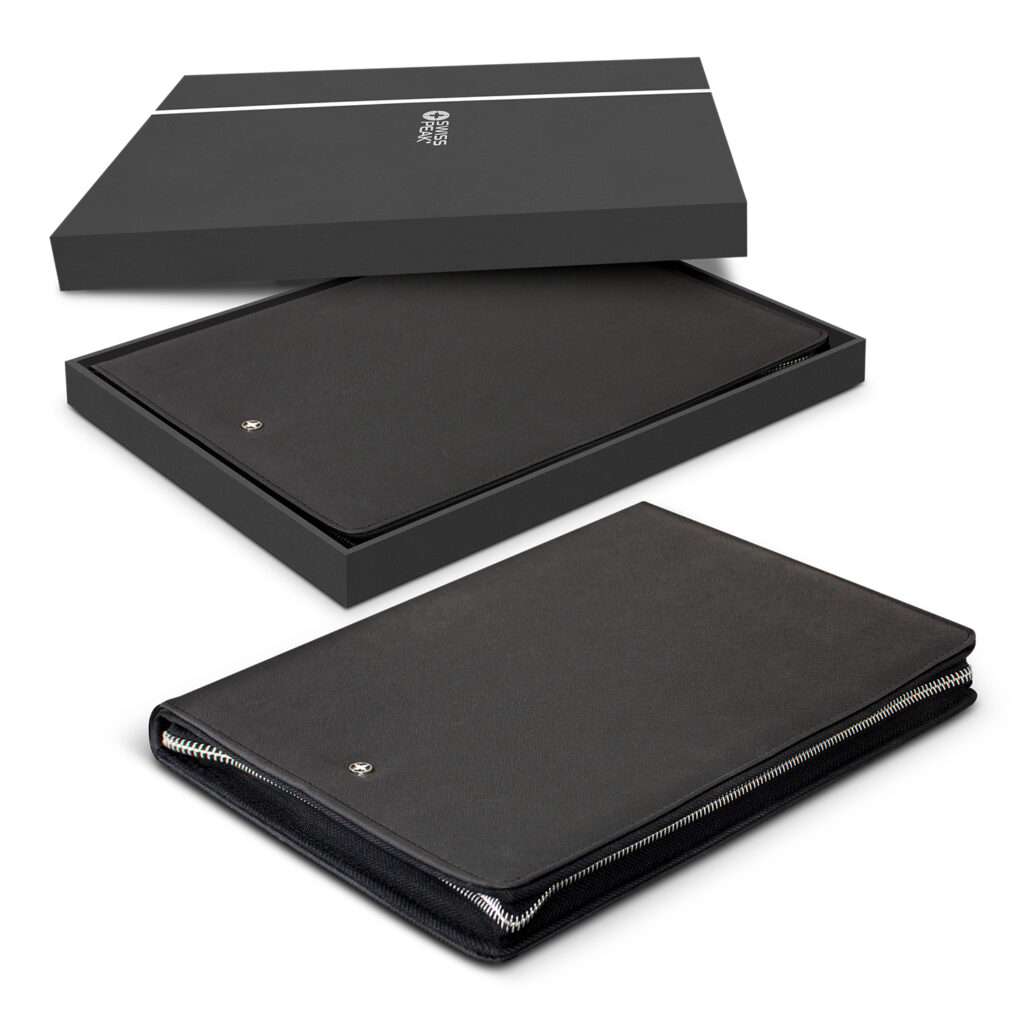
Premium merchandise suits a small, known list and an occasion where quality is part of the message. Live PromoMate examples include BLUNT umbrellas, Swiss Peak bags and Titleist golf products. The point is not to spend more for its own sake; it is to choose something the recipient would be pleased to own without the logo.
Where premium makes sense
- VIP client onboarding or renewal.
- Board, partner, service or staff-recognition milestones.
- Keynote and speaker gifts.
- A tightly selected group of high-value prospects after a real conversation—not every person walking past the stand.
Premium is easiest to ruin with oversized branding. A restrained engrave, deboss or embroidery position often protects the product’s appeal better than filling the available area. Our printing versus embroidery guide explains how the decoration method affects detail, feel and durability.
Christmas is when most businesses mix tiers: something premium for key clients and a smaller gift for everyone else. Our corporate Christmas gifts guide has ideas for each group and the order-by timing.
Real examples from the PromoMate catalogue


When mixing tiers is the smarter order
A single event can have three audiences. Treating them all the same either wastes money or wastes an opportunity.
- General visitors: a useful budget item that can be distributed quickly.
- Booked meetings or qualified leads: a mid-tier product connected to the conversation.
- Key clients, speakers or decision-makers: a reserved premium item, handed over deliberately.
The same logic works for staff programs: a consistent mid-tier onboarding kit for everyone, with premium recognition at genuine milestones. It is clearer and usually more defensible than spreading the whole budget evenly.
If you have settled on a budget but the usual choices feel a bit predictable, browse our eight unusual branded merchandise ideas. The shortlist covers practical desk gifts, puzzles and tech, with print areas and buying considerations to help narrow it down.
If you are still at the blank-page stage, our three-question promotional product guide will help you define the audience, place of use and non-negotiables before you compare price bands.
Seven details to put in the brief
- Who receives it and what do you know about them?
- What should the product help them do?
- How many are required, including a sensible spare quantity?
- What is the total project budget—not only the blank product allowance?
- What artwork must be reproduced, and in how many positions?
- What is the in-hands date and delivery postcode?
- Is there a material, packaging, brand or compliance requirement that must be evidenced?
Send those details at the start and the shortlist gets much better. For timing, see our shipping and lead-time guide. We will confirm the product, stock and branding schedule for the actual job rather than applying a blanket turnaround promise.
A quick note on recycled and “eco” merchandise
Do not pay a premium for a vague environmental label. Ask what component is recycled, the percentage or material standard where available, what packaging is supplied and whether the claim applies to the whole item or one part. The ACCC guidance on environmental and sustainability claims is a useful independent check: claims should be clear, specific and capable of being substantiated.
Frequently asked questions
Is it ever worth ordering premium gear for a trade show?
Not for every walk-up. Premium items can make sense when you have booked meetings or a small list of named decision-makers. Keep a broader budget or mid-tier item for general visitors and reserve the premium pieces for the conversations that justify them.
How do I justify premium spend to my finance team?
Show the intended recipient, reason for the gift, expected use and total project cost. Compare cost per useful, retained item rather than inventing an exact impression count. Premium is defensible when the audience is deliberately selected and the product has a realistic long-term use.
Can I mix tiers in one order?
Yes. A common structure is a useful budget item for broad distribution, mid-tier merchandise for named participants and a limited premium item for key clients or speakers. Tell us the audience numbers for each group and we can quote the project together.
Can a budget product still make my logo look good?
Absolutely, if the product and decoration suit the artwork. A simple one-colour logo can look excellent on a budget pen or tote. Detailed gradients, fine text or several colours may require a different product, a larger print area or another branding method.
How far ahead should I plan?
It depends on stock, quantity, branding method, proof approval and delivery location. Premium does not always mean slower, and budget does not always mean immediate. Share the required date before choosing the product so we can confirm realistic stocked options and flag anything that needs more time.
Practical product sourcing and branding advice for Australian organisations.
Meet the team →
Want a shortlist instead of another catalogue? Send us the audience, quantity, budget, artwork and required date. We’ll recommend realistic options and prepare a free visual proof before anything goes into production. Request a quote and free visual proof →
Recommended products
- Corporate Christmas Gifts Australia: What to Order (and When) for 2026Clients, staff and the long thank-you list each need a different gift. Here’s what to order for Christmas 2026, and when to brief it so it arrives before the office shuts.
- You’ve Been Asked to Sort the Merch. Where Do You Start?Need to sort branded merch? Use three simple questions to choose promotional products for events, staff and clients, then send us your brief for a free proof.
- 8 Unusual Promotional Products People Actually Want to KeepExplore 8 unusual promotional products for Australian teams and clients, with practical branding advice, real product links and free visual proofs.
- How to Choose Promotional Product Colours That Suit Your BrandBold merchandise can look brilliant or completely off-brand. Here is how to choose stock colours, custom PMS products and full-colour decoration with fewer surprises.
- Budget vs Premium Promotional Products: What Actually Earns the Spend?Compare budget, mid-tier and premium promotional products using real PromoMate catalogue examples. Match the item to the audience, use, quantity, artwork and occasion.
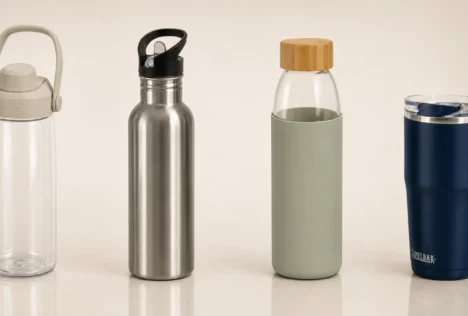
Stainless Steel vs Plastic vs Glass vs Insulated Vacuum: Which Branded Drink Bottle Actually Suits Your Job?
🥤 Branded Drink Bottles: Four Materials, Four Very Different Jobs
G’day. If you’re staring down a quote for branded drink bottles and you’ve got a tab open for stainless steel, another for BPA-free plastic, a third for glass and a fourth for some $28 insulated vacuum number, you’re not alone. This is one of the most common product decisions we get phone calls about at PromoMate, and the wrong call here usually means one of two things: either you’ve overspent by $4,000 on a bottle that ends up in a drawer, or you’ve underspent on something that cracks at the gym and the logo fades after a fortnight.
The honest truth is that all four of these drink bottle options have a job they’re brilliant at, and a job they’re terrible at. This guide is how Dan or Katy would talk you through it over the phone: opinionated, with real per-unit numbers, and a clear winner for each scenario. No fluff, no “depends on your needs”. Let’s pick the right one. If you are weighing the bottle against other branded merchandise, our budget vs premium promotional products guide covers the wider budget, mid-tier and premium decision.
⚡ Quick-Pick TLDR
- Trade show, 500 units, $3 budget each → BPA-free plastic Tritan with pad print.
- Gym, sports club or school sports day, 200 units, $7–10 each → Single-wall stainless with laser engrave.
- Executive corporate gift, 25–50 units, $25+ each → Insulated vacuum double-wall stainless, laser engraved, gift-boxed.
- Cafe loyalty / refill program, 100 units, looks-led → Glass with silicone sleeve, sandblast logo.

🥤 Option 1: BPA-Free Plastic (Tritan, PET, PP)
What it is. A lightweight, food-grade plastic bottle made from Tritan (the clear, glassy stuff that flexes but won’t shatter), PET (the same plastic as a Coke bottle, but reusable-grade), or PP (polypropylene, softer and often opaque). All three are BPA-free by default in the promo industry now; that’s table stakes, not a feature. Branding is almost always done with a single-colour or multi-colour pad print, which sits on the surface of the bottle and is sealed clear.
Where it shines. Big runs, tight budgets. Think trade show booths, uni open days, footy club season giveaways, festival hydration stations, real estate letterbox drops, gym membership signup packs. Anywhere you need 500-plus bottles in your customer’s hands and the per-unit budget is sub-$5. Tritan in particular looks deceptively premium — you can print full-colour logos that pop, and it’s surprisingly durable for what it costs.
Where it falls down. The pad print is the weak link. Run it through a dishwasher 30-40 times and the logo will start to lift at the edges. Plastic also doesn’t read “premium” no matter how you brand it, so it’s the wrong call for corporate gifting where the bottle is the only thing the recipient sees. And on hot mine sites or in cars left in the Perth sun, cheaper grades of plastic can develop a flavour over time.
Cost positioning: budget. Expect $2 to $6 per unit at 100+ quantities, including a single-colour pad print one position. A 750ml Tritan sports bottle with a flip-top lid and your logo printed one colour usually lands around $3.20–$4.50 each at 250 units. PET screw-cap bottles can drop under $2.50 at 500+ if you stick to a basic shape. For a real product example, the Rivia RPET Bottle is a 600ml BPA-free recycled PET option with order breaks starting at 50.
⚙️ Option 2: Single-Wall Stainless Steel
What it is. A one-layer 304-grade or 18/8 stainless steel bottle. No insulation, no double wall, just a solid metal tube with a screw or sports lid. Branding is almost always laser engraved, which burns a permanent, slightly darker mark into the steel surface. The engraved mark itself is permanent, although many bottles are still marked hand-wash only to protect the lid and painted finish. It’s the branding method we always push customers toward when they’re going stainless.
Where it shines. Gyms, sports clubs, schools, council giveaways, charity events, real estate closing gifts at the lower end. It’s the sweet spot bottle. Feels properly substantial in the hand, the laser engrave looks classy at any quantity, and you get a real “this is a quality item” reaction without paying vacuum-flask prices. A school netball team carrying 80 engraved stainless bottles to interschool comp looks the part. A footy club rolling them out as a pre-season hydration kit looks even better.
Where it falls down. Single-wall means temperature transfers straight through. Pour cold water in and the outside of the bottle gets cold and sweaty, which is a problem in a conference satchel, fine in a gym bag. Pour hot tea in and you’ll burn your hand. So it’s not a coffee bottle, and it’s not the bottle to hand to a mining crew expecting their water to stay cold to smoko. Also, laser engrave is single-tone. If your logo only works in full colour, this isn’t your option.
Cost positioning: mid. Roughly $5 to $12 per unit at 100+, laser engrave one position included or nearly so. A 600ml stainless bidon-style bottle with a sports lid runs about $6.50–$8.50 each at 150 units engraved. Step up to a 750ml screw-cap with bamboo lid and you’re closer to $10–$12. Setup for the laser is usually $40–$60 one-off. The 900ml Solana Bottle is a solid single-wall stainless example, with a carry handle, laser-engraving option and order breaks from 25.
🧪 Option 3: Glass with Silicone Sleeve
What it is. A borosilicate glass bottle (the same heat-resistant glass used in kitchen lab gear and good coffee plungers), wrapped in a coloured silicone sleeve that protects it from knocks and gives you a colour-match option for your brand. Lid is usually bamboo or stainless. Branding is done either by sandblast (a frosted, etched look directly into the glass) or screen print onto the silicone sleeve. Sandblast looks the most premium; the screen print is cheaper and lets you do colour.
Where it shines. Cafes running loyalty refill programs, wellness brands, yoga studios, sustainability-led corporates, naturopaths, premium events where the bottle itself is part of the brand story. Glass tastes neutral, no plastic flavour or metallic note, and customers who care about that really care. Sandblast etched on borosilicate glass looks like something from a high-end whisky decanter. It punches above its price in perceived value.
Where it falls down. Glass breaks. The sleeve helps a lot. You can drop it on tiles and usually walk away fine. But throw it in a tradie’s ute or hand it to 200 kids at a sports carnival and you’ll have a problem. It’s also heavier, which makes shipping costs higher per unit. And it’s the slowest of the four to brand because sandblast is a more manual process. Don’t pick glass for fly-in fly-out mining crews or anything heading into a rough environment.
Cost positioning: mid-to-premium. Around $8 to $15 per unit at 100+ with branding. A 500ml borosilicate glass bottle with silicone sleeve and a sandblast logo typically lands $10–$13 each at 100 units. Screen-printed sleeve versions can come in under $10 at the same quantity. MOQs are usually 50-100 units, lower than stainless in some ranges. The 600ml Eden Glass Bottle with Silicone Sleeve is the like-for-like option, with borosilicate glass, a bamboo lid and order breaks from 50.
🔥 Option 4: Insulated Vacuum Double-Wall Stainless
What it is. Two layers of 304 stainless steel with a vacuum-sealed gap between them, sometimes with copper plating on the inner wall for extra thermal resistance. The vacuum is what does the heavy lifting — it stops heat or cold transferring through the bottle wall, so your contents stay icy cold for 24+ hours or piping hot for 12+. Laser engrave is again the gold-standard branding method, though some ranges support full-colour UV print or wrap. Lid options range from screw-cap to flip-straw to push-button coffee lid.
Where it shines. Executive corporate gifts, board onboarding kits, law firm welcome packs, mining and resource crews where water needs to survive a 12-hour shift in 40-degree heat, conference VIP bags, real estate “thank you for listing” gifts for higher-end properties, end-of-year staff appreciation gifts. Anywhere the bottle itself needs to do work for your brand, and where the recipient will use it daily for years. We send vacuum bottles out to FIFO crews up at Pilbara mine sites all the time; they earn their keep there.
Where it falls down. Cost. At $12-$35 a unit, you can’t hand these out as a 500-piece trade show giveaway without blowing your budget into next quarter. They’re also heavier than single-wall stainless, so they’re a worse pick for cyclists or runners. And the premium feel only lands if you’ve spent the money on a known shape. The cheaper vacuum bottles at the low end of the range can look just OK without feeling special, which defeats the point.
Cost positioning: premium. Roughly $12 to $35 per unit at 100+ with laser engrave. A 600ml vacuum bottle with a bamboo lid and one-position engrave usually sits $16–$22 each at 100 units. A 750ml powder-coated vacuum bottle with a flip-straw lid and full wrap branding can push $28–$35 at the same quantity. Step up to gift-boxed sets at 25-50 units and you’re paying $30+ each, but for a 25-piece exec gift run, that’s well-spent money. The 550ml Nexus Vacuum Bottle is a current double-wall stainless example with laser engraving, a dual-opening lid and included gift box.
⚖️ Head-to-Head: The Comparison Table
Here’s the practical side-by-side most buyers actually need before they pick up the phone:
| Factor | BPA-Free Plastic | Single-Wall Stainless | Glass + Silicone | Insulated Vacuum |
|---|---|---|---|---|
| Cost (100+ units) | $2–$6 | $5–$12 | $8–$15 | $12–$35 |
| Branding Method | Pad print (colour) | Laser engrave | Sandblast or screen | Laser engrave / UV wrap |
| Durability | Good — flexes, won’t shatter | Excellent — dents, won’t break | Fair — breaks if dropped hard | Excellent — built like a tank |
| Keeps Drinks Cold? | No (insulation effect minimal) | No | Slightly (glass is poor insulator) | Yes — 24+ hours cold |
| Keeps Drinks Hot? | No | No (and burns your hand) | No | Yes — 12+ hours hot |
| Dishwasher-Safe Logo | Limited (pad print lifts over time) | Yes — engrave is permanent | Yes (sandblast) / Limited (screen) | Yes — engrave is permanent |
| Perceived Value | Functional / promo | Quality, sporty | Premium, lifestyle | High-end corporate |
| Typical MOQ | 100 units | 100 units | 50–100 units | 50–100 units |
| Lead Time | 2–3 weeks | 3–4 weeks | 3–4 weeks | 3–5 weeks |
| Weight | Lightest | Mid | Heaviest | Heavy |
🎯 Which One For Which Job?
This is the part most articles dodge. We won’t. Here are the calls we’d make if it was our money:
Scenario 1: 500-bottle trade show giveaway, $3 per unit budget
BPA-free Tritan with a one-colour pad print. Don’t even think about stainless at this budget — you’ll get half the quantity and the bottles will still get binned at the end of the conference. Save your money, pick a clean shape, brand it well, and move on. See our budget bottle range for the most popular Tritan and PET options.
Scenario 2: 150 bottles for a netball or footy club season kit
Single-wall stainless, laser engraved. The team carries them to every match, the logo never fades through 50 washes, and the per-unit cost lands around $7-9 once you factor in setup. Plastic is too cheap-feeling for a team kit; vacuum bottles are overkill and weigh too much for sports use.
Scenario 3: 25 executive Christmas gifts for top clients, $30+ budget
Insulated vacuum, laser engraved, in a gift box. This is exactly the situation vacuum bottles are made for: a 25-unit run where the bottle has to land like a proper gift, and the recipient will use it on their desk or in their car every day for the next three years. We’d pair it with a bamboo lid for the looks.
Scenario 4: 200 bottles for a FIFO mining crew, Pilbara summer
Insulated vacuum, no question. Single-wall stainless turns into a hand-burner in the cab of a haul truck; plastic warms the water in 20 minutes. A 750ml double-wall vacuum bottle with a screw lid keeps the water cold from pre-start to knockoff. Spec it powder-coated in the company colour, engrave the crew logo, done.
Scenario 5: 100 bottles for a cafe loyalty / refill program
Glass with silicone sleeve, sandblast logo. The cafe vibe is wellness-led, customers care about taste neutrality, and the bottle becomes part of the shop’s brand on the bench. Pair it with one of our reusable coffee cups for a full refill offer.
Scenario 6: 80 bottles for a primary school sports day
Single-wall stainless if budget allows ($8 each), or BPA-free Tritan with a sports lid if the budget is sub-$4. Glass is a no-go around kids, too breakable. Vacuum is overkill at this age group; they’ll lose them within a term anyway. Keep it tough and simple.
🔧 A Quick Word on Branding Methods
Laser engrave is what we recommend on every stainless and vacuum bottle we quote, unless the client specifically wants a colour print. The mark is permanent and looks expensive, even though the bottle itself may still be hand-wash only. The colour comes out slightly darker than the bare metal, usually a clean charcoal grey on raw stainless, or a contrasting tone on powder-coated finishes. One-off setup is $40-$60.

Pad print is the standard for plastic. It transfers ink from a flat plate via a silicone pad onto the curved surface of the bottle. Holds up reasonably well, but it’s not permanent. Heavy dishwasher use will eventually lift the edges. Multi-colour pad prints are possible but each colour adds a setup of $40-$50 and a few cents per unit. For most plastic bottle runs, one or two colours is the sweet spot.
Sandblast (etching) is the premium method for glass. A stencil masks the bottle and abrasive grit blasts away the surface, leaving a frosted etched logo that’s part of the glass itself. Won’t ever come off. Looks brilliant. Slower and more manual than other methods, so lead times are slightly longer.
Screen print on silicone sleeve is the cheaper glass-bottle option. You’re printing onto the rubber wrap, not the glass itself, so colour is unlimited but the print is only as durable as the sleeve. Fine for cafe and lifestyle use; not what we’d pick for daily heavy use.
❓ Frequently Asked Questions
Q: Are all your bottles BPA-free?
Yes. Every plastic bottle we sell is BPA-free as standard — that’s been an industry baseline for years now, not a feature anyone should be charging extra for. Tritan, PET and PP options are all certified food-grade.
Q: How long does the laser engrave actually last on a stainless bottle?
The engraved mark itself is permanent because it is cut into the metal rather than printed on top, so it can outlast the painted finish. Follow the individual bottle’s care instructions, though: many are marked hand-wash only to protect the coating, seals and lid. We’ve had customers come back five years later to reorder for the same crew and the original engravings still look fine.
Q: Can you do full-colour logos on stainless or vacuum bottles?
Yes, via UV digital print or wrap on most vacuum bottle ranges. The trade-off is that UV print isn’t quite as bulletproof as laser engrave — heavy dishwasher use over a couple of years can wear it. For corporate gifts that get hand-washed, full-colour is fine. For sports clubs, we’d still push you toward engrave.
Q: What’s the smallest order quantity you’ll do?
Most bottle ranges start at 50 units, with the most common MOQ being 100. A few vacuum and glass ranges go down to 25 if you want a really small executive run, but the per-unit cost climbs at that scale. Send us your numbers and we’ll point you toward the best-fit range.
Q: How long from order to delivery?
Standard production is 3-4 weeks for stainless and vacuum, 2-3 weeks for plastic, and 3-4 weeks for glass. We’ll send you a digital visual proof within a day or two of order, you sign off, and the clock starts from there. Rush is possible on some ranges — just ask.
15+ years in promotional products, specialising in product sourcing and branding method selection for Australian businesses.
Meet the team →
🎯 Want help picking the right bottle?
Tell us the quantity, the use case, and a rough budget, and we’ll send a free visual proof of your logo on the option you’re leaning toward. No obligation, no sales pitch, and we actually answer emails.
👉 Get a Free Quote →
Have a browse of our full branded drink bottle range, the broader drinkware category, or our sports and fitness picks for clubs and gyms.