
Tag Archives: Branded
Screen Printing vs Embroidery: Which Branding Method Is Right for Your Merch?
🖨️ Two Methods, Very Different Results — Let’s Sort It Out
G’day. If you’ve been going back and forth between screen printing and embroidery for your next merch order, you’re not alone. It’s one of the most common questions we get from marketing managers, event coordinators, and business owners who want their brand to look sharp — but don’t want to get the decision wrong and end up with 300 polos that feel off.
The honest answer is: both methods are excellent. But they suit very different jobs. Picking the wrong one for your application is where buyers come unstuck — and that usually means either overspending, or ending up with a result that doesn’t hold up the way you expected.
This guide breaks it down so you can stop second-guessing and just order the right thing.
🎨 What Is Screen Printing?
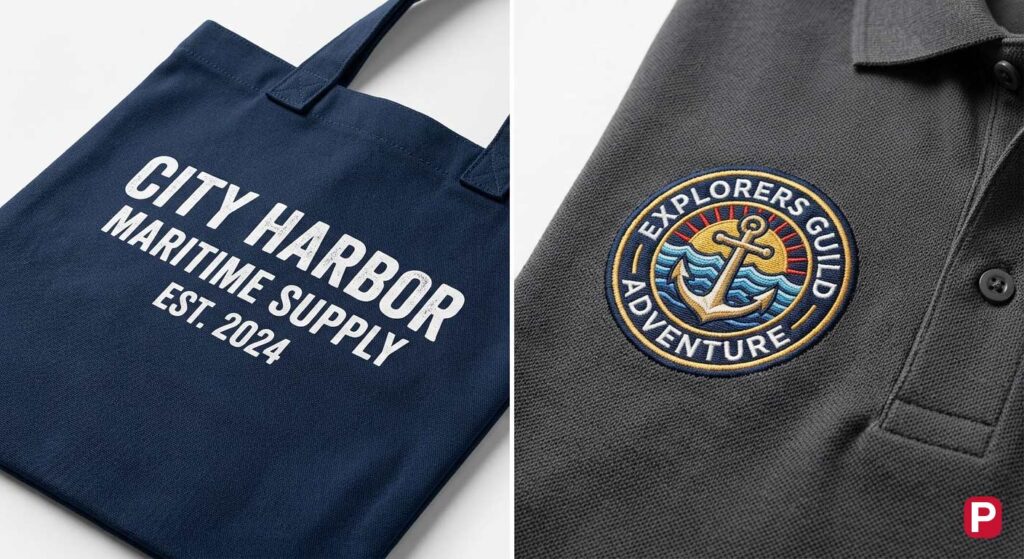
Screen printing (also called silk screening) pushes ink directly through a mesh stencil onto the surface of the garment or product. Each colour in your design gets its own screen, and the ink is pressed through layer by layer. The result is a flat, vibrant print that sits on top of the fabric.
It’s been the workhorse of the promo products industry for decades. When you’re ordering in volume and you want bold colours that don’t fade after a few washes, screen printing does the job. Think: event t-shirts, trade show giveaways, corporate uniforms for larger teams, tote bags at conferences, and school spirit gear.
Screen printing works best on smooth, flat surfaces — cotton and cotton-blend t-shirts are the sweet spot. It struggles on highly textured fabrics or curved surfaces where the ink can’t sit flat.
Screen Printing: Quick Facts
Best for: T-shirts, tote bags, flat cotton garments, high-volume runs
Colour limit: Typically 1–6 spot colours per design (each colour = a separate screen)
Setup cost: $20–$50 per colour per screen (amortised over the run)
Minimum quantities: Usually 24–50 units to make setup costs worth it
Wash durability: Excellent — 50+ washes with minimal fading if cured properly
Turnaround: 7–14 business days standard; rush available at a premium
🧵 What Is Embroidery?
Embroidery stitches your logo directly into the fabric using thread. A machine reads a digitised version of your artwork and punches it into the garment stitch by stitch. The result is a raised, textured design that looks and feels premium — the kind of logo you’d see on a well-made polo or a structured cap.
If screen printing is the loud mate at the pub, embroidery is the one in the nice polo. It’s the standard choice for corporate workwear, team uniforms, hospitality and hotel staff, sporting clubs, and anyone who wants their branded gear to feel professional rather than promotional. Browse our full embroidered polos, corporate jackets, and branded t-shirts to get a feel for what suits embroidery best.
Embroidery suits thicker, structured fabrics — polos, fleeces and pullovers, jackets, beanies, and caps. It holds up really well in the wash because the thread is woven into the fabric itself — nothing to peel, crack, or fade in the sun.
The trade-off is detail. Embroidery handles solid shapes and block lettering really well, but fine gradients, tiny text under 6mm, or highly intricate artwork can lose definition in the stitching. Your artwork will need to be digitised (converted into a stitch file), which is a one-off setup cost.
Embroidery: Quick Facts
Best for: Polos, caps, jackets, beanies, fleece, structured workwear
Colour limit: No real limit — each thread colour is just a thread change, though very high thread counts add cost
Setup cost: $50–$120 one-off digitising fee (charged once, reused forever)
Minimum quantities: Often as low as 12 units — more viable for small teams
Wash durability: Exceptional — the thread is part of the fabric and won’t fade or peel
Turnaround: 7–14 business days; digitising adds 1–2 days if artwork is new
🎯 Not sure which method suits your order?
Tell us what you’re after and we’ll point you in the right direction — no obligation, no sales pitch.
👉 Get a Free Quote →
⚖️ Screen Printing vs Embroidery: Head-to-Head
Here’s the practical side-by-side comparison most buyers actually need:
| Factor | Screen Printing | Embroidery |
|---|---|---|
| Setup Cost | $20–$50 per colour (screens) | $50–$120 one-off digitising fee |
| Cost Per Unit (50 units) | $4–$8 per print location | $6–$12 per garment |
| Cost Per Unit (200+ units) | $2–$4 per print location | $4–$8 per garment |
| Minimum Qty | 24–50 units typical | 12–24 units typical |
| Colour Range | 1–6 spot colours (per run) | Unlimited thread colours |
| Fine Detail | Excellent (halftones, gradients possible) | Limited — 6mm+ text, solid shapes |
| Wash Durability | Very good (50+ washes) | Exceptional (doesn’t fade or peel) |
| Texture / Feel | Flat, smooth print surface | Raised, tactile stitched finish |
| Perceived Value | Good for casual/event use | Higher — looks corporate and premium |
| Best Fabrics | Cotton, cotton-poly, flat surfaces | Polo, fleece, cap, jacket, beanie |
| Turnaround | 7–14 business days | 7–14 business days (+ digitising if new) |
| Large Designs | Full chest prints, oversized graphics — yes | Limited to ~30cm x 30cm max stitch area |
📦 Real-World Scenarios: Which Method Wins?
Scenario 1: You’re ordering 500 tote bags for a trade show or conference
Screen printing, every time. The setup cost gets spread across 500 units, your cost per bag drops significantly, and screen printing on canvas tote bags produces a clean, vibrant result. Embroidery on a flat canvas bag looks awkward and costs more per unit without adding value.
Scenario 2: You need 50 embroidered polos for your team
Embroidery wins outright. Fifty polo shirts is a very reasonable quantity for embroidery — the one-off digitising cost is a minor add-on across the run, and the result looks genuinely professional. A screen print on a polo fabric can feel cheap by comparison, especially on textured pique fabric where the ink sits unevenly. Have a look through our corporate polo range — the pique and performance knits there are designed to take embroidery cleanly.
Scenario 3: School sports carnival, 200 cotton t-shirts, tight budget
Screen printing is the clear answer. Simple 1–2 colour design, flat cotton fabric, large quantity — screen printing is made for exactly this. Cost per shirt drops well below embroidery at volume, and bold sporting colours pop on cotton. See our cotton t-shirt range for the most popular event and team styles.
Scenario 4: A construction company ordering 30 high-vis jackets for a site crew
Embroidery. Full stop. High-vis jackets go through serious punishment — constant washing, outdoor wear, abrasion. Embroidery holds up to that in a way no print can match. Reflective and hi-vis fabrics don’t always take ink cleanly either, so embroidery is the safer bet for quality and compliance. Most of our branded jackets and outerwear is purpose-built for embroidered branding — drill cotton, ripstop, and reflective panels included.
Scenario 5: A restaurant chain ordering 150 structured caps for front-of-house staff
Embroidery on structured caps is the standard for a reason. The curved surface of a cap makes screen printing difficult and inconsistent. Embroidery sits cleanly on a cap front panel, looks polished, and survives daily wear in a kitchen or hospitality environment without any drama. Pair caps with embroidered aprons and staff polos for a fully on-brand front-of-house look.
🔧 Other Branding Methods Worth Knowing
Screen printing and embroidery cover most jobs, but they’re not the only game in town. A few other methods worth knowing about:
Pad Printing — The go-to for hard products like pens, USB drives, keyrings, and stress balls. It uses a silicone pad to transfer ink onto irregular curved surfaces where screen printing can’t reach. Cost-effective at volume, typically 1–4 colours.
Laser Engraving — Burns your logo permanently into the surface of metal, wood, leather, or glass products. Think metal water bottles, timber USB drives, and leather journals. You get a clean, permanent mark with no ink involved. No colour options, but it won’t wear off either. Looks sharp on gift-style drinkware and corporate gift products.
DTF (Direct to Film) / Heat Transfer — A newer method that prints your design onto a special film, then heat-presses it onto the garment. It handles full-colour, photographic designs without the screen setup costs of screen printing. Great for short runs (under 24 pieces), highly detailed artwork, or garments that don’t suit screen printing. The finish is slightly different to screen printing — a bit more plasticky to touch — but it’s come a long way in recent years.
Dye Sublimation — Infuses the dye directly into polyester fibres, producing full-colour, edge-to-edge prints with no hand feel at all. It’s ideal for sportswear, performance teamwear, sublimated polo shirts, and any product where you need an all-over photographic print. The catch: it only works on white or very light polyester. Cotton won’t take it. See more about all available methods on our Printing Processes page.
🚫 Common Mistakes Buyers Make When Choosing a Branding Method
Choosing screen printing because it sounds cheaper — without checking setup costs. Screen printing has per-colour setup costs. A 4-colour logo on a 24-unit run can cost more per garment than embroidery once you factor in screen charges. Always ask for a full quote including setup before assuming one method is cheaper.
Trying to embroider a logo with tiny text or fine gradients. If your logo has detail that looks great on a business card, it won’t necessarily translate to embroidery. Thread can’t replicate halftones or text under about 6mm high. Your supplier should flag this — but a good rule of thumb is to simplify your logo artwork before embroidering. Check our Artwork Requirements page if you’re unsure what format to supply.
Ordering the wrong garment fabric for the chosen method. Screen printing on a textured fleece or embroidered pique polo with a large print area are both recipes for disappointing results. Match your method to your fabric — your supplier should be steering you right on this from the start.
Waiting too long to order. “Standard” lead times of 7–14 business days assume your artwork is ready to go and approved quickly. Factor in digitising time for embroidery, back-and-forth on artwork approvals, and freight. If your event is in three weeks, contact your supplier now — not next week.
Assuming more colours always looks better. A clean 1–2 colour screen print often looks sharper and more professional than a 6-colour design that’s been crammed onto a shirt. Strong, simple branding almost always outperforms complex artwork on apparel. Less is usually more.
🧢 Need a second opinion on your artwork or method choice?
Send us your logo and tell us what you’re printing on — we’ll let you know what’ll work and what won’t before you commit to anything.
👉 Request a Free Quote →
Reviewed by Daniel Galpin, Co-Founder at PromoMate Australia
15+ years supplying branded merchandise for Australian businesses, events, schools, and trade teams. Focus areas: product selection, print method fit, MOQ planning, and reducing order risk. Meet the team →
❓ Frequently Asked Questions
1. Is embroidery always more expensive than screen printing?
Not necessarily — it depends on quantity and design complexity. For small runs (under 50 units), embroidery can actually be cheaper because screen printing setup costs hit harder at low quantities. At 200+ units, screen printing typically wins on per-unit cost. For accurate comparisons, always get a quote for both methods side by side.
2. Can I embroider a full-colour logo with gradients?
Not directly. Embroidery works in solid thread colours — it can’t replicate gradients or photographic detail the way screen printing or DTF can. A skilled digitiser can approximate gradients using techniques like blending stitches, but it won’t be a pixel-perfect match. If your logo has complex colour work, screen printing or DTF will serve you better.
3. How long does embroidery last compared to screen printing?
Embroidery lasts longer, full stop. The thread is part of the fabric — it can’t peel, crack, or fade the way ink can. A well-executed screen print on quality cotton will still look good after 50+ washes, but embroidery on a polo or jacket will typically outlast the garment itself. For daily-wear workwear, embroidery wins on durability every time.
4. What’s the minimum order quantity for screen printing?
Most Australian suppliers require a minimum of 24–50 units for screen printing to be cost-effective. Below that, the per-colour screen setup fees make the per-unit cost very high. For small runs under 24 units, DTF or heat transfer is usually the better option — lower setup costs and no minimum quantity restrictions.
5. Can screen printing be done on caps or beanies?
Caps are not ideal for screen printing due to the curved surface — embroidery is the standard for structured caps. Beanies can take either method, but embroidery tends to hold its shape better on the stretchy knit fabric. Flat-knit beanies with a clean fabric face can be screen printed with care, but check with your supplier first.
6. Do I need to pay the digitising fee every time I reorder?
No — digitising is a one-off cost. Once your logo has been digitised into a stitch file, that file is stored and used for every subsequent embroidery order. You only pay the digitising fee once. Keep this in mind when you’re comparing first-order costs to reorder costs — embroidery gets cheaper relative to the first order on every reorder you place.
7. Which method is better for dark-coloured garments?
Both methods work well on dark fabrics, but in different ways. Screen printing on dark garments usually requires an underbase layer of white ink to make colours pop — this adds cost and slightly increases the thickness of the print. Embroidery doesn’t have this issue at all since thread colour shows regardless of the garment colour. For dark polos or jackets, embroidery is often the cleaner choice.
8. How should I supply my artwork for embroidery vs screen printing?
For both methods, a vector file (.ai, .eps, or .svg) or a high-resolution PNG (300dpi+) is the starting point. For embroidery, your artwork gets converted into a digitised stitch file — your supplier handles this, but simple, clean artwork makes for better embroidery results. For screen printing, Pantone colour codes help ensure accurate colour matching. Check our full Artwork Requirements guide for everything you need to know before submitting.
📋 What to Send Your Supplier (5-Minute Checklist)
After 15+ years of quoting jobs, the orders that go smoothest are the ones where the buyer briefs us properly up front. Half the back-and-forth on a typical job is because something basic was missing in the first email. If you can answer these six questions before you reach out, you’ll get a sharper quote, faster turnaround, and far fewer surprises.
Quantity — exact, not “around 100”. Per-unit pricing changes at every quantity bracket.
Garment type and fabric — polo, t-shirt, hoodie, cap. If you’ve spotted a specific product, send the link.
Print method preference (or “open to suggestions”) — being open often saves you money.
Number of print locations — front only, front + back, sleeve, etc. Each location is a separate cost.
Logo file — vector if you have it. If not, send what you’ve got and we’ll let you know.
Deadline — the date you need the goods in hand, not the dispatch date. Build in a buffer.
A clean brief like that gets a turnaround quote in hours, not days. A vague enquiry triggers a chain of clarifying emails — and your event keeps creeping closer.
💡 Three Things Most Buyers Don’t Realise
1. You can mix methods on the same order. Plenty of jobs use embroidered polos for the management team and screen-printed t-shirts for the broader staff or event giveaway. Same artwork, same brand consistency, very different per-unit cost. Worth asking about if your order has multiple use cases.
2. Embroidery thread colours can be matched to your Pantone — but not always exactly. Thread comes in a finite range (usually Madeira or Isacord charts). A good supplier will match the closest shade and send you a thread sample for approval before stitching the run. If brand colour exactness is critical, ask for the thread match upfront.
3. Print position matters more than print method. A logo placed too low on a polo, or too far to the side on a cap, can ruin an otherwise great job. Always ask for a digital mockup showing exact placement and dimensions before approving production. Reputable suppliers will provide this as standard — if they don’t, push for it.
Still not sure which way to go? No dramas — just send us a message with your order details and we’ll give you a straight answer. We’re not going to push you toward the more expensive option; we’ll tell you what actually makes sense for what you’re trying to do.
📩 Email us at [email protected] — or hit the button below and we’ll get back to you within one business day.