
Tag Archives: Branded Merchandise Perth
Screen Printing vs Embroidery: Which Branding Method Is Right for Your Merch?
🖨️ Two Methods, Very Different Results — Let’s Sort It Out
G’day. If you’ve been going back and forth between screen printing and embroidery for your next merch order, you’re not alone. It’s one of the most common questions we get from marketing managers, event coordinators, and business owners who want their brand to look sharp — but don’t want to get the decision wrong and end up with 300 polos that feel off.
The honest answer is: both methods are excellent. But they suit very different jobs. Picking the wrong one for your application is where buyers come unstuck — and that usually means either overspending, or ending up with a result that doesn’t hold up the way you expected.
This guide breaks it down so you can stop second-guessing and just order the right thing.
🎨 What Is Screen Printing?
Screen printing (also called silk screening) pushes ink directly through a mesh stencil onto the surface of the garment or product. Each colour in your design gets its own screen, and the ink is pressed through layer by layer. The result is a flat, vibrant print that sits on top of the fabric.
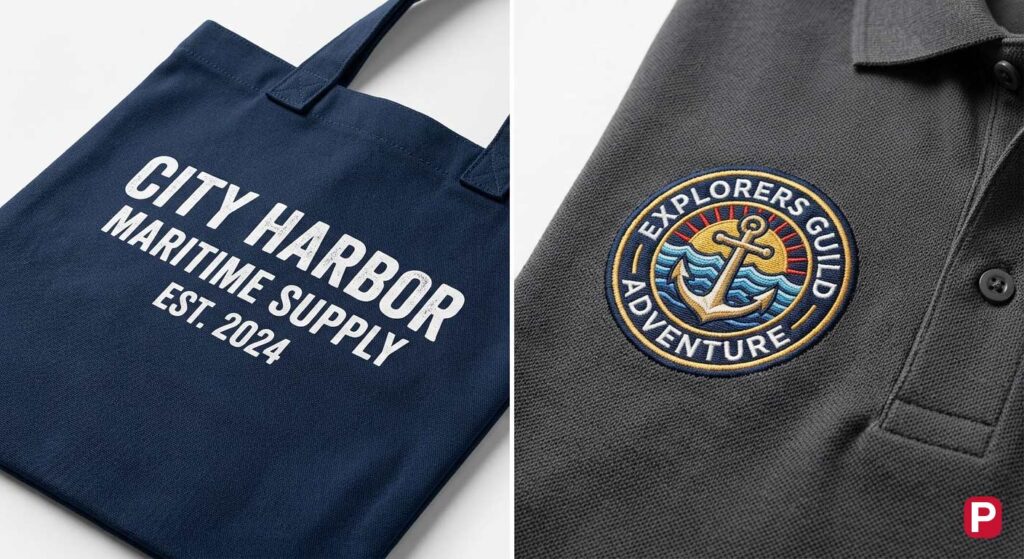
It’s been the workhorse of the promo products industry for decades. When you’re ordering in volume and you want bold colours that don’t fade after a few washes, screen printing does the job. Think: event t-shirts, trade show giveaways, corporate uniforms for larger teams, tote bags at conferences, and school spirit gear.
Screen printing works best on smooth, flat surfaces — cotton and cotton-blend t-shirts are the sweet spot. It struggles on highly textured fabrics or curved surfaces where the ink can’t sit flat.
Screen Printing: Quick Facts
Best for: T-shirts, tote bags, flat cotton garments, high-volume runs
Colour limit: Typically 1–6 spot colours per design (each colour = a separate screen)
Setup cost: $20–$50 per colour per screen (amortised over the run)
Minimum quantities: Usually 24–50 units to make setup costs worth it
Wash durability: Excellent — 50+ washes with minimal fading if cured properly
Turnaround: 7–14 business days standard; rush available at a premium
🧵 What Is Embroidery?
Embroidery stitches your logo directly into the fabric using thread. A machine reads a digitised version of your artwork and punches it into the garment stitch by stitch. The result is a raised, textured design that looks and feels premium — the kind of logo you’d see on a well-made polo or a structured cap.
If screen printing is the loud mate at the pub, embroidery is the one in the nice polo. It’s the standard choice for corporate workwear, team uniforms, hospitality and hotel staff, sporting clubs, and anyone who wants their branded gear to feel professional rather than promotional. Browse our full embroidered polos, corporate jackets, and branded t-shirts to get a feel for what suits embroidery best.
Embroidery suits thicker, structured fabrics — polos, fleeces and pullovers, jackets, beanies, and caps. It holds up really well in the wash because the thread is woven into the fabric itself — nothing to peel, crack, or fade in the sun.
The trade-off is detail. Embroidery handles solid shapes and block lettering really well, but fine gradients, tiny text under 6mm, or highly intricate artwork can lose definition in the stitching. Your artwork will need to be digitised (converted into a stitch file), which is a one-off setup cost.
Embroidery: Quick Facts
Best for: Polos, caps, jackets, beanies, fleece, structured workwear
Colour limit: No real limit — each thread colour is just a thread change, though very high thread counts add cost
Setup cost: $50–$120 one-off digitising fee (charged once, reused forever)
Minimum quantities: Often as low as 12 units — more viable for small teams
Wash durability: Exceptional — the thread is part of the fabric and won’t fade or peel
Turnaround: 7–14 business days; digitising adds 1–2 days if artwork is new
🎯 Not sure which method suits your order?
Tell us what you’re after and we’ll point you in the right direction — no obligation, no sales pitch.
👉 Get a Free Quote →
⚖️ Screen Printing vs Embroidery: Head-to-Head
Here’s the practical side-by-side comparison most buyers actually need:
| Factor | Screen Printing | Embroidery |
|---|---|---|
| Setup Cost | $20–$50 per colour (screens) | $50–$120 one-off digitising fee |
| Cost Per Unit (50 units) | $4–$8 per print location | $6–$12 per garment |
| Cost Per Unit (200+ units) | $2–$4 per print location | $4–$8 per garment |
| Minimum Qty | 24–50 units typical | 12–24 units typical |
| Colour Range | 1–6 spot colours (per run) | Unlimited thread colours |
| Fine Detail | Excellent (halftones, gradients possible) | Limited — 6mm+ text, solid shapes |
| Wash Durability | Very good (50+ washes) | Exceptional (doesn’t fade or peel) |
| Texture / Feel | Flat, smooth print surface | Raised, tactile stitched finish |
| Perceived Value | Good for casual/event use | Higher — looks corporate and premium |
| Best Fabrics | Cotton, cotton-poly, flat surfaces | Polo, fleece, cap, jacket, beanie |
| Turnaround | 7–14 business days | 7–14 business days (+ digitising if new) |
| Large Designs | Full chest prints, oversized graphics — yes | Limited to ~30cm x 30cm max stitch area |
📦 Real-World Scenarios: Which Method Wins?
Scenario 1: You’re ordering 500 tote bags for a trade show or conference
Screen printing, every time. The setup cost gets spread across 500 units, your cost per bag drops significantly, and screen printing on canvas tote bags produces a clean, vibrant result. Embroidery on a flat canvas bag looks awkward and costs more per unit without adding value.
Scenario 2: You need 50 embroidered polos for your team
Embroidery wins outright. Fifty polo shirts is a very reasonable quantity for embroidery — the one-off digitising cost is a minor add-on across the run, and the result looks genuinely professional. A screen print on a polo fabric can feel cheap by comparison, especially on textured pique fabric where the ink sits unevenly. Have a look through our corporate polo range — the pique and performance knits there are designed to take embroidery cleanly.
Scenario 3: School sports carnival, 200 cotton t-shirts, tight budget
Screen printing is the clear answer. Simple 1–2 colour design, flat cotton fabric, large quantity — screen printing is made for exactly this. Cost per shirt drops well below embroidery at volume, and bold sporting colours pop on cotton. See our cotton t-shirt range for the most popular event and team styles.
Scenario 4: A construction company ordering 30 high-vis jackets for a site crew
Embroidery. Full stop. High-vis jackets go through serious punishment — constant washing, outdoor wear, abrasion. Embroidery holds up to that in a way no print can match. Reflective and hi-vis fabrics don’t always take ink cleanly either, so embroidery is the safer bet for quality and compliance. Most of our branded jackets and outerwear is purpose-built for embroidered branding — drill cotton, ripstop, and reflective panels included.
Scenario 5: A restaurant chain ordering 150 structured caps for front-of-house staff
Embroidery on structured caps is the standard for a reason. The curved surface of a cap makes screen printing difficult and inconsistent. Embroidery sits cleanly on a cap front panel, looks polished, and survives daily wear in a kitchen or hospitality environment without any drama. Pair caps with embroidered aprons and staff polos for a fully on-brand front-of-house look.
🔧 Other Branding Methods Worth Knowing
Screen printing and embroidery cover most jobs, but they’re not the only game in town. A few other methods worth knowing about:
Pad Printing — The go-to for hard products like pens, USB drives, keyrings, and stress balls. It uses a silicone pad to transfer ink onto irregular curved surfaces where screen printing can’t reach. Cost-effective at volume, typically 1–4 colours.
Laser Engraving — Burns your logo permanently into the surface of metal, wood, leather, or glass products. Think metal water bottles, timber USB drives, and leather journals. You get a clean, permanent mark with no ink involved. No colour options, but it won’t wear off either. Looks sharp on gift-style drinkware and corporate gift products.
DTF (Direct to Film) / Heat Transfer — A newer method that prints your design onto a special film, then heat-presses it onto the garment. It handles full-colour, photographic designs without the screen setup costs of screen printing. Great for short runs (under 24 pieces), highly detailed artwork, or garments that don’t suit screen printing. The finish is slightly different to screen printing — a bit more plasticky to touch — but it’s come a long way in recent years.
Dye Sublimation — Infuses the dye directly into polyester fibres, producing full-colour, edge-to-edge prints with no hand feel at all. It’s ideal for sportswear, performance teamwear, sublimated polo shirts, and any product where you need an all-over photographic print. The catch: it only works on white or very light polyester. Cotton won’t take it. See more about all available methods on our Printing Processes page.
🚫 Common Mistakes Buyers Make When Choosing a Branding Method
Choosing screen printing because it sounds cheaper — without checking setup costs. Screen printing has per-colour setup costs. A 4-colour logo on a 24-unit run can cost more per garment than embroidery once you factor in screen charges. Always ask for a full quote including setup before assuming one method is cheaper.
Trying to embroider a logo with tiny text or fine gradients. If your logo has detail that looks great on a business card, it won’t necessarily translate to embroidery. Thread can’t replicate halftones or text under about 6mm high. Your supplier should flag this — but a good rule of thumb is to simplify your logo artwork before embroidering. Check our Artwork Requirements page if you’re unsure what format to supply.
Ordering the wrong garment fabric for the chosen method. Screen printing on a textured fleece or embroidered pique polo with a large print area are both recipes for disappointing results. Match your method to your fabric — your supplier should be steering you right on this from the start.
Waiting too long to order. “Standard” lead times of 7–14 business days assume your artwork is ready to go and approved quickly. Factor in digitising time for embroidery, back-and-forth on artwork approvals, and freight. If your event is in three weeks, contact your supplier now — not next week.
Assuming more colours always looks better. A clean 1–2 colour screen print often looks sharper and more professional than a 6-colour design that’s been crammed onto a shirt. Strong, simple branding almost always outperforms complex artwork on apparel. Less is usually more.
🧢 Need a second opinion on your artwork or method choice?
Send us your logo and tell us what you’re printing on — we’ll let you know what’ll work and what won’t before you commit to anything.
👉 Request a Free Quote →
Reviewed by Daniel Galpin, Co-Founder at PromoMate Australia
15+ years supplying branded merchandise for Australian businesses, events, schools, and trade teams. Focus areas: product selection, print method fit, MOQ planning, and reducing order risk. Meet the team →
❓ Frequently Asked Questions
1. Is embroidery always more expensive than screen printing?
Not necessarily — it depends on quantity and design complexity. For small runs (under 50 units), embroidery can actually be cheaper because screen printing setup costs hit harder at low quantities. At 200+ units, screen printing typically wins on per-unit cost. For accurate comparisons, always get a quote for both methods side by side.
2. Can I embroider a full-colour logo with gradients?
Not directly. Embroidery works in solid thread colours — it can’t replicate gradients or photographic detail the way screen printing or DTF can. A skilled digitiser can approximate gradients using techniques like blending stitches, but it won’t be a pixel-perfect match. If your logo has complex colour work, screen printing or DTF will serve you better.
3. How long does embroidery last compared to screen printing?
Embroidery lasts longer, full stop. The thread is part of the fabric — it can’t peel, crack, or fade the way ink can. A well-executed screen print on quality cotton will still look good after 50+ washes, but embroidery on a polo or jacket will typically outlast the garment itself. For daily-wear workwear, embroidery wins on durability every time.
4. What’s the minimum order quantity for screen printing?
Most Australian suppliers require a minimum of 24–50 units for screen printing to be cost-effective. Below that, the per-colour screen setup fees make the per-unit cost very high. For small runs under 24 units, DTF or heat transfer is usually the better option — lower setup costs and no minimum quantity restrictions.
5. Can screen printing be done on caps or beanies?
Caps are not ideal for screen printing due to the curved surface — embroidery is the standard for structured caps. Beanies can take either method, but embroidery tends to hold its shape better on the stretchy knit fabric. Flat-knit beanies with a clean fabric face can be screen printed with care, but check with your supplier first.
6. Do I need to pay the digitising fee every time I reorder?
No — digitising is a one-off cost. Once your logo has been digitised into a stitch file, that file is stored and used for every subsequent embroidery order. You only pay the digitising fee once. Keep this in mind when you’re comparing first-order costs to reorder costs — embroidery gets cheaper relative to the first order on every reorder you place.
7. Which method is better for dark-coloured garments?
Both methods work well on dark fabrics, but in different ways. Screen printing on dark garments usually requires an underbase layer of white ink to make colours pop — this adds cost and slightly increases the thickness of the print. Embroidery doesn’t have this issue at all since thread colour shows regardless of the garment colour. For dark polos or jackets, embroidery is often the cleaner choice.
8. How should I supply my artwork for embroidery vs screen printing?
For both methods, a vector file (.ai, .eps, or .svg) or a high-resolution PNG (300dpi+) is the starting point. For embroidery, your artwork gets converted into a digitised stitch file — your supplier handles this, but simple, clean artwork makes for better embroidery results. For screen printing, Pantone colour codes help ensure accurate colour matching. Check our full Artwork Requirements guide for everything you need to know before submitting.
📋 What to Send Your Supplier (5-Minute Checklist)
After 15+ years of quoting jobs, the orders that go smoothest are the ones where the buyer briefs us properly up front. Half the back-and-forth on a typical job is because something basic was missing in the first email. If you can answer these six questions before you reach out, you’ll get a sharper quote, faster turnaround, and far fewer surprises.
Quantity — exact, not “around 100”. Per-unit pricing changes at every quantity bracket.
Garment type and fabric — polo, t-shirt, hoodie, cap. If you’ve spotted a specific product, send the link.
Print method preference (or “open to suggestions”) — being open often saves you money.
Number of print locations — front only, front + back, sleeve, etc. Each location is a separate cost.
Logo file — vector if you have it. If not, send what you’ve got and we’ll let you know.
Deadline — the date you need the goods in hand, not the dispatch date. Build in a buffer.
A clean brief like that gets a turnaround quote in hours, not days. A vague enquiry triggers a chain of clarifying emails — and your event keeps creeping closer.
💡 Three Things Most Buyers Don’t Realise
1. You can mix methods on the same order. Plenty of jobs use embroidered polos for the management team and screen-printed t-shirts for the broader staff or event giveaway. Same artwork, same brand consistency, very different per-unit cost. Worth asking about if your order has multiple use cases.
2. Embroidery thread colours can be matched to your Pantone — but not always exactly. Thread comes in a finite range (usually Madeira or Isacord charts). A good supplier will match the closest shade and send you a thread sample for approval before stitching the run. If brand colour exactness is critical, ask for the thread match upfront.
3. Print position matters more than print method. A logo placed too low on a polo, or too far to the side on a cap, can ruin an otherwise great job. Always ask for a digital mockup showing exact placement and dimensions before approving production. Reputable suppliers will provide this as standard — if they don’t, push for it.
Still not sure which way to go? No dramas — just send us a message with your order details and we’ll give you a straight answer. We’re not going to push you toward the more expensive option; we’ll tell you what actually makes sense for what you’re trying to do.
📩 Email us at [email protected] — or hit the button below and we’ll get back to you within one business day.
Why Every Desk Needs a Fidget Pen (And Why Your Logo Should Be On It)
You know that person in the meeting who clicks their pen non-stop? The one tapping their foot, spinning their phone, drumming on the table like they’re auditioning for a Midnight Oil cover band?
That person isn’t bored. They’re thinking.
If you’ve ever caught yourself unscrewing a pen cap for the fifteenth time during a conference call, welcome to the club. You’re a fidgeter. Most of us are, whether we admit it or not.
Fidgeting has copped a bad rap for years. Teachers told us to sit still. Managers gave the pen clickers the look. But the science has actually caught up with what fidgeters have always suspected: keeping your hands busy helps your brain stay on track.
Which brings us to the Spinner Fidget Pen. We’ll be upfront, we thought it was a gimmick when the first box landed in our office. A pen with a spinner on top? Pull the other one.
Then we picked one up. Gave it a flick. Then another flick. Then we lost about twenty minutes and someone had to physically take it off us.
We were wrong. These things are genuinely fun.
🧠 Fidgeting actually helps you focus (there’s research)
This isn’t just us rambling. Researchers at the University of California, Davis found that fidgeting improves memory and attention during tasks that don’t need intense visual focus. A 2015 study in the Journal of Abnormal Child Psychology showed physical movement, including fidgeting, helped kids with ADHD perform better on cognitive tasks.
Adults too. A University of Surrey study found that doodling (fidgeting’s quieter cousin) improved recall by 29% compared to just sitting there trying to listen.
So fidgeting isn’t a distraction. It’s a low-level physical outlet that stops your brain from drifting off to think about what’s for dinner. And when you give someone a proper fidget tool rather than letting them slowly destroy a perfectly good biro, everyone’s better off.
The research says:
Fidgeting improved cognitive task performance in children with ADHD (Journal of Abnormal Child Psychology, 2015)
Doodling improved recall by 29% vs passive listening (University of Surrey)
52% of promo product recipients use their item at least once a week (APPA)
🖊️ The Spinner Fidget Pen, honestly reviewed
We were sceptical. A pen with a spinner? Sounds like something you’d find in a showbag at the Perth Royal Show, jammed between a foam glider and a bag of fairy floss.
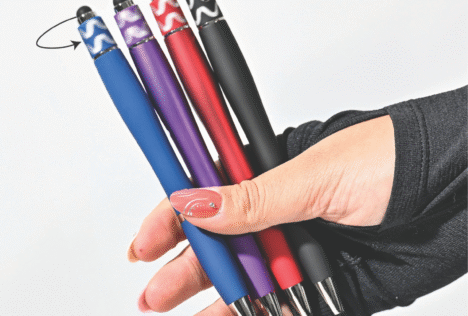
But here’s the thing that surprised us: the spinner is actually weighted properly. It’s not a cheap wobbly bit of plastic. It spins smoothly, quietly, with this satisfying momentum that makes it weirdly hard to put down. We had three people in the office fighting over the sample within an hour.
Flip it over and there’s a stylus tip that works on phones and tablets. Handy for signing docs, scribbling notes on a tablet, or pretending you’re taking minutes when you’re actually on Wordle.
Twist the barrel and you get a smooth black ballpoint. Because at the end of the day, it’s still a pen. And honestly, it writes better than half the branded pens we’ve tested over the years.
It comes in five colours (White, Red, Purple, Black, Navy Blue) and it’s small enough for a shirt pocket or a conference lanyard bag.
🖊️ Spin it. Tap it. Write with it.
The Spinner Fidget Pen. Three tools, one branded pen, zero chance it ends up in the bin.
👉 Check out the Spinner Fidget Pen →
🎯 Why these actually work as promo merch
Promotional products live or die by one question: will people keep it?
APPA (the Australasian Promotional Products Association) says 52% of people who receive a promo product use it at least once a week. The items that get used most are the ones that are either genuinely useful or genuinely enjoyable.
The fidget pen is both. Compare it to a stress ball (drawer after a week) or a lanyard (bin after the conference). This is a pen people use every day, with a spinner they can’t stop fiddling with. It becomes the pen they reach for first, which means your logo is the one they see every morning.
A few places where we reckon it really shines:
Corporate gifts and onboarding packs. Forget the generic notepad. A fidget pen in a welcome kit says you actually put some thought into it. We’ve had clients use them in client gift boxes and new starter packs.
Trade shows. People walk past a hundred booths and grab a hundred pens. The fidget pen is the one they remember. It’s the one they show their colleague back at the office, and that’s when your logo gets its second, third, fourth look.
School fundraisers and fetes. Kids love spinners. Teachers love pens. Parents love anything under five bucks. It ticks all the boxes.
Friday arvo drinks, golf days, charity runs. Anything where you want people walking away with something they’ll actually talk about.
🎁 Need branded pens that people actually keep?
Browse our full range of promotional pens, or get in touch for a custom quote.
👉 Shop Promotional Pens →
Want a few more ideas with a bit of personality? Our guide to unusual promotional products people want to keep puts the fidget pen alongside seven other options, with advice on who each one suits.
✍️ Pens are still the number one promo product in Australia
You might think promotional pens are past it. They’ve been around since the dawn of trade shows. But APPA’s 2024 industry report found writing instruments are still the most distributed promotional product in Australia. The average branded pen sticks around for over 9 months, which adds up to thousands of impressions.
Now picture a pen that also has a spinner and a stylus. People fidget with it during calls, lend it to a colleague, lose it to a colleague, and end up ordering more because everyone keeps pinching theirs.
That kind of desk-level brand visibility is hard to get with a Google Ad.
Kept longer: The average branded pen is kept for over 9 months (APPA 2024)
Used often: 52% of recipients use promo products at least once a week
Shared around: Useful promo items get passed between colleagues, multiplying impressions
📦 How ordering works with PromoMate
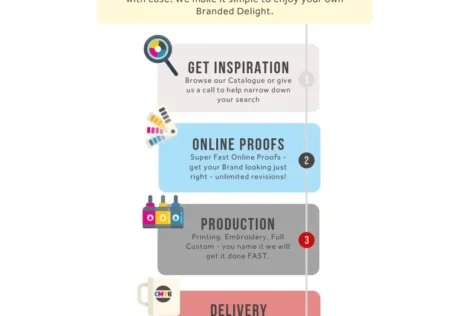
We keep it straightforward.
Pick your product, or tell us what you’re after. If you’ve got a wild custom idea, even better.
Send us your artwork. Logo, design, colours, whatever you’ve got. If you need help with design, our team can sort that out.
We send you a digital mock-up within 24 hours. You sign off, nothing gets printed until you’re happy.
Standard turnaround is 7-10 business days from artwork approval. We also run an express lane on selected items, as quick as 3 days when you’re in a pinch.
Your project manager keeps you posted with status updates at four stages: quote, artwork proof, printing, and dispatch.
We’re based in Western Australia. We ship nationwide. We actually answer our emails. No overseas middlemen, no mystery tracking numbers, no “it’s on a boat somewhere” excuses.
☀️ Ready to get your brand on something people actually use?
Local production, real people, fast turnarounds.
👉 Get a Quote Today →
❓ Frequently asked questions
1. What’s the minimum order for the Spinner Fidget Pen?
100 units to start, with better per-unit pricing at 250, 500, and 1000+. Get in touch and we can work out a quantity that suits your budget.
2. How long does delivery take?
7-10 business days from artwork approval is standard. Express turnaround is available on request if you’re working to a tighter deadline.
3. What branding can you do?
Pad print on the barrel is standard. Digital print is available on request too. Either way, you’ll get a proof before anything goes to production.
4. Can I mix colours in one order?
Yep. Mix and match across the five colours. Just tell us the split when you order.
5. Does the stylus work on all devices?
Works on any capacitive touchscreen: iPhones, iPads, Android phones, tablets, and most touchscreen laptops.
6. Do you ship Australia-wide?
We do. Based in WA, deliver everywhere. Freight is quoted with your order.
7. Can I get a sample first?
We can arrange samples. Drop us a line at [email protected].
8. What if I need help with artwork?
No worries. Our team handles artwork setup, logo placement, and colour matching. Just send us what you’ve got.
Got a question we didn’t cover? Ping us at [email protected] or ring the office.
- Corporate Christmas Gifts Australia: What to Order (and When) for 2026

- You’ve Been Asked to Sort the Merch. Where Do You Start?
- 8 Unusual Promotional Products People Actually Want to Keep
- How to Choose Promotional Product Colours That Suit Your Brand
- Budget vs Premium Promotional Products: What Actually Earns the Spend?
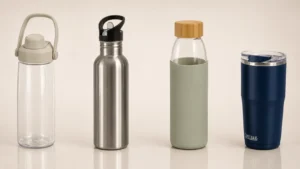
- Stainless Steel vs Plastic vs Glass vs Insulated Vacuum: Which Branded Drink Bottle Actually Suits Your Job?
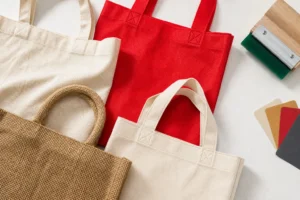
- Cotton vs Non-Woven vs Jute vs Recycled Cotton Tote Bags
- Do Promotional Products Actually Work? What the 2025 APPA Data Shows
15+ years in promotional products — specialising in print method selection, product sourcing, and event merchandise for Australian businesses, charities, and community organisations.
Meet the team →
Browse related categories
The Great Custom-Merch Showdown: Why PromoMate Leaves the Competition in the Dust…
The Ultimate Merch Smack-Down 2025: Why PromoMate Is Every Aussie Marketer’s Secret Weapon
(Grab a long mac (in your branded travel mug), loosen the belt on your high-vis shorts, and settle in—we’re going deep on branded gear, WA-style.)
1. Big-Picture Merchonomics: The Numbers Behind the Hype
Promotional products aren’t just “nice-to-have” swag anymore; they’re a fast-growing, data-driven media channel. Globally, the market is tipped to leap from USD 20.7 billion in 2025 to nearly USD 40 billion by 2033 at a compound 8 % clip. Business Research Insights. Closer to home, Australian demand keeps surging as brands chase tangible touch-points in an oversaturated digital world.
Industry giants are equally bullish: 45 % of PPAI-100 distributors expect 6–15 % sales growth in 2025, with product-line expansion and deeper customisation leading the charge.ppai.org And the ROI case? ASI’s 2024 Ad-Impressions Study still dazzles: a lone branded pen racks up roughly 3 000 impressions, while a cap or drink bottle kicks around for years at a cost per impression that makes Google Ads blush.
Translation: merch isn’t your conference afterthought. It’s a scalable, high-return media channel that keeps delivering long after the banner ads have scrolled into oblivion.
2. Why “Made-in-WA” Isn’t Just Patriotic—It’s Strategic
Freight now spews 7 % of Australia’s total emissions, and 83 % of that is road transport. Climateworks Centre. Every time a pallet of tee-shirts lurches from Shenzhen to Fremantle, your carbon budget (and sometimes your deadline) takes a hiding. By decorating in Perth instead of Guangzhou, PromoMate slices those freight kilometres—and the risk of supply-chain chaos—by a country mile.
Perth Production Perks
Jobs for locals. Every screen printer, embroiderer and warehouse picker we employ pours dollars back into the WA economy (and probably spends them on flat whites at the café down the road).
Shorter lead times. No waiting for a container ship stuck at Port Klang when your expo starts Friday.
Lower emissions. You won’t need a 30-page ESG memo to justify a marketing giveaway.
Five Things That Separate a “Meh” Supplier from a “Mate” Supplier
- Rock-Solid Quality & Range
The best partners don’t make you choose between nice and affordable. From neoprene stubby holders that actually keep drinks cold to eco bottles that survive kids’ lunchboxes, insist on products built for repeat use. - Free-Thinking Design Support
You shouldn’t need a graphic-design degree to get your logo centred. Look for suppliers who check artwork, offer unlimited tweaks, and warn you before your brand orange prints like a sad pumpkin. - Turnaround You Can Set Your Watch To
Events wait for no one. A credible supplier offers standard production plus genuine rush options—and, critically, owns up when a deadline can’t be met. - Transparent, All-Inclusive Pricing
“Gotcha” set-up fees? Hard pass. Great partners show GST, freight and decoration costs up-front so your budget doesn’t need a contingency line for surprises. - Local Sustainability That Isn’t Just Lip-Service
Anyone can plant a tree; not everyone will source responsibly, reduce freight miles and manufacture right here in WA. Ask where items are printed, what inks are used, and how off-cuts are recycled.
PromoMate vs. the Rest—A Quick Reality Check
- Made-in-WA Cred – Many suppliers print offshore. We stitch, sublimate and screen-print right here in Perth, slashing freight emissions and lead times.
- Human Help, Not Chat-Bots – Need a Tuesday night phone call because the CEO changed her mind? Our real-life account managers have you covered.
- Low MOQs for Test-Runs – Want 25 tote bags to woo potential investors before committing to a thousand? No problem.
- Warehouse & Fulfilment – We can store your merch and drip-ship to branch offices, clients or events so you don’t have cartons crowding the staff kitchen.

3.How to Order (Without the Spreadsheet Headache)
Bulk Orders – Ideal for conferences and seasonal gifting. The bigger the quantity, the smaller the per-unit price, simple.
Low-MOQ Fast-Turn – Testing a campaign or kitting out a start-up team? Order as few as 25 pieces and still hit the same WA quality standards.
Dream & Scope – Jump on chat, phone, or even Whatsapp voice note at 9 p.m. We love brainstorms.
Design Sandbox – Send your logo; our design crew mocks up two concepts within 24 hours.
Quote (No Surprises) – All-inclusive pricing lands in your inbox faster than your kids can say “What’s for dinner?”
Production Time – Once artwork is signed off, Perth-based crew print, embroider, or laser your goodies.
Dispatch & Data – Tracking link + carbon-emission figure for your ESG report. Re-order button lives in your client portal for next year’s event.
4.Rookie Mistakes to Dodge
Ignoring Brand Guidelines on Small Items – That intricate 12-colour gradient might look epic on a billboard; it’ll be mush on a 10 mm pen clip.
Chasing the Cheapest Quote – A $4 tee that shrinks to crop-top status after one wash will cost your brand a lot more than it saves.
Forgetting the Delivery Window – Australia is vast, and floods really do happen. Book realistic buffers, especially around Christmas and EOFY.
5.Extended FAQ—Because Finance/Legal/Your Boss Will Ask
| Question | Turbo-Short Answer |
|---|---|
| MOQ? | Many items start at 25 pieces; print-on-demand store has no MOQ. |
| Can I get a pre-produciton sample? | Yep—decorated or blank. Express courier, next-day metro Perth. |
| Repeat-order setup fees? | Zero. Your screen/embroidery file lives here rent-free. |
| Pantone match guarantee? | We hit ±1 ΔE on coated swatches. If the hue’s off, we reprint—our shout. |
| Fulfilment to multiple sites? | We split shipments by department, cost-centre or staff member—just send the spreadsheet. |
Check our FAQ page here.
Popular Picks
6.Bulk Orders? Sorted. Small Runs? No Problem.
Small Runs or Large Orders—We’ve Got You
Whether you need 25 stubby holders for a team event or 5,000 for a state-wide campaign, we’re ready. Because we don’t rely on offshore production or bulk shipping containers, we can scale orders to suit your needs—and still deliver fast.
We’ve handled urgent last-minute orders for events where the original supplier dropped out. We’ve also supported small community groups with limited budgets and small order numbers. And we regularly work with large companies who need ongoing branded stock for teams across the state.
The process is simple: send us your ideas, we’ll put together a free mock-up, and once you give the green light, we’ll get printing. You’ll be kept updated throughout, and your order will arrive on time.
7.Final Word: Merch That Lives Past the Hashtag
In 2025 your customers skip ads, nuke cookies, and scroll faster than a teenager on 5G. But they still drink coffee, grab groceries, and crack a cold one after work. Put your logo on the objects they actually touch—made ethically, printed locally, and delivered on time—and you’re not just marketing; you’re earning daily micro-moments of brand love.
PromoMate does the heavy lifting so your brand can do the heavy flexing. Ready to turn humble stubbies, totes and tech toys into priceless WA-made billboards? Let’s chat—first coffee’s on us (in a branded keep-cup, naturally). ☕🚀
Recommended products
- Corporate Christmas Gifts Australia: What to Order (and When) for 2026Clients, staff and the long thank-you list each need a different gift. Here’s what to order for Christmas 2026, and when to brief it so it arrives before the office shuts.
- You’ve Been Asked to Sort the Merch. Where Do You Start?Need to sort branded merch? Use three simple questions to choose promotional products for events, staff and clients, then send us your brief for a free proof.
- 8 Unusual Promotional Products People Actually Want to KeepExplore 8 unusual promotional products for Australian teams and clients, with practical branding advice, real product links and free visual proofs.
- How to Choose Promotional Product Colours That Suit Your BrandBold merchandise can look brilliant or completely off-brand. Here is how to choose stock colours, custom PMS products and full-colour decoration with fewer surprises.
- Budget vs Premium Promotional Products: What Actually Earns the Spend?Compare budget, mid-tier and premium promotional products using real PromoMate catalogue examples. Match the item to the audience, use, quantity, artwork and occasion.
15+ years in promotional products — specialising in print method selection, product sourcing, and event merchandise for Australian businesses, charities, and community organisations.
Meet the team →
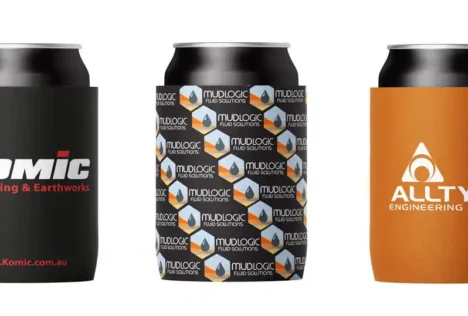
Stubby Holders: The Underrated Aussie Classic That Still Delivers
Stubby Holders: The Surprisingly Versatile Promo Product Made Right Here in WA
In a world full of digital noise and throwaway advertising, there’s something refreshingly effective about a promotional item people actually use. One of the most underappreciated yet incredibly effective options out there? The good old stubby holder.
At PromoMate, we’re proud to design and manufacture stubby holders locally in Western Australia. We’ve seen firsthand how powerful they can be as a branding tool—whether they’re keeping a drink cool on a hot site visit, sitting on a staff desk during meetings, or handed out at school events and conferences.
Stubby holders might seem like a small thing, but their impact can be long-lasting. And despite the name, they’re not just for stubbies—and certainly not just for beer. In fact, their versatility is what makes them such a standout. If you are weighing a stubby-holder run against other merchandise, our budget vs premium promotional products guide explains how audience and occasion should shape the tier.
Let’s explore why stubby holders are still such a brilliant option for promotional campaigns, how they’re being used across different industries, and why choosing WA-made makes all the difference.
Why Stubby Holders Work
Stubby holders are one of those products that quietly outperform flashier alternatives. They’re simple, useful, and surprisingly durable. When someone slips their drink into a holder, they’re not just enjoying a cold refreshment—they’re also seeing your logo, your brand colours, your message. And so is everyone around them.
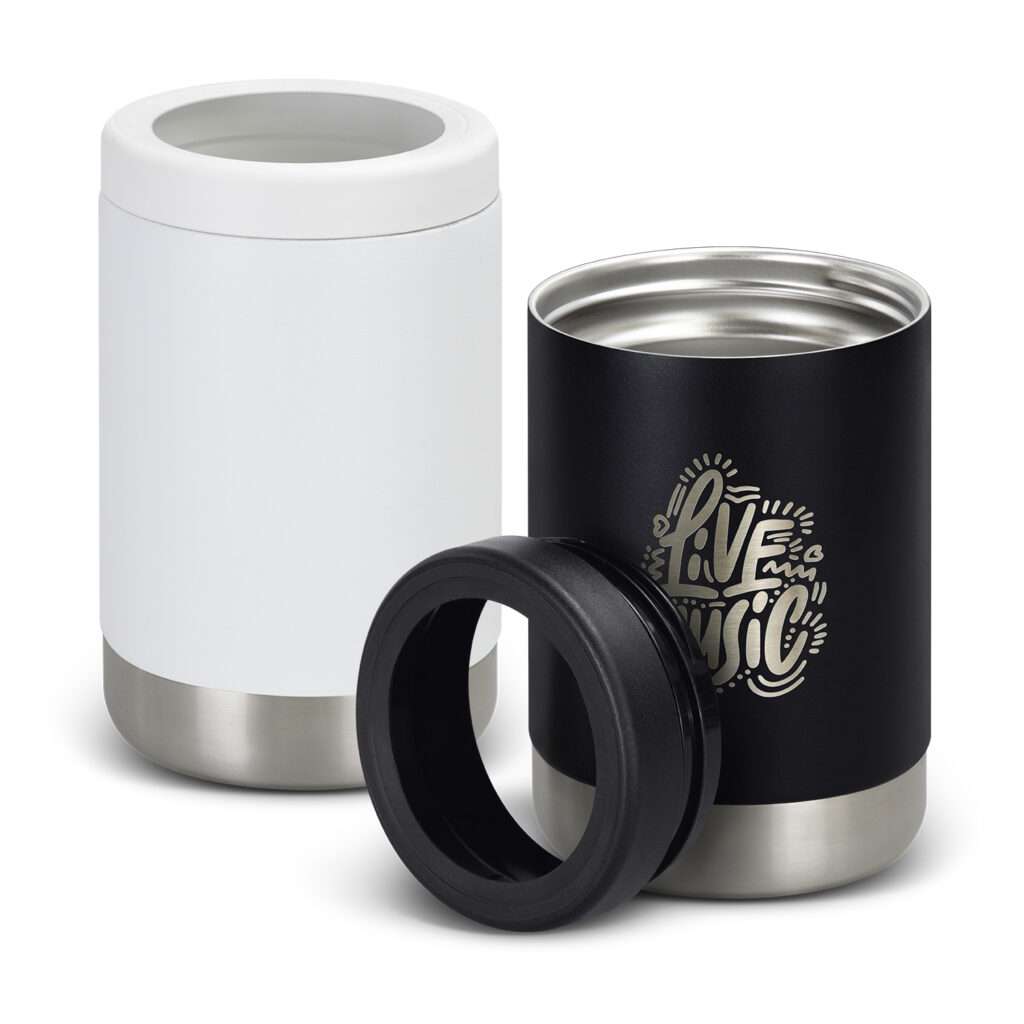
Unlike pens that get lost or stress balls that collect dust, stubby holders have staying power. People don’t throw them away. They get taken to events, kept in glove boxes, left on kitchen benches, or stashed in office drawers for daily use. And because they suit so many types of drinks—sparkling water, soft drink, juice, energy drinks, even reusable bottles—they’re appealing to a broad audience.
Proudly Made in Western Australia
We make every stubby holder locally in our WA production facility. That’s a huge point of difference. Here’s why that matters:
- Fast turnaround: No international shipping delays or border headaches.
- Consistent quality: We oversee every order ourselves.
- Local support: Need something changed last-minute? We’re right here.
- WA jobs: When you order with PromoMate, you’re supporting local workers and our state’s economy.
It also means you can get small runs produced without paying international freight fees, and you have more flexibility with customisation options.
Not Just for Beer Anymore
Stubby holders might have earned their name in the pub, but today they’re used far more widely—and for far more than beer.
We regularly see stubby holders used to insulate water bottles on job sites, hold cans of soft drink at kids’ sports days, wrap around energy drinks in the gym, or even slip over small coffee cups on chilly mornings. Slimline and tall versions have become especially popular for sparkling water, kombucha, and low-sugar drinks.
Some parents even use them to label their kids’ drink bottles at school or sport—they’re fun, washable, and personalised, making them a clever and reusable name tag. We’ve even had orders for juice box sleeves for kindy classes and graduation mementos.
So when we say they’re not just for beer—we really mean it. Think hydration, health, fun, family, and practicality.
Real-World Use Cases
Stubby holders aren’t a one-size-fits-all novelty. We’ve worked with clients across every industry and community group, helping them create stubby holders that reflect their identity, message, and audience. Here are some ways they’re being used today:
1. Corporate Promotions
Stubby holders are an excellent promotional giveaway at trade shows, conferences, or internal events. They’re more engaging than a brochure and more likely to be kept than a pen or notepad. Add your logo, tagline, and even a QR code linking to your website.
Example: A local energy company distributed branded stubby holders with safety messaging to all employees for their annual site BBQ. It doubled as a practical item and a reminder of key workplace values.
2. Retail Merchandise & Tourism
Stubby holders are lightweight and cheap to ship, making them perfect souvenirs. We’ve done WA-themed designs for:
- Tourist gift shops
- Regional produce hampers
- Outback tours and 4WD adventures
Custom-printed with landmarks, wildlife, or local art, they’re a hit with interstate and international travellers alike.
3. Sports Clubs and Community Groups
From cricket to AFL, every WA sports club worth their salt has a custom stubby holder. They’re perfect for:
- End-of-season wind-ups
- Player awards
- Club fundraisers
- Merchandise sales
You can even include player names, nicknames, or jersey numbers for a personal touch.
4. Weddings, Engagements & Celebrations
A big trend we’ve seen? Couples designing personalised stubby holders for wedding guests. They make for:
- A fun, practical favour
- A keepsake people will actually keep
- Ice-breakers at the bar!
And bucks/hens nights? Stubby holders double as an unofficial team uniform.
5. Mine Sites & Industrial Applications
On-site morale matters. Many remote mine sites, FIFO crews and industrial businesses use branded stubby holders for internal events, safety weeks, or holiday season gifting. They’re durable, washable, and easy to toss into a kitbag.
Example: A WA mining company included custom stubby holders in their Christmas gift packs for employees, printed with the year’s milestones and site name.
Design Options to Match Any Vibe
At PromoMate, we offer a huge range of design choices. Whether you want to keep it clean and classic or go wild with bold colours and inside jokes, we’ve got you.
Options include:
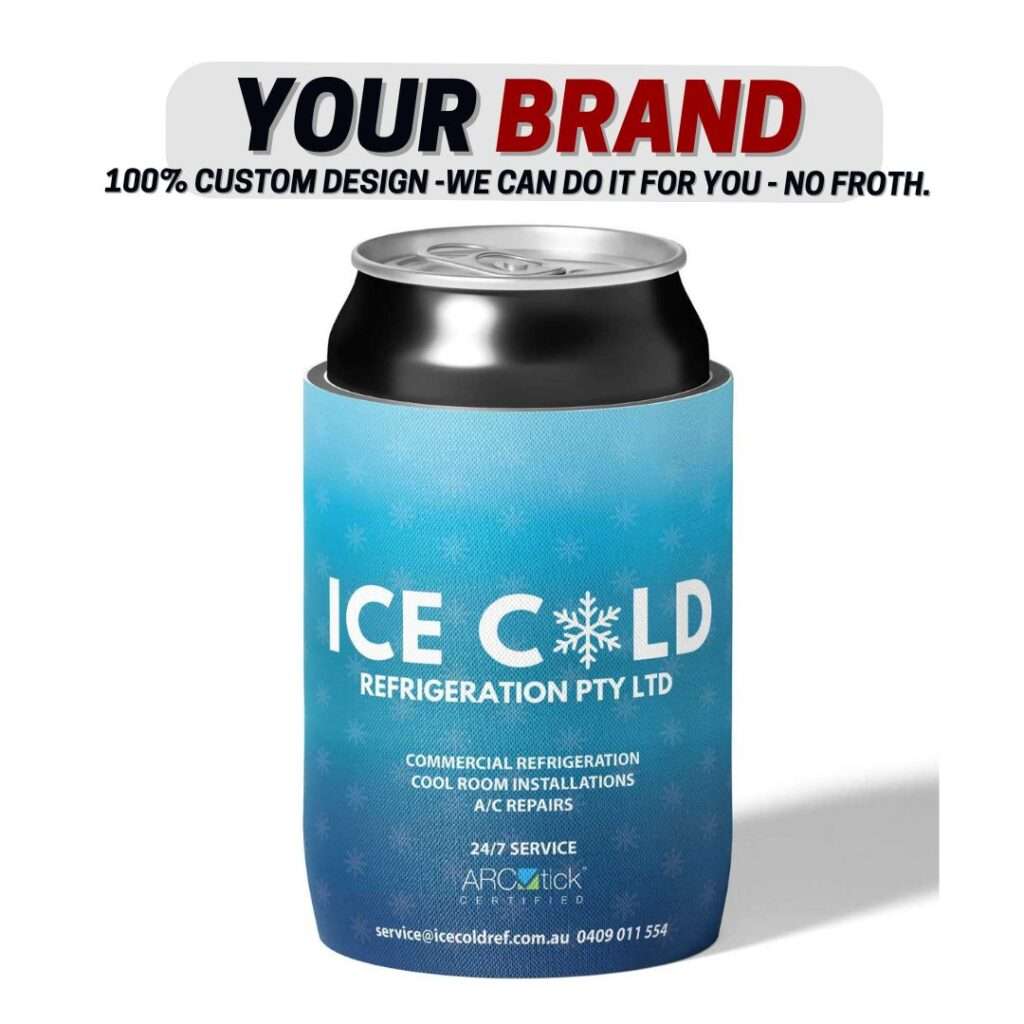
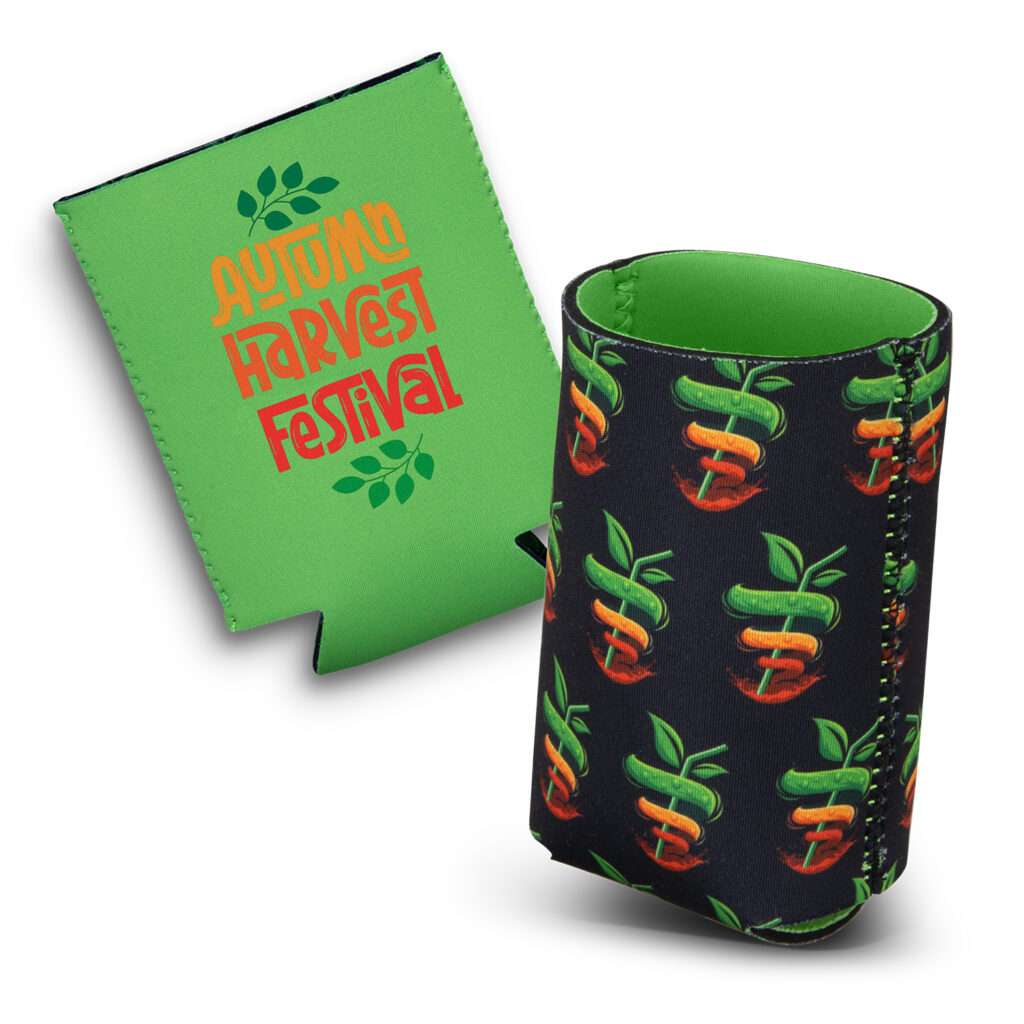
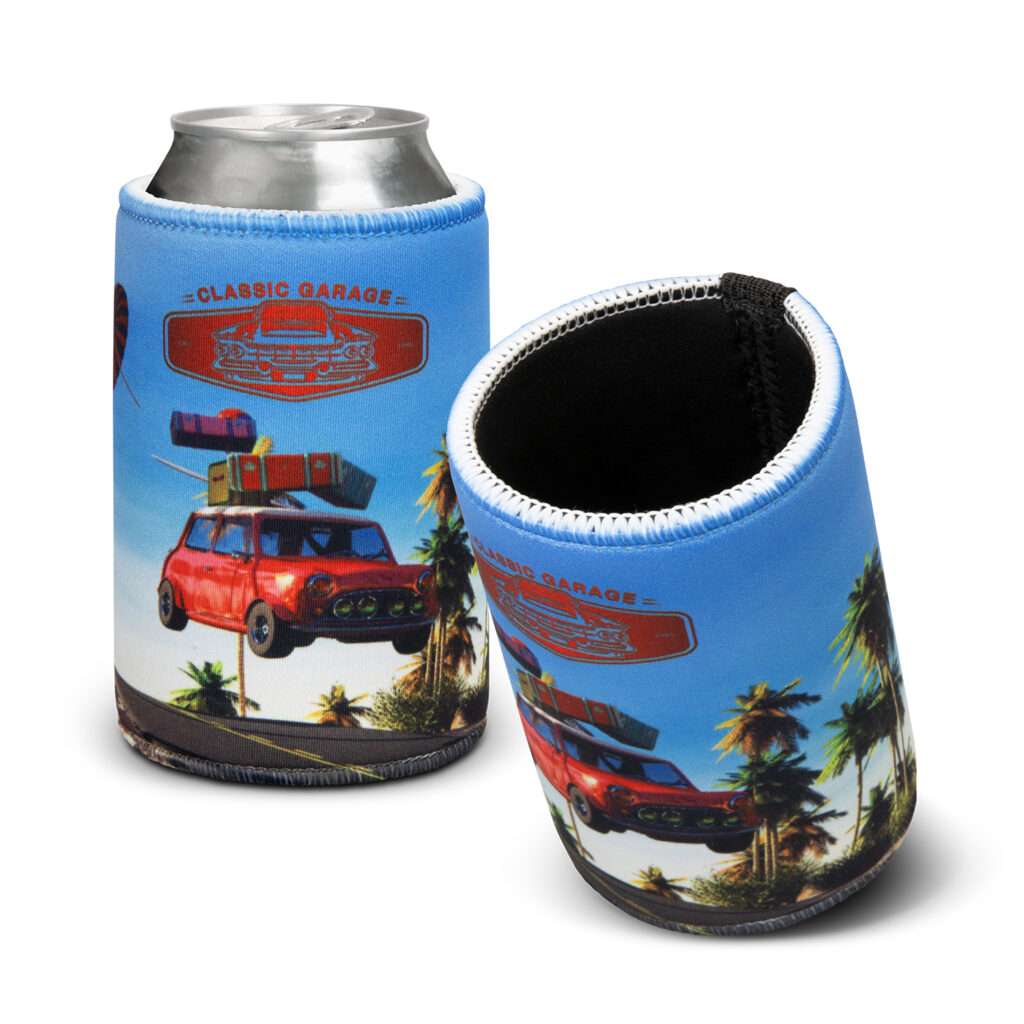
- Full colour dye sublimation (photos, logos, text—go nuts!)
- Pantone-matched spot colours
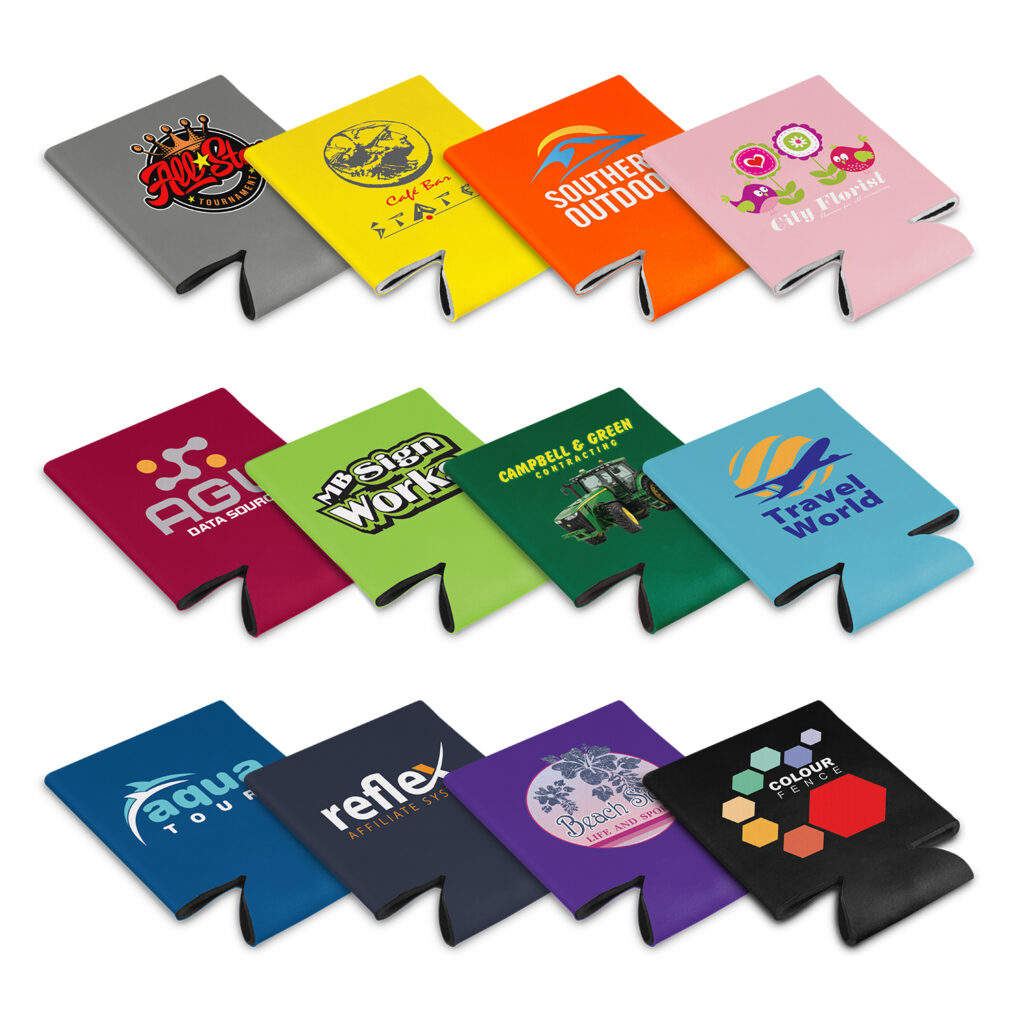
- Base colours in black, navy, red, green, yellow, pink and more
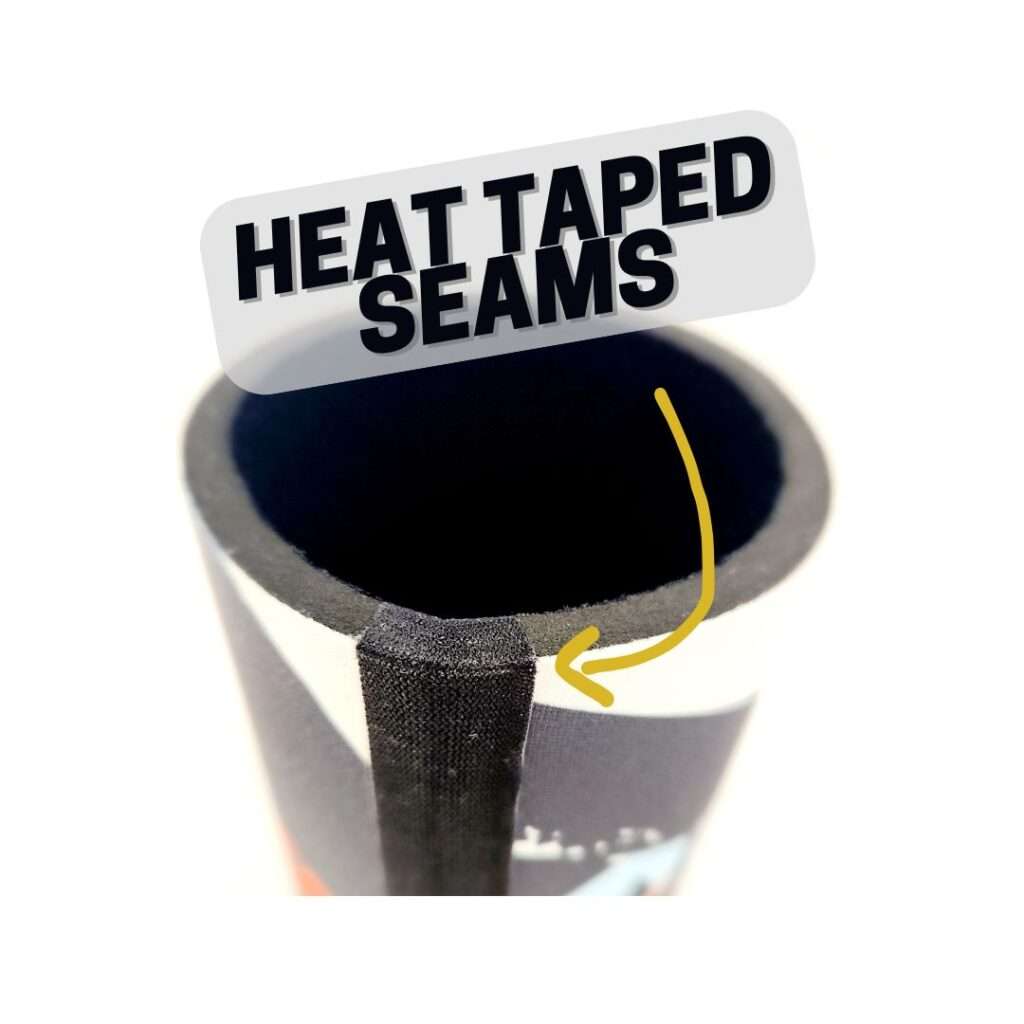
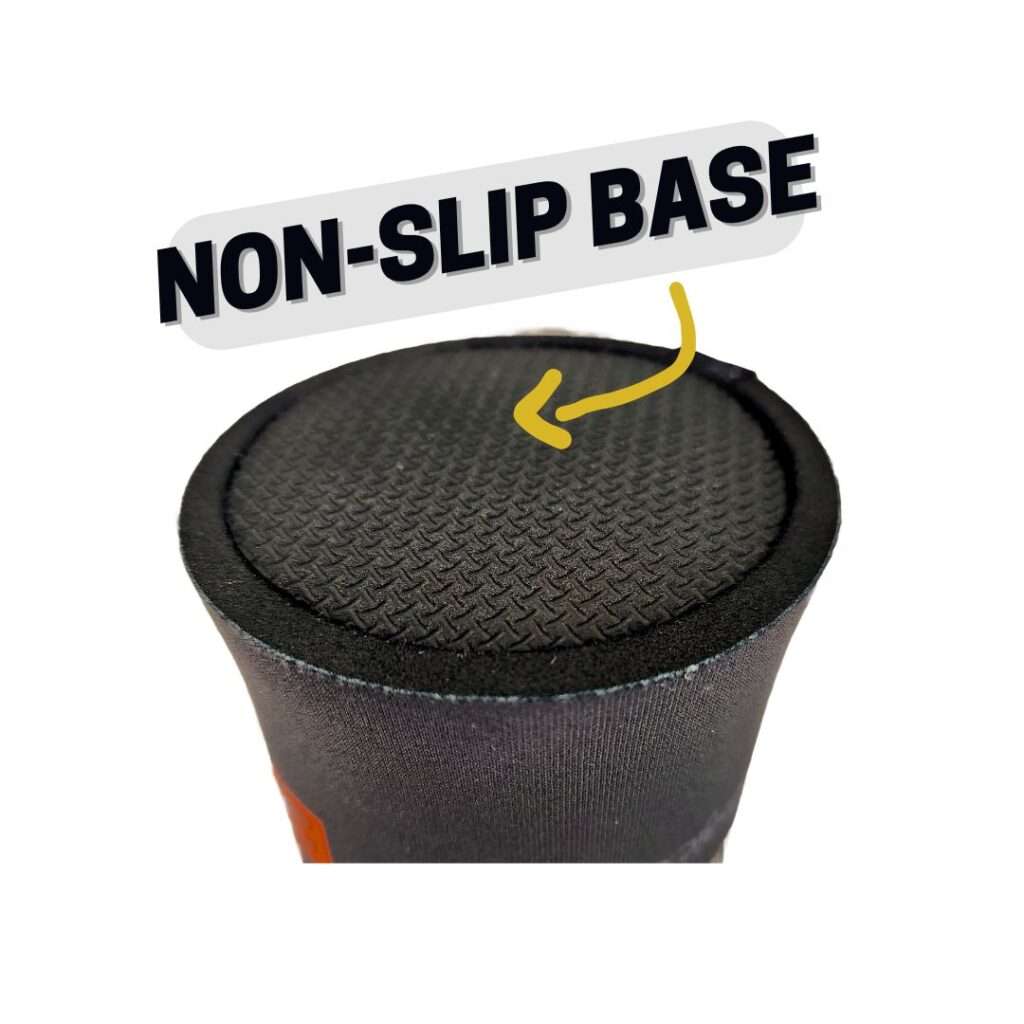
- Flat or stitched seams
- Standard, slimline, or tallboy sizes
- Optional individual name personalisation
- QR codes or website details printed directly on
Got your artwork sorted? Great—we’ll turn it into a mockup so you can see exactly how it will look. Need help designing? No stress—our in-house team can help bring your ideas to life.
Bulk Orders? Sorted. Small Runs? No Problem.
Small Runs or Large Orders—We’ve Got You
Whether you need 25 stubby holders for a team event or 5,000 for a statewide campaign, we’re ready. Because we don’t rely on offshore production or bulk shipping containers, we can scale orders to suit your needs—and still deliver fast.
We’ve handled urgent last-minute orders for events where the original supplier dropped out. We’ve also supported small community groups with limited budgets and small order numbers. And we regularly work with large companies who need ongoing branded stock for teams across the state.
The process is simple: send us your ideas, we’ll put together a free mockup, and once you give the green light, we’ll get printing. You’ll be kept updated throughout, and your order will arrive on time.
Final Thoughts: A Promo Product That Actually Works
If you’ve been wondering what kind of promotional item actually sticks—something that won’t break the budget, that won’t be tossed in a drawer, and that people might actually talk about—stubby holders are a smart, flexible choice.
They suit nearly every audience. They’re easy to customise. They’re lightweight, reusable, and well-loved. And when you get them made locally through PromoMate, you’re not only getting a better product—you’re supporting Western Australian jobs, businesses, and manufacturing.
So whether you’re planning a school fundraiser, a corporate campaign, a milestone event, or just want a clever way to get your brand out there, don’t overlook the stubby holder.
They’re simple. They’re smart. And they work.
Recommended products
- Corporate Christmas Gifts Australia: What to Order (and When) for 2026Clients, staff and the long thank-you list each need a different gift. Here’s what to order for Christmas 2026, and when to brief it so it arrives before the office shuts.
- You’ve Been Asked to Sort the Merch. Where Do You Start?Need to sort branded merch? Use three simple questions to choose promotional products for events, staff and clients, then send us your brief for a free proof.
- 8 Unusual Promotional Products People Actually Want to KeepExplore 8 unusual promotional products for Australian teams and clients, with practical branding advice, real product links and free visual proofs.
- How to Choose Promotional Product Colours That Suit Your BrandBold merchandise can look brilliant or completely off-brand. Here is how to choose stock colours, custom PMS products and full-colour decoration with fewer surprises.
- Budget vs Premium Promotional Products: What Actually Earns the Spend?Compare budget, mid-tier and premium promotional products using real PromoMate catalogue examples. Match the item to the audience, use, quantity, artwork and occasion.
15+ years in promotional products — specialising in print method selection, product sourcing, and event merchandise for Australian businesses, charities, and community organisations.
Meet the team →