
Month: July 2026

Cotton vs Non-Woven vs Jute vs Recycled Cotton Tote Bags
So you’ve decided on tote bags. Smart move. They get used, they get seen, and they stay on someone’s shoulder long after the trade-show pack-up. Then the quotes arrive: one bag is firmly budget territory, another costs several times more, and they all look roughly the same in a thumbnail.
That spread is not a rort. It is mostly material, weight and construction. Cotton, non-woven polypropylene, jute and recycled cotton feel different, print differently and say different things about your brand. This is the conversation we’d have if you rang us tomorrow and asked which one to pick – including where each option falls down. If the tote is part of a wider merchandise order, our budget vs premium promotional products guide helps balance reach, retention and spend.
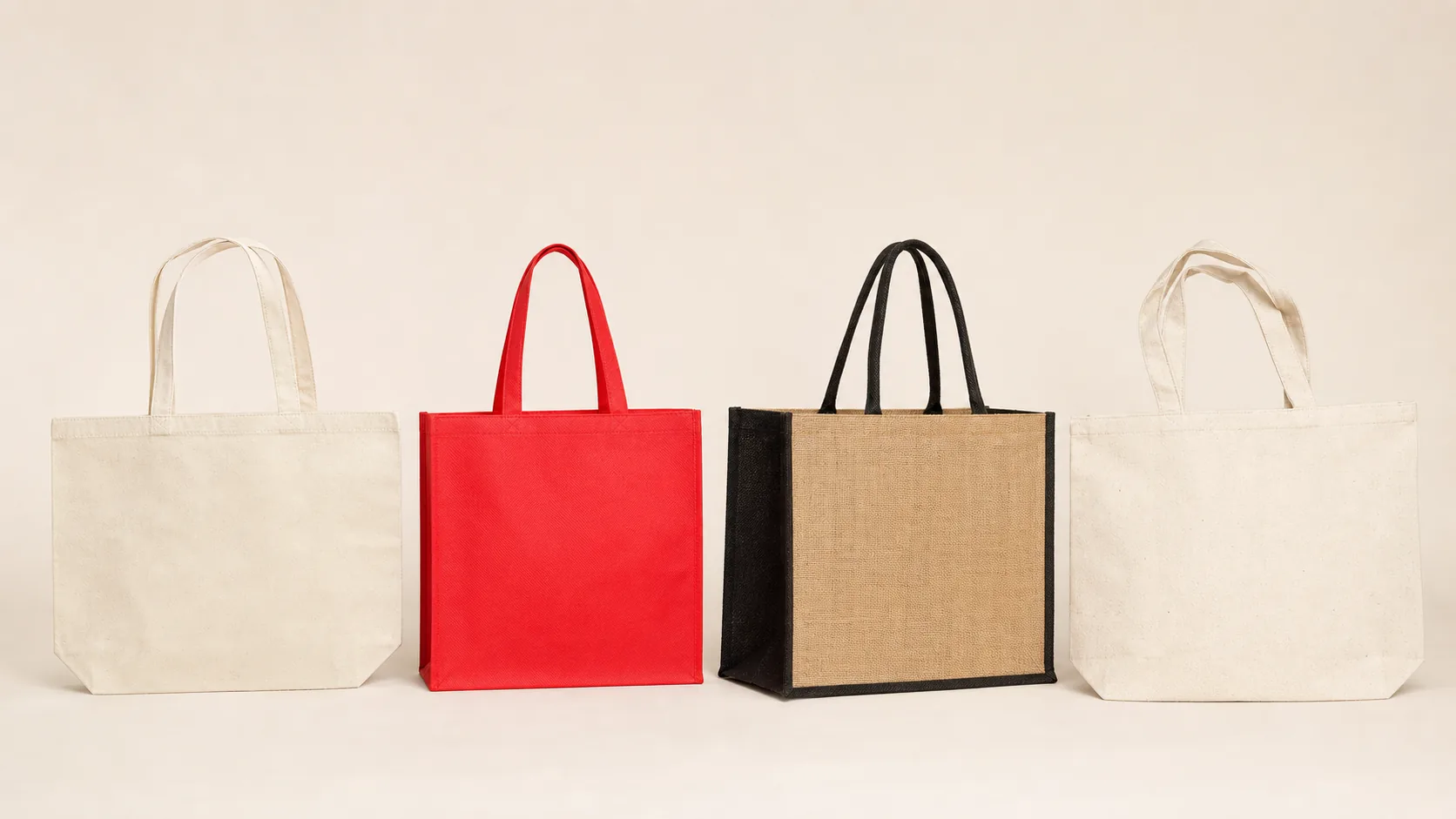
Quick pick:
Conference or trade-show bags in volume: non-woven PP. Light, colourful and budget-friendly for carrying delegate material.
Retail, bookshop or cafe bag people will reuse: cotton or canvas. Choose the weight based on how premium you want it to feel.
Hampers, wineries and natural-looking retail: jute. The texture does plenty of the branding work before your logo goes on.
Staff packs, universities or a recycled-material brief: recycled cotton. Familiar cotton feel with a clear material specification.
Cotton tote bags
What it is. Woven cotton, usually natural unbleached calico but sometimes dyed or recycled. Fabric weight matters: a lightweight tote folds down small and keeps freight sensible, while a heavier weave feels more substantial and holds its shape better.
Where it shines. Retail reusable bags, bookshop carry-aways, farmers markets, fashion pop-ups, yoga studios and welcome packs. A cotton tote with a clean screen print feels like a useful gift rather than event packaging, which gives it a better chance of being kept.
Where it falls down. Cotton creases, picks up marks more readily than synthetic fabric and only makes sense environmentally when it is used repeatedly. Its impact varies with fibre source, fabric weight, manufacturing and washing, so we would not sell cotton as an automatic green win for a one-day giveaway.
PromoMate example. The Liberty Cotton Tote Bag uses 220gsm unbleached cotton, holds 10L and has a base gusset. Its listed quantity breaks start at 100 units. Weight, decoration, freight and delivery date still need to be included in the final quote.
Cotton vs canvas tote bags: what’s the difference?
Canvas is usually cotton too; the difference is the construction. Canvas uses a heavier, tighter weave, so it feels more structured and generally handles heavier contents. A lighter cotton or calico tote is easier to fold, post and hand out in volume.
Choose canvas when the bag is part of the gift or needs to carry books, groceries or retail purchases. Choose lighter cotton when pack size, freight and budget matter more. You can compare both directions in our cotton bag range.
Non-woven polypropylene (PP) tote bags
What it is. A spun-bonded polypropylene fabric. It feels a little like felt, stays light and comes in a broad colour range. It is the familiar conference and delegate-bag material.
Where it shines. Trade shows, conference packs, charity walks, real-estate information packs and other high-volume jobs where the bag needs to carry light contents without consuming the budget.
Where it falls down. It is a synthetic plastic material and it is not biodegradable. Carrying capacity and lifespan vary with fabric weight, seams and construction, so check the exact product rather than assuming every non-woven bag performs the same. Bold artwork is usually the safest choice because very fine detail can be lost on the textured surface.
PromoMate example. The Viva Tote Bag has shoulder-length handles, a 250mm x 250mm screen-print area and 17 listed colours. Its quantity breaks start at 100 units, making it a useful reference point for a volume job.
Jute hessian tote bags
What it is. A coarse fabric woven from natural jute fibre, sometimes laminated on the inside to help the bag hold its shape. Jute has a firm, tactile finish and usually comes with cotton-webbing or padded handles.
Where it shines. Wineries, gift hampers, organic grocers, artisan retail, food producers and brands that want the packaging to feel substantial. The material brings a natural, premium look before a logo is added.
Where it falls down. Jute is stiffer and bulkier than lightweight cotton or PP, so freight and storage need more thought. Its coarse weave can swallow fine artwork; bold screen prints and transfers designed for the exact product are safer. Stock source and lead time vary, so confirm both before promising an event date.
PromoMate example. The Modena Jute Tote Bag is made from 325gsm laminated jute. It holds 27L and has a large gusset and padded cotton handles. Its listed quantity breaks start at 50 units, so it can work for smaller premium runs as well as bigger orders.
Recycled cotton tote bags
What it is. Cotton textile waste is processed back into fibre and spun into new yarn. It keeps the familiar natural-cotton look while putting existing material back to work.
Where it shines. Staff welcome packs, universities, councils, charities and brands that want a straightforward recycled-material story without the technical look of a synthetic bag.
Where it falls down. It still behaves like cotton: it can crease, mark and vary slightly between batches. Recycled content is not a free pass either. Textile Exchange’s cotton life-cycle assessment notes that recycled-cotton impacts depend on energy, transport and local recycling infrastructure, so repeat use still matters.
PromoMate example. The Carnaby Recycled Cotton Tote Bag is made from 100% recycled, unbleached cotton. It is 170gsm with a 13L capacity and a base gusset. Its listed quantity breaks start at 100 units.
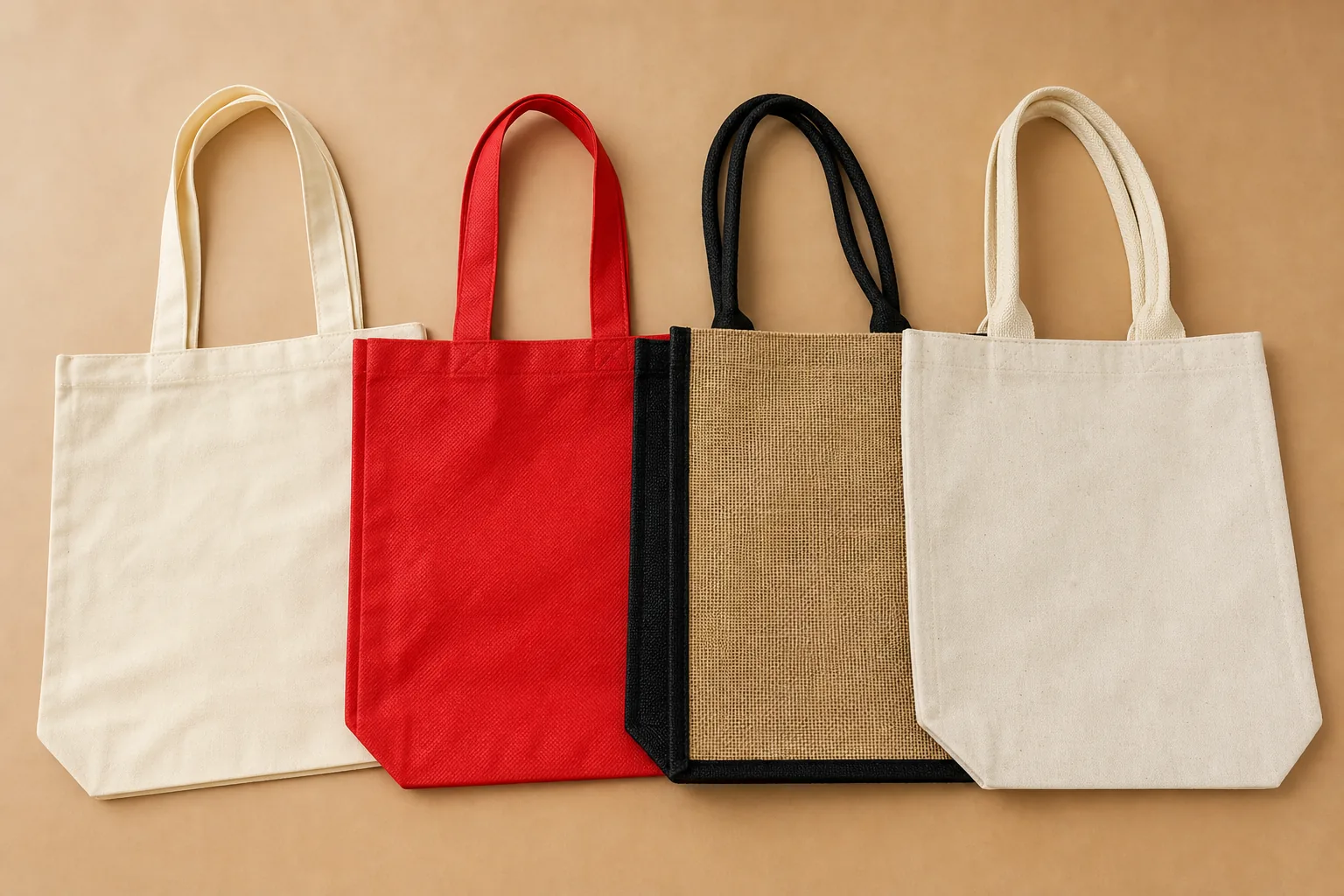
Side-by-side tote bag material comparison
| Dimension | Cotton | Non-woven PP | Jute | Recycled cotton |
|---|---|---|---|---|
| Cost position | Mid | Budget | Premium | Mid |
| PromoMate example | Liberty: 220gsm, 10L | Viva: lightweight, 17 colours | Modena: 325gsm, 27L | Carnaby: 170gsm, 13L |
| Best fit | Retail, welcome packs, reusable merch | Conferences and volume giveaways | Hampers and premium retail | Recycled-material briefs |
| Branding | Screen print or suitable transfer | Screen print or suitable transfer | Bold screen print or suitable transfer | Screen print or suitable transfer |
| Material consideration | Natural fibre; reuse matters | Synthetic and lightweight | Natural, stiff and bulky | Recycled fibre; reuse still matters |
| Example quantity breaks start at | 100 | 100 | 50 | 100 |
Product specifications checked July 2026. Stock, supplier pricing, decoration costs and freight can change, so use these as comparison points rather than a final quote.
Which tote bag material suits which job?
This is the part nobody on the phone wants: they want us to pick. So we will.
- Large trade show or conference run with a tight budget: non-woven PP. Keep the contents light and the artwork bold.
- Bookshop, boutique or cafe bag customers will reuse: cotton or canvas. Choose the weight based on how premium and structured the bag needs to feel.
- Christmas hamper, winery or artisan food range: laminated jute. It looks substantial and copes well with boxed contents.
- University, council or staff onboarding program with a recycled-material brief: recycled cotton with screen print or a transfer method approved for the chosen product.
- Small premium run: jute or heavier cotton. Both can feel considered without looking like generic conference merchandise.
The best tiebreaker is what happens after the first use. If someone will fold it into a handbag, choose lightweight cotton or PP. If it needs to carry a hamper or premium retail purchase, choose jute or canvas. If recycled content is part of the procurement brief, choose a product with a clear material specification and make sure the bag is useful enough to keep.
Planning a broader event range? Our guides to trade show promotional products, event merchandise that people keep and lower-impact promotional materials cover the wider decision.
Frequently asked questions
How many uses does a cotton tote need before it is environmentally worthwhile?
There is no universal break-even number. It changes with the weight and source of the cotton, how the comparison bag is made, washing and whether either bag is reused. The UK Environment Agency’s carrier-bag life-cycle study is useful context, but it is based on specific assumptions rather than a rule for every tote. The practical answer is simple: order a bag people will use repeatedly, and avoid over-ordering for a one-day event.
Can I get full-colour artwork on a tote bag?
Usually, yes, but the method must suit the exact product and artwork. Cotton and recycled cotton can work with approved transfer methods or screen print. Non-woven PP and coarse jute often look better with bold artwork and fewer fine details. Send us the design and we will recommend the method after checking the bag’s listed decoration area.
What’s the minimum order quantity for branded tote bags?
It varies by product and decoration method. The four current examples in this guide have quantity-price breaks beginning at 100 units for Liberty, Viva and Carnaby, and 50 units for Modena. That does not guarantee every decoration method is available at the first break, so ask for a quote based on the exact quantity and artwork.
Are recycled cotton tote bags a good environmental choice?
They can be a sensible choice when the specification is clear and the bag will be reused. Recycled cotton puts existing textile fibre back to work, but energy, transport, construction and lifespan still affect the result. Treat recycled content as one useful factor rather than a blanket environmental claim.
How long do branded tote bags take to produce?
Lead time depends on stock, quantity, decoration method, artwork approval and delivery location. Tell us the event date before choosing the bag; we will confirm what is realistic and suggest an alternative if the first choice will not arrive in time. See our current shipping and lead-time guide for the process.
15+ years in promotional products – specialising in product sourcing and branding method selection for Australian businesses.
Meet the team →
Want help picking? We’ll put your logo on the best-fit options and send a free visual proof before you commit. No obligation, no pushy follow-ups. Get a Free Quote →
Browse the cotton bag range, compare all custom tote bags, or explore the broader bags category. If you’re still stuck, send us the quantity, artwork and deadline and we’ll sort it.
Do Promotional Products Actually Work? What the 2025 APPA Data Shows
📊 The Numbers Are In: What 627 Aussies and Kiwis Told APPA About Branded Merch
Every promo supplier will tell you their products work. We would too. But we’d rather show you the data. In 2025 the Australasian Promotional Products Association (APPA) ran two studies at once. One asked 399 people who’d received branded merchandise how it changed their behaviour. The other asked 228 business buyers, most of them micro and small businesses, how they actually spend. Put the two together and you get the clearest picture we’ve had in years of whether this stuff is worth the money.
Short version: it works, and it works better than most digital channels. But the buyer half of the research also shows a lot of businesses are spending less deliberately than they used to, which means plenty of budgets are getting wasted on the wrong products. Here’s what the figures say, and how to make yours count. If you want to turn that data into a product brief, our budget vs premium promotional products guide maps audience, use and budget to a sensible tier.
(You can read the original APPA write-up here. The numbers below are theirs; the opinions on what to do about them are ours.)
🧠 People Remember the Thing on Their Desk
The standout figure: 81% of recipients could recall the brand on a promotional product they’d been given. That beats the recall you’d get from a digital ad or a print piece, and it’s not hard to see why. A banner ad is gone in a scroll. A branded drink bottle sits on someone’s desk for months, getting glanced at a dozen times a day.
What APPA’s recipients did after getting branded merch:
- 81% recalled the brand on the product
- 84% told someone else about the brand
- 77% went on to buy from the brand
- 66% looked the brand up online or on social after receiving something
That 84% word-of-mouth number is the one most people miss. A good branded item doesn’t just reach the person holding it. It gets shown around. The stubby holder that gets a laugh at a barbecue, the tote everyone at the office asks where you got. You’re not paying for one impression, you’re paying for a conversation starter.

🛒 The Bit That Matters: 77% Bought Something
Recall is nice. Sales are better. More than three-quarters of the people APPA surveyed said they made a purchase from a brand after receiving a promotional product from them. That’s the whole game: a physical object that puts your name in someone’s hand and, a few weeks later, tips them toward buying.
The reason it works comes down to something psychologists call reciprocity: give someone something useful and they feel a small, genuine pull to give back. It doesn’t have to be expensive. A pen that writes properly. A reusable coffee cup someone grabs on the way out the door. The usefulness is what does the work. A cheap product that breaks or gets binned burns the goodwill instead of building it, so bargain-basement can cost you more than it saves.
So the takeaway isn’t “buy more merch.” It’s “buy merch people want to keep.” A drawer full of tat that gets thrown out gives you none of that 77%. One good item that survives on a desk gives you all of it.
💸 Where Businesses Are Getting It Wrong
Now flip to the buyer side of the research. Back in 2014, 57% of businesses ran a formal annual budget for promotional products. By 2025 that had dropped to 29.4%. Fewer than a third of businesses are planning this spend properly anymore, and you can feel it in the way orders come in.
On top of that, most buyers now spend under $5,000 a year on merch, and 63% expect their spending to stay flat. Read those two together and you can see what’s happened: a lot of promo buying has gone reactive. No budget, no plan, just a scramble a fortnight before an event to grab whatever’s quick and cheap.
That’s the trap. When you buy in a panic you overpay for rush production, you pick products that don’t suit your audience, and you miss the volume pricing you’d get by planning ahead. The businesses getting real value out of that same sub-$5,000 budget are the ones who sit down in January, map out their events and gifting for the year, and order in a couple of planned batches instead of six frantic ones.
The APPA buyer snapshot:
- Only 29.4% of businesses keep a formal promo budget, down from 57% in 2014
- Most buyers spend under $5,000 a year
- 63% expect their spend to stay flat
If your budget’s flat, the only lever left is spending it smarter. Planning is free. Panic isn’t.

🌱 Sustainability Stopped Being Optional
One of the four big themes APPA pulled out of the research is that sustainability has shifted from a nice-to-have to a primary selection criterion. People are no longer impressed by a plastic trinket that’ll outlive them in landfill. They notice when a product is built to last or made from recycled material, and it changes what they think of the brand that handed it over.
It fits with the recall and purchase numbers too. A reusable drink bottle or a decent tote bag gets used for years, so your logo racks up thousands of views. And the fact it’s not single-use plastic quietly says something good about you. You get the branding mileage and the values signal in the one item. Cheap disposable giveaways get you neither.
You don’t need to overhaul everything to green shirts and bamboo. Just lean toward products with a real second life. If it’s going to get used, it’s going to get seen. And these days people clock whether you cared.

🤝 Digital Speed, Human Warmth
The other themes APPA flagged are worth a mention because they’re a bit of a paradox. Buyers now expect the speed, price transparency and range they get from big online retailers. They’ll compare a promo order to how quickly Amazon ships a phone case. But at the same time, the research points to people valuing genuine human connection more than ever in a world running at AI speed.
A well-chosen physical gift is one of the few things that does both jobs at once. It’s a real object in a screen-heavy world, and picking the right one for someone is a distinctly human bit of thoughtfulness that an algorithm can’t fake. APPA calls the blend of physical and digital “phygital”, where a QR code on a branded card opens a personalised landing page, or a merch pack unlocks an online experience. Fair enough as a prediction of where things head next. But the fundamentals haven’t shifted: pick something useful, brand it well, get it to the right person.
🎯 Turning the Data Into a Smarter Order
Stats are only worth anything if they change what you do. Here’s how we’d read the APPA research if we were planning a promo spend this year:
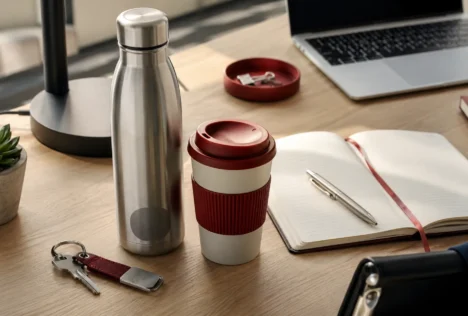
Pick for keep-ability, not unit price. The 77% purchase figure comes from products people hold onto. Before you order, ask one question: would someone actually keep this? If the honest answer is no, it’s not cheap, it’s wasted. Bottles, quality pens, keyrings and coffee cups all clear that bar easily.
Plan the year, order in batches. With most budgets flat and under $5k, the win is in planning, not spending more. Map your events and gifting moments now, then order in one or two batches to get better pricing and dodge rush fees. Our lead times page shows how far ahead each product type needs.
Let the item carry the branding. That 84% word-of-mouth number rewards products that get shown off. Something a bit unusual or genuinely nice sparks conversations a generic pen won’t. Match the item to who’s getting it. A mining crew and a design studio want very different things.
Brand it properly. All these numbers assume people can actually read your logo. A clean print on the right method beats a cramped, cluttered one every time. Supply vector artwork where you can, and check our printing processes for what suits each material.
Reviewed by Daniel Galpin, Co-Founder at PromoMate Australia
15+ years supplying branded merchandise for Australian businesses, events, schools, and trade teams. Focus areas: product selection, print method fit, MOQ planning, and reducing order risk. Meet the team →
📊 Want your promo budget to pull its weight?
Tell us your audience and what you’re trying to do, and we’ll help you pick products people actually keep. On budget, no dramas.
👉 Get a Free Quote →
❓ Frequently Asked Questions
1. Do promotional products actually work?
The 2025 APPA research says yes, and fairly convincingly. 81% of people recalled the brand on merch they were given, 84% told someone else about it, and 77% went on to buy from that brand. Those are strong numbers next to most digital advertising. The catch is that the effect depends on the product being useful enough to keep. A bottle that lives on a desk works; a flimsy giveaway that gets binned doesn’t.
2. What does APPA stand for?
APPA is the Australasian Promotional Products Association, the industry body for promotional merchandise across Australia and New Zealand. In 2025 they ran two studies, one of 399 recipients and one of 228 business buyers, measuring how branded merch affects behaviour and how businesses are spending. It’s the most credible local data on the industry going around.
3. How much should a small business spend on promotional products?
APPA found most buyers spend under $5,000 a year, and plenty spend a fair bit less. There’s no magic number. It depends on your events, your audience and your goals. The bigger issue the research flagged is that only 29.4% of businesses actually budget for it now, down from 57% in 2014. Whatever you spend, planning it beats winging it every time.
4. Why do people remember branded merchandise better than ads?
Because it hangs around. A digital ad gets a second of attention then disappears. A branded bottle, pen or tote sits in someone’s space and gets seen over and over, sometimes for years. That repeated, low-key exposure is what drives the 81% recall figure. It’s also physical, which people process and remember differently to something on a screen.
5. Are sustainable promotional products worth the extra cost?
Usually, yes. APPA named sustainability as a primary reason people now choose one product over another, so eco-friendly options can lift how your brand is perceived. They also tend to be more useful and longer-lasting. A reusable bottle or a decent tote gets kept and used, which means more brand exposure per dollar. You’re often paying a little more for something that works harder, not just something that looks greener.
6. What are the best promotional products for brand recall?
Anything that gets daily use in a visible spot. Drink bottles, reusable coffee cups, quality pens, tote bags and keyrings all perform well because they’re handled constantly and often out in public. The APPA numbers reward keep-ability, so lean toward products your audience will genuinely want to hang onto rather than the cheapest thing that hits your quantity.
7. How far ahead should I plan my promo orders?
Given most budgets are flat, planning ahead is the easiest way to get more from the same spend. Mapping your year and ordering in a couple of batches gets you better volume pricing and avoids rush fees. Standard items can turn around in 7–10 business days, but premium or custom pieces can need several weeks, so the earlier you sort it, the more options you’ve got. Have a look at our lead times page for specifics.
8. Where can I see the original APPA research?
APPA published a summary of both 2025 studies on their website. You can read it here. It covers the recipient behaviour figures, the buyer spending trends, and the four themes they see shaping the industry. Worth a read if you want the full picture straight from the source.